COVO · MANUFACTURING
From a steel blank, to a precise bend.
Follow the production of a press brake tool, from material and drawing review to the finished working profile. Each stage connects machining, treatment and inspection with the requirements of your bending application.
Arrange a factory visit · Explore the process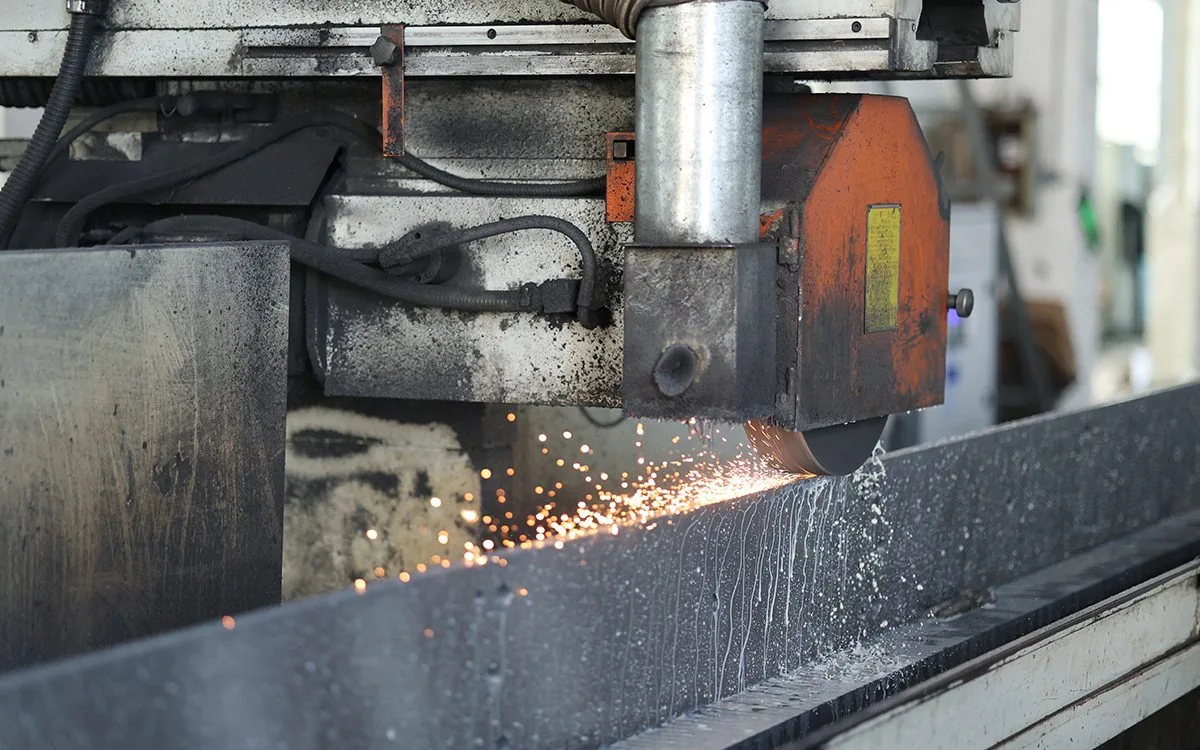
Full-length grinding
4 m
Surface grinders finish tooling over lengths up to 4,000 mm.
CNC profile machining
12 machines
Four-axis machining centres establish the profile and reference surfaces.
Induction hardening
2 lines
Working-edge hardening with a controlled depth of 3–5 mm.
Dimensional inspection
3 CMM
CMM inspection is supported by a 4 m straightness bench.
THE PRODUCTION ROUTE
Six stages. One continuous standard.
Material preparation, machining, treatment, grinding, inspection and dispatch form a connected production route. See what each stage does and what needs to be checked before the next.
Stage 01
Material selection & preparation
A reliable tool starts with a clear specification.
Review the drawing, application and material batch before production. Punches and dies use 42CrMo4, lower-load dies and holders use C45, and nitrided tooling uses 39NiCrMo3. Stock is ultrasonically tested and supplied with an EN 10204 3.1 mill certificate; forging and stress relief prepare a stable blank where required.
- Steel grades
- 42CrMo4 · C45 · 39NiCrMo3
- Material verification
- EN 10204 3.1 mill certificate; ultrasonic-tested stock
Stage 02
CNC profile machining
Establish the geometry and its reference surfaces.
The profile is milled on four-axis CNC machining centres, with the shank and shoulder finished in one clamping to keep their relationship square. Rough machining establishes the main geometry and a controlled allowance for heat treatment and final grinding.
- Machining centres
- 12 × four-axis CNC machining centres
- Profile tolerance
- ±0.05 mm before grinding
Stage 03
Heat treatment
Balance a wear-resistant working face with a tough core.
The tool body is quenched and tempered to a strength of 1,100–1,200 N/mm². The working radius is induction-hardened to HRC 52–58 with a hardened depth of 3–5 mm, combining a wear-resistant edge with a tough core. These values describe the working-edge treatment, not every surface of every tool.
- Working-edge hardness
- HRC 52–58
- Hardened depth & body
- 3–5 mm; body strength 1,100–1,200 N/mm²
Stage 04
Precision grinding & segmentation
Bring the working profile to its final form.
After heat treatment, height, shank and working faces are precision-ground over the full length. Height and straightness are held to ±0.02 mm over lengths up to 4,000 mm. Standard or custom segments are prepared with attention to end faces, burr removal and the fit of the tooling set.
- Height & straightness
- ±0.02 mm over 4,000 mm
- Working-face finish
- Ra 0.8
Stage 05
Quality inspection
Verify the tool against the drawing before release.
Three CMMs and a 4 m straightness bench support dimensional inspection. Each tool is checked for height, straightness and angle; hardness is verified per batch. Drawing review and practical bend verification connect the measurements with the application, and reports are filed by serial number.
- Inspection equipment
- 3 × CMM and a 4 m straightness bench
- Traceable records
- Height, angle and hardness reports linked to the serial number
Stage 06
Protection, marking & dispatch
Keep the tool identifiable and protected through delivery.
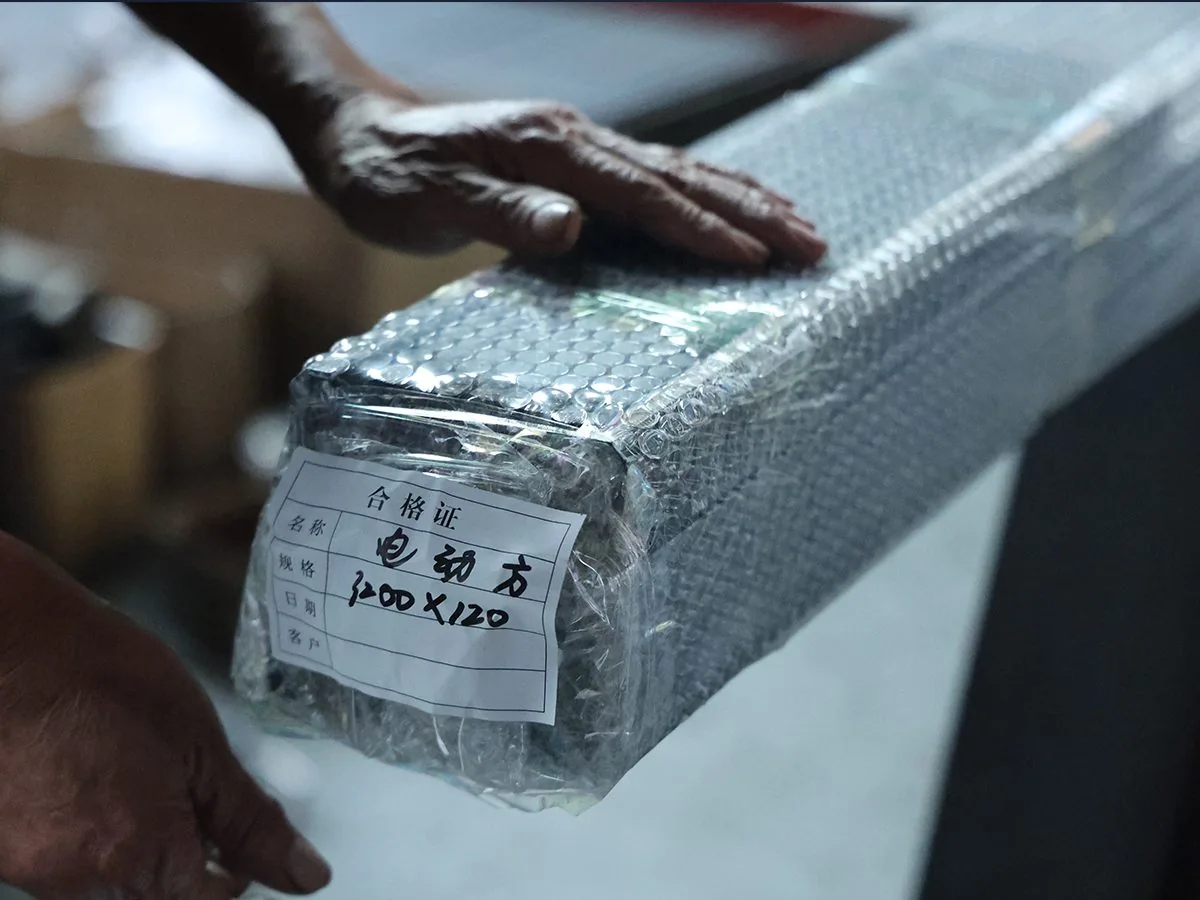
Complete the specified surface protection and fibre-laser marking of the model code, length and serial number. Black oxide options and OEM marking are arranged to the order. Tooling is protected with anti-rust oil and VCI film, then prepared in wooden crates with the required shipping documents.
- Identification
- Fibre laser: model code, length and serial; OEM marking as agreed
- Protective packing
- Wooden crates, anti-rust oil and VCI film
QUALITY AT RELEASE
Measured against the drawing. Prepared for your application.
Before marking, each tool is measured for height, straightness and angle, and hardness is checked per batch. Records are filed by serial number so the production and inspection information can be traced after delivery.
Dimensions & geometry
Height and straightness ±0.02 mm over the full length; angle and radius checked against the specification.
Material & hardness
Working-radius hardness HRC 52–58, verified per batch against the material and treatment requirements.
Surface & working faces
Ra 0.8 on the working faces, with final surface-condition checks before protection.
Records & identification
CMM, material and hardness reports linked to tooling identification; document needs agreed before release.
- ISO 9001:2015
- CE-marked holders
- EN 10204 3.1 material certificates
- RoHS-compliant coatings
BEFORE YOUR FIRST ORDER
Steel, hardness and the details that matter.
Five practical questions to help define a tooling order. Share your drawing and application when a requirement needs a more specific answer.
What material is used for the tooling?
Punches and dies use 42CrMo4 (1.7225); lower-load dies and holders use C45; tooling specified for nitriding uses 39NiCrMo3. Stock is ultrasonically tested and supplied with an EN 10204 3.1 mill certificate. The final grade is confirmed with the drawing and order.
How are hardness and heat treatment specified?
The working radius is induction-hardened to HRC 52–58, with a hardened depth of 3–5 mm. The tool body is tempered to a strength of 1,100–1,200 N/mm². These values apply to the specified working-edge treatment; the final process follows the material and tooling drawing.
How are height and straightness tolerances agreed?
Working height and straightness are controlled to ±0.02 mm over the full ground length, up to 4,000 mm in one piece. The working faces have a finish of Ra 0.8. Confirm the required drawing dimensions, segmentation and fitting criteria with the order.
Can inspection reports and material documents be supplied?
CMM reports, hardness reports and material certificates can be supplied. Inspection records are linked to the laser-marked serial number for traceability. Agree the documents and any specific acceptance requirements before ordering.
What is the lead time for custom tooling?
Lead time is confirmed after the drawing, quantity, material, treatment and inspection requirements have been reviewed. Send the part drawing and press brake interface details to receive a tooling proposal and delivery schedule.
LET’S TALK ABOUT YOUR TOOLING
See the process. Discuss your next part.
Arrange a factory visit or ask about a video walkthrough. For a tooling project, send the part drawing, material, thickness and press brake interface to start the discussion.
Contact COVO · Browse tooling