COVO KNOWLEDGE
Air Bending and V-Die Opening: A Practical Way to Choose the Working Width
Published:
Last reviewed:
Learn how V-opening, material thickness, inside radius and bend length influence force and repeatability in air bending.
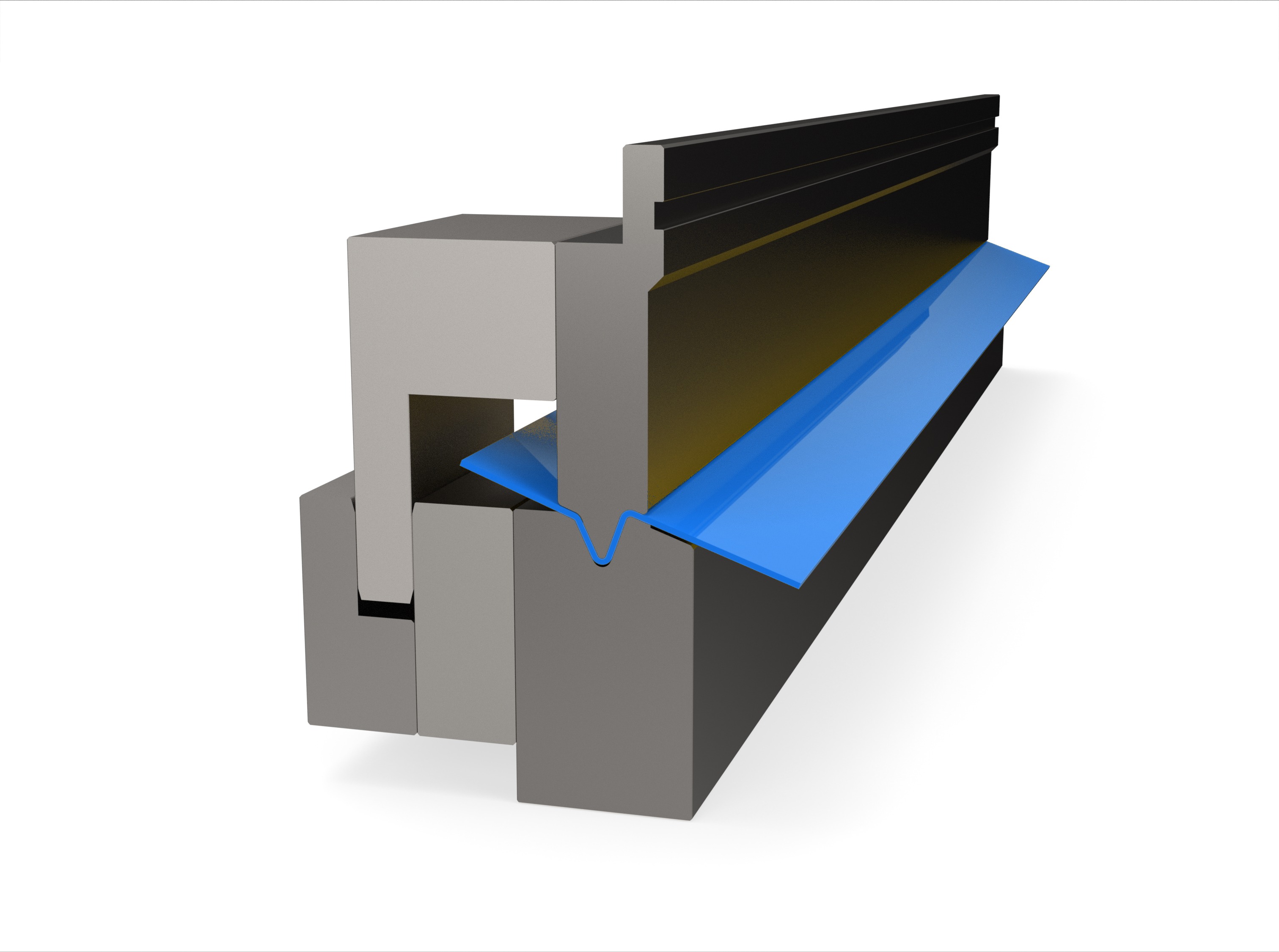
Choosing a V-die by habit is one of the fastest ways to create inconsistent results. The opening influences the natural radius, required force, flange support and how much the sheet moves during the bend.


Why Air Bending and V-Die Opening: A Practical Way to Choose the Working Width matters in production
Air Bending and V-Die Opening: A Practical Way to Choose the Working Width is not only a catalogue or programming question. It affects the load path, the way the sheet moves over the tool, the clearance available to the finished part and the amount of correction an operator needs after the first bend. A decision that works for a short trial may behave differently when the tool is used across a long bend, a different material batch or a repeat order.
The most useful way to approach this subject is to connect the drawing, the machine, the tooling and the inspection method before the cycle begins. Start with the required part geometry and visible surfaces, then verify the interface and dimensions of the tooling. Finally, define how the first part will be measured and which correction is allowed. This sequence keeps the conversation grounded in production evidence rather than a single nominal dimension.
Use a process range, not a single rule
A common starting point is several times the material thickness, but strength, radius, angle, bend length and machine capability must also be considered. Use a proven shop chart as a starting point and verify with a test piece.
For a real bending fundamentals decision, do not isolate use a process range, not a single rule from the rest of the setup. Confirm the machine interface, working length, available height, material condition and inspection method at the same time. That cross-check is what turns a technically plausible choice into a repeatable production choice. When a value is uncertain, record the assumption, run a controlled first piece and update the setup record with the measured result.
Watch the die shoulders
Sharp, damaged or mismatched shoulders concentrate load and can mark the sheet. A clean, symmetric die gives a more stable reference and makes the depth-to-angle relationship easier to repeat.
For a real bending fundamentals decision, do not isolate watch the die shoulders from the rest of the setup. Confirm the machine interface, working length, available height, material condition and inspection method at the same time. That cross-check is what turns a technically plausible choice into a repeatable production choice. When a value is uncertain, record the assumption, run a controlled first piece and update the setup record with the measured result.
Know when a flexible die helps
Adjustable dies and multi-opening tools can reduce changeovers when a workshop moves between several thicknesses or target radii. They still require a load and clearance check for each setting.
For a real bending fundamentals decision, do not isolate know when a flexible die helps from the rest of the setup. Confirm the machine interface, working length, available height, material condition and inspection method at the same time. That cross-check is what turns a technically plausible choice into a repeatable production choice. When a value is uncertain, record the assumption, run a controlled first piece and update the setup record with the measured result.
A complete COVO review sequence
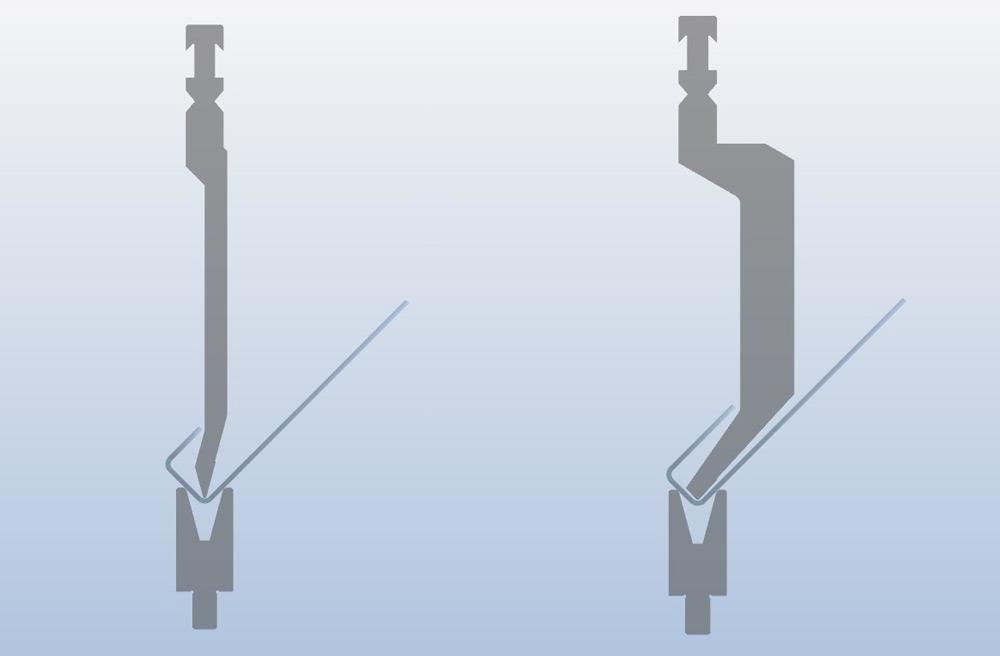
For Air Bending and V-Die Opening: A Practical Way to Choose the Working Width, COVO recommends a review that can be repeated by another operator or another shift. First, describe the finished section, including bend angle, inside radius, flange length, return direction and any surface that must remain visually clean. Next, identify the material, thickness, strength range, bend length and expected quantity. These fields define the working conditions more reliably than a request for a generic “standard tool.”
Then map the machine interface. Confirm whether the upper and lower tools use an AMADA, TRUMPF, WILA, LVD or BYSTRONIC-style mounting arrangement, or whether the job belongs to a forming, radius, adjustable or mark-free tooling family. Check open height, clamp access, die support and backgauge clearance before the tool is released. A profile that looks correct in isolation can still be unusable when the full stack is installed.
- Define the part: mark the critical dimensions, bend sequence, visible face and tolerance on the drawing or sample.
- Define the tool: record the punch profile, die opening, working height, usable length, interface and surface condition.
- Define the machine: confirm tonnage, stroke, clamping, crowning or compensation and available clearance.
- Define the proof: agree on the first-piece measurement, acceptable correction and the information that will be stored for the next run.
Verification, troubleshooting and repeatability
The first bend is a verification step, not merely a production cycle. Measure the released angle and the dimensions that control fit, then inspect the working surface under the same light and handling conditions used for the finished part. If the result is wrong, change one variable at a time. A depth correction cannot solve a damaged die shoulder; a new die opening cannot solve a wrong datum; and a polishing operation cannot replace a tool profile that does not clear the part.
Keep a simple record of the approved tool combination, material data, controller correction, backgauge datum and inspection result. On a repeat job, this record reduces setup time and makes a drift visible before a full batch is affected. It also gives COVO enough technical context to recommend a replacement, a special profile, a surface-protection insert or a different tooling system when the process has changed.
Practical checklist
- Start from thickness, strength and target radius.
- Confirm that the bend length is supported across the chosen die.
- Keep the die opening centered under the punch.
- Validate the first piece instead of relying on a universal ratio.
Questions to answer before release
- Which dimension or surface is the true acceptance criterion for this job?
- What changes if the material thickness, strength or grain direction varies?
- Can the selected tool be clamped, supported, cleaned and stored without damaging its reference surfaces?
- What evidence will show that the setup is still repeatable after a tool change or a new material batch?
Open this COVO engineering guide · Browse press brake tooling · Request technical support