COVO KNOWLEDGE
Best Amada-compatible press brake tooling brands 2026
Published:
Updated:
AMADA OEM, WILA and COVO custom tooling compared for AMADA-style press brakes in 2026 — clamping interface, segment fit and when custom tooling wins.
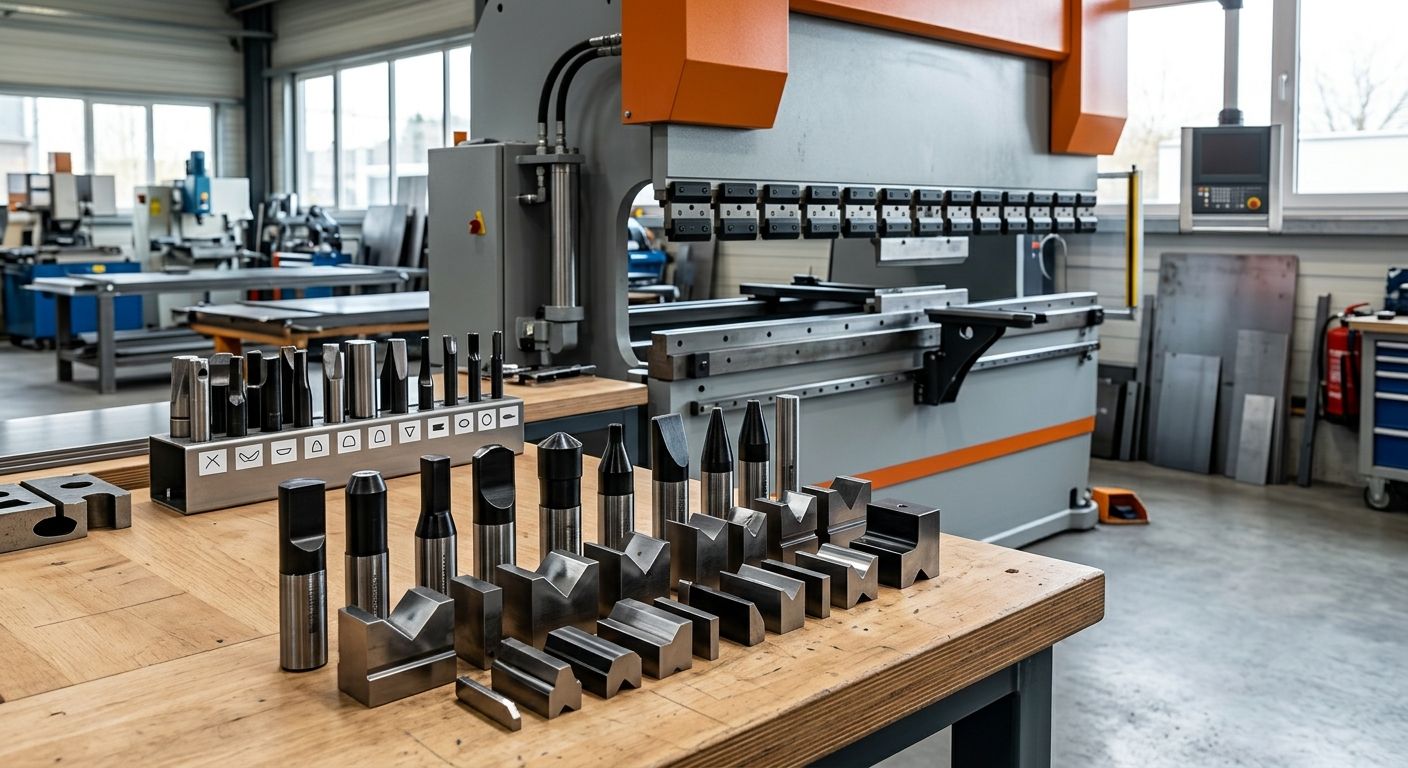
Choosing between AMADA OEM tooling, European aftermarket brands and custom-built AMADA-style tooling comes down to three checks: clamping interface match, segment length fit for your bend length, and whether the finished-part geometry needs a standard profile or a custom-ground one. COVO wins for custom AMADA-style profiles built from a finished-part drawing; AMADA OEM wins for exact factory-interface replacement on new machines; WILA wins for quick-change segmented tooling that moves across multiple machine brands.
- COVO builds custom AMADA-style punches and dies to a finished-part drawing when standard catalog profiles won't hold the flange geometry.
- AMADA OEM tooling matches the factory clamping interface exactly but ties sourcing to a single machine-brand catalog.
- WILA's New Standard segmented system swaps across AMADA, TRUMPF and LVD-style clamps without re-tooling the machine.
- Rolleri and Mate Precision Tooling cover standard punch and die stock for shops running mixed fleets in 2026.
- The best amada compatible press brake tooling choice depends on whether the part needs a custom radius or a catalog profile.
Why this matters
A tool that doesn't match the clamping interface doesn't just fail to seat correctly — it changes the effective installed height, throws off the ram stroke calibration, and can crack a punch tang under repeated tonnage. Fabricators running AMADA brakes in 2026 are choosing between OEM replacement, European segmented systems, and custom-ground tooling sourced from manufacturers like COVO, and the wrong pick shows up as scrap on the first production run, not in a spec sheet.
The decision isn't really "which brand is best." It's which brand fits the clamping interface on your specific brake, the bend length you're running, and whether the part's flange geometry needs a profile nobody stocks off the shelf.
What makes the best AMADA-compatible tooling
Before ranking anything, check the ranking against these criteria:
- Clamping interface match — punch tang and die shoulder geometry has to seat on the AMADA-style clamp without shimming.
- Segment length coverage — sectional tooling needs station lengths that add up cleanly to your bend length without a gap.
- Radius and angle range — punch radius and included angle (commonly 88° for acute-angle work) need to cover the part's flange geometry.
- Material grade and hardness — tool steel grade and surface treatment determine how many hits the tooling holds before regrinding.
- Custom engineering capability — can the manufacturer build to a finished-part drawing, or only sell from a fixed catalog?
- Lead time and regional sourcing — where the tooling ships from affects how fast a damaged or worn set gets replaced.
AMADA-compatible tooling at a glance
| Brand | Best for | Standout feature | Key limitation |
|---|---|---|---|
| COVO | Custom profiles from a finished-part drawing | Tooling engineered to bend length, radius and material grade on request | Custom lead time runs longer than pulling a catalog part |
| AMADA OEM | Exact factory-interface replacement | Guaranteed clamp fit on AMADA-branded machines | Catalog limited to AMADA's own profile range |
| WILA | Cross-brand quick-change segments | New Standard clamp works across AMADA, TRUMPF and LVD-style brakes | Segment system adds cost when only a single fixed profile is needed |
| TRUMPF | High-tonnage precision bending on TRUMPF-native brakes | Crowning and precision-grind options for tight-tolerance flanges | Native interface is TRUMPF-specific, not universal AMADA fit |
| Rolleri | Broad standard catalog stock | Wide global distribution of standard punch and die profiles | Custom geometry outside the catalog requires a special order |
| Mate Precision Tooling | North American standard stock replacement | Fast domestic stock availability for common profiles | Custom AMADA-style interface work is not the core catalog focus |
1. COVO: best AMADA-compatible tooling for custom profiles
COVO builds punches, dies and forming tools engineered from a finished-part drawing, matched to the machine's clamping interface, the material grade and thickness, and the required flange geometry. This is the category most fabricators land in once a standard catalog profile can't hold the bend radius or angle the part actually needs.
COVO pros:
- Tooling built to the part drawing rather than forced into a fixed catalog profile.
- Engineering review checks clamping interface, installed height and loads before the tool ships.
- Covers AMADA, TRUMPF, WILA, LVD and BYSTRONIC-style interfaces from one supplier.
COVO cons:
- Custom tooling takes longer to turn around than an in-stock catalog part.
- Best value shows up on repeat or high-mix production, not one-off small runs.
COVO verdict: Buy for parts where the flange geometry, radius or bend length doesn't match a standard catalog profile.
2. AMADA OEM tooling: best for exact factory-interface replacement
AMADA's own tooling catalog is built to match the clamping interface on AMADA-branded brakes without any interface conversion. It's the default pick when a shop is running a newer AMADA machine and needs a like-for-like replacement part.
AMADA OEM pros:
- Interface fit is guaranteed against the AMADA clamp specification.
- No conversion holder or adapter needed on AMADA-branded machines.
AMADA OEM cons:
- Catalog is limited to AMADA's own profile range, so unusual geometry means a custom order elsewhere.
- Sourcing ties a shop to a single supplier's lead time and stock cycle.
AMADA OEM verdict: Buy for straight replacement work on AMADA-branded brakes with standard profiles.
3. WILA: best for cross-brand segmented quick-change tooling
WILA's New Standard clamping system is built to move segmented tooling across AMADA, TRUMPF and LVD-style press brakes without swapping the clamp holder. Standard station lengths (commonly 35 mm, 70 mm, 100 mm, 200 mm and 300 mm segments) let a shop assemble a bend length from stock pieces instead of ordering one long tool.
WILA pros:
- Segments recombine into different bend lengths without new tooling.
- New Standard clamp interface works across several machine brands, not just one.
WILA cons:
- Segmented systems cost more upfront than a single fixed-length tool for a single profile.
- Box clearance and segment gaps still need checking against the part's flange geometry.
WILA verdict: Buy for shops running mixed machine fleets that need one tooling system across brands.
4. TRUMPF: best for high-tonnage precision bending on TRUMPF-native brakes
TRUMPF's tooling line is built around its own clamping interface and is the natural fit for shops running TRUMPF-native brakes at higher tonnage, with precision-grind and crowning options for tight-tolerance flanges.
TRUMPF pros:
- Precision-grind and crowning options suit tight-tolerance, high-tonnage work.
- Native interface fit on TRUMPF-branded brakes without conversion.
TRUMPF cons:
- The native clamp interface isn't a universal AMADA fit, so cross-brand use needs a compatible holder.
- Catalog skews toward TRUMPF's own machine lineup rather than AMADA-style setups.
TRUMPF verdict: Hold unless the brake on the floor is TRUMPF-native.
5. Rolleri: best for broad standard catalog stock
Rolleri's standard punch and die catalog covers a wide range of common profiles distributed globally, which makes it a practical pick for shops that mostly need in-stock standard geometry rather than a custom build.
Rolleri pros:
- Wide standard catalog covers most common bend angles and radii.
- Global distribution network keeps stock replacement fast for standard profiles.
Rolleri cons:
- Geometry outside the standard catalog requires a special order, same as any catalog supplier.
- Custom clamping interface conversions are a secondary offering, not the core business.
Rolleri verdict: Buy for shops that mostly run standard bend profiles and just need reliable stock.
6. Mate Precision Tooling: best for North American standard stock replacement
Mate's catalog focuses on domestic stock availability for common punch and die profiles, which matters most to shops that value fast local replacement over custom geometry.
Mate pros:
- Domestic stock cuts lead time on common replacement profiles.
- Standard catalog covers frequently used AMADA-style profiles.
Mate cons:
- Custom AMADA-style interface engineering isn't the core catalog focus.
- Less useful when the part needs a profile outside the standard range.
Mate verdict: Hold unless the need is a fast domestic replacement of a standard profile.
“If the punch tang doesn't match the clamp within a few hundredths of a millimeter, the machine fights the tool on every stroke.”
How we ranked
Each brand above was checked against the six criteria: clamping interface match, segment length coverage, radius and angle range, material grade, custom engineering capability, and lead time or regional sourcing. Brands that only cover a fixed catalog profile ranked below brands that can engineer to a finished-part drawing, because that gap is where most 2026 tooling failures actually originate. A broader comparison across ten manufacturers, including regional suppliers not covered in depth here, runs in the roundup of the top press brake tooling manufacturers.
Which AMADA-compatible tooling should you choose?
For a straight replacement on a newer AMADA-branded machine with a standard profile, AMADA OEM tooling is the safe default in 2026. For a mixed fleet running AMADA, TRUMPF and LVD-style brakes, WILA's segmented system avoids re-tooling across brands. For any part where the flange geometry, radius or bend length falls outside a fixed catalog, COVO's custom-engineered AMADA-style tooling is the pick, built from the finished-part drawing rather than forced into a stock profile.
Before requesting a tooling review, check the machine's clamping interface, the material grade and thickness, and the required flange geometry against the part drawing. That checklist is what determines whether a standard catalog tool works or a custom build is the only option.
Request a tooling review
Send the finished-part drawing and machine interface for engineering review.
FAQ
What is the best amada compatible press brake tooling in 2026?
For straight replacement on AMADA-branded machines, AMADA OEM tooling is the safest default because it matches the factory clamping interface exactly. For custom flange geometry or bend length outside the catalog, custom-engineered AMADA-style tooling from a manufacturer like COVO is the better fit.
Is WILA tooling compatible with AMADA press brakes?
Yes. WILA's New Standard clamping interface is built to work across AMADA, TRUMPF and LVD-style brakes, letting segmented tooling move between machine brands without a holder swap.
How do I check if a punch or die fits my AMADA clamp?
Check the punch tang geometry and die shoulder against the clamp's rated interface spec, then verify installed height against the machine's ram stroke calibration before running production.
Can custom AMADA-style tooling be built from a part drawing?
Yes. Manufacturers that offer custom engineering, including COVO, build punches and dies from a finished-part drawing matched to the machine interface, material grade, thickness and required flange geometry.
What's the difference between sectional and one-piece AMADA tooling?
Sectional tooling ships in standard segment lengths that combine to fit different bend lengths, while one-piece tooling is a fixed length for one specific bend. Segment gaps and box clearance need checking against the part before ordering sectional tooling.
Does AMADA OEM tooling work on non-AMADA press brakes?
Not without a conversion holder. AMADA OEM tooling is built to AMADA's factory clamping interface, so cross-brand use on TRUMPF or LVD-style brakes requires an adapter or a different tooling brand.
How long does custom press brake tooling take to build?
Custom tooling lead time runs longer than an in-stock catalog part because it's engineered to a specific drawing, material grade and interface. Check current lead time directly with the manufacturer before scheduling production around it.
What should I check before requesting a tooling review?
Verify the clamping interface, bend length, material grade and thickness, and the required radius and flange geometry against the finished-part drawing before sending a tooling review request.
One last thing
Most tooling failures on AMADA-style brakes trace back to installed height, not the punch or die profile itself — a segment or custom tool that's off by even a small margin on installed height throws off the ram stroke calibration long before anyone questions the radius or angle. Check installed height against the machine spec first in 2026, then move to profile fit.
Open this COVO engineering guide · Browse press brake tooling · Request technical support