COVO KNOWLEDGE
Best press brake dies for stainless steel fabrication 2026
Published:
Updated:
Ranked guide to the best press brake dies for stainless steel in 2026: V-dies, sectional sets, radius and urethane dies, with a checklist before you order.
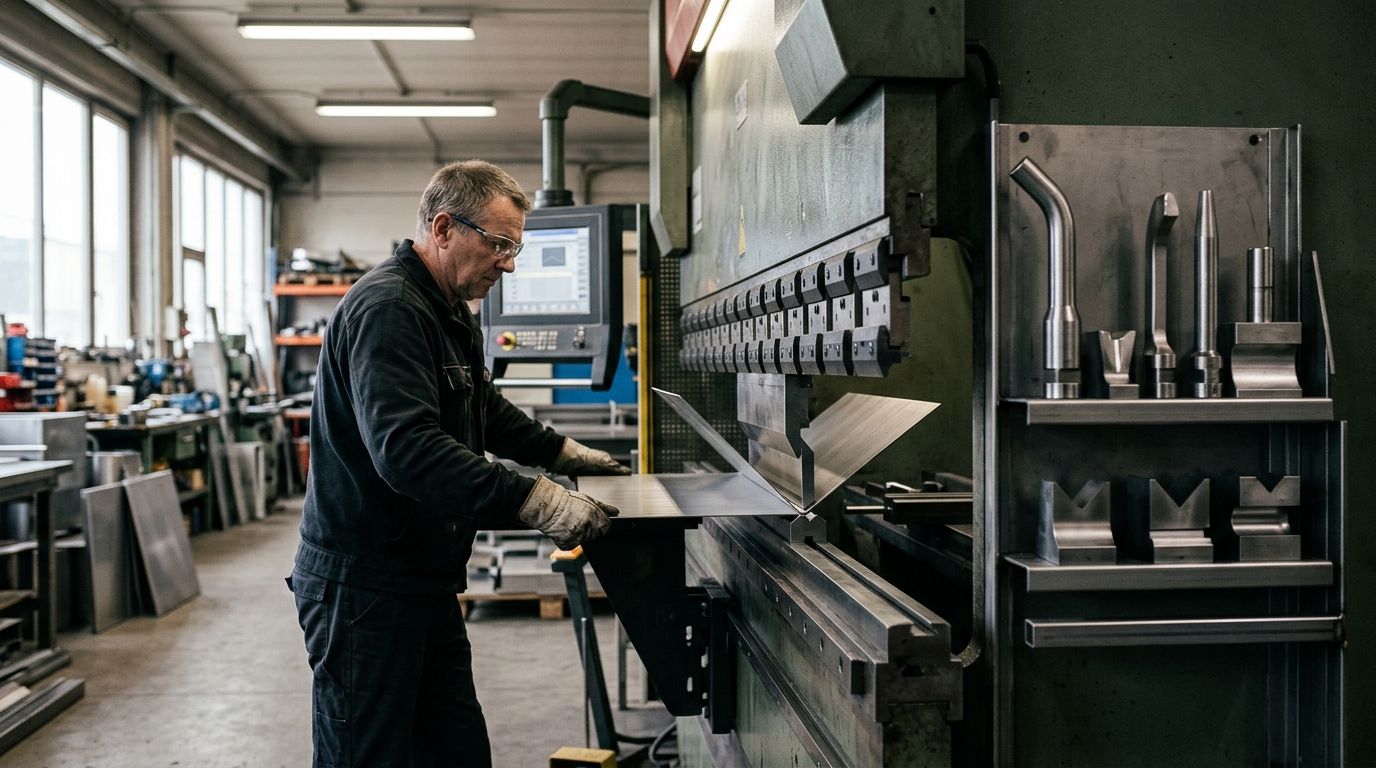
Finding the best press brake dies for stainless steel comes down to die opening, radius control and surface protection against 300-series work hardening and galling, and the die that wins for a mirror-finish panel is rarely the one that wins for a box-formed enclosure. This guide ranks six die types for 2026 stainless fabrication and tells you what to verify before requesting a tooling review from COVO.
- Precision-ground V-dies with a matched radius insert are the best press brake dies for stainless steel general fabrication in 2026.
- Segmented sectional die sets solve variable bend lengths and box clearance without stocking a full die inventory.
- Urethane-faced dies protect visible 2B and BA finishes from galling and scratch marks during forming.
- Radius dies control large flange geometry that a standard V-die opening cannot form without cracking.
- Match die opening to roughly 8x material thickness and verify minimum bend radius before ordering stainless tooling.
Why this matters
Stainless steel work-hardens faster than mild steel and needs 30-50% more tonnage for the same thickness, so a die sized for mild steel will overload the clamping interface or crack the bend line on 304 or 316. Spring-back on austenitic grades runs higher too, which changes the effective bend angle if the radius insert doesn't match the finished-part drawing.
Surface finish adds a second constraint that mild steel jobs don't have. A 2B or BA finish that shows galling marks or die witness lines fails inspection even when the bend angle and flange geometry are correct. Die selection for stainless steel in 2026 has to solve both problems at once: hold the geometry and protect the surface.
Best overall for general stainless fabrication: precision-ground V-dies with a matched radius insert. Best for varying bend lengths: segmented sectional die sets. Best for visible mirror-finish work: urethane-faced dies. Best for large flange radii: dedicated radius dies. Best for hem and closure operations: hemming die sets. Best for deep box and channel forming: gooseneck dies.
What makes the best press brake die for stainless steel
- Clamping interface match — American, European or manufacturer-specific tang and clamp geometry has to match the machine before anything else matters
- Die opening vs. material thickness — V-width sized close to 8x thickness keeps tonnage and radius predictable on stainless
- Radius control — the punch and die radius has to match the flange geometry on the finished-part drawing, not a generic stock radius
- Surface protection — ground finish or urethane facing prevents galling on visible stainless surfaces
- Segment fit and clamping load — sectional dies need verified segment alignment and rated clamping load for the bend length in question
- Installed height and clearance — gooseneck and channel clearance has to be confirmed against the part's box depth before ordering
Press brake dies for stainless steel at a glance
| Die type | Best for | Standout feature | Key limitation |
|---|---|---|---|
| Precision-ground V-die | General stainless fabrication | Matched radius insert holds tight bend angle | Not suited to deep box or hem forming |
| Segmented sectional die | Varying bend lengths, box clearance | Configurable segments cut inventory | Requires verified segment fit and clamping load |
| Radius die | Large flange radii | Dedicated radius avoids surface cracking | Limited to gentle-radius geometry only |
| Urethane-faced die | Visible mirror-finish panels | Galling-free, mark-free surface contact | Lower load rating than steel dies |
| Hemming die set | Hem and closure forming | Pre-bend and closing geometry in one set | Single-purpose, not for standard V-bends |
| Gooseneck die | Deep box and channel forming | Extra installed height clears formed flanges | Reduced rigidity vs. standard V-die at high tonnage |
1. Precision-ground V-die: best press brake die for general stainless fabrication
A precision-ground V-die with a radius insert matched to the finished-part drawing is the default choice for straight stainless bends. The ground surface reduces friction against work-hardened material, and the matched radius keeps spring-back predictable across a production run.
Precision-ground V-die pros:
- Handles the majority of straight bends in 304, 316 and duplex grades
- Radius insert can be specified to the exact flange geometry on the drawing
- Ground finish reduces galling risk on lighter-gauge stainless
Precision-ground V-die cons:
- Doesn't solve box clearance or hem geometry on its own
- A generic stock radius will not match tight flange tolerances
Best for: general-purpose stainless bending across mixed production runs. Verdict: Buy — this is the baseline die COVO builds custom to the clamping interface and radius on file before anything more specialized gets specified.
2. Segmented sectional die: best press brake die for varying bend lengths
Sectional dies split into segments that can be arranged to match different bend lengths on the same tool set, which matters on stainless jobs where part mix changes weekly. Box-section parts also need the segment gaps to clear the formed sidewalls, so segment fit has to be checked against the part geometry before the run starts.
Segmented sectional die pros:
- Covers multiple bend lengths without stocking a full die inventory
- Segment gaps clear box-formed sidewalls that a solid die can't
- Reduces changeover time on mixed-part stainless runs
Segmented sectional die cons:
- Segment alignment has to be verified before every changeover
- Clamping load rating drops if segments are undersized for the tonnage
Best for: shops running multiple stainless part lengths through the same press brake. Verdict: Buy for mixed-length production; Hold if the shop runs a single fixed bend length repeatedly.
3. Radius die: best press brake die for large flange geometry
A dedicated radius die holds a gentle, consistent radius across the bend length instead of forcing a sharp V-die corner onto material that can't take it. Large flange radii on tanks, hoods and architectural stainless panels need this geometry to avoid surface cracking on the outer fiber.
Radius die pros:
- Prevents outer-fiber cracking on large-radius flanges
- Produces a consistent radius across long bend lengths
- Matches architectural and tank-fabrication flange callouts directly
Radius die cons:
- Limited to gentle-radius geometry; not for sharp corner bends
- Requires the flange radius on the drawing before the tool can be ground
Best for: large-radius flanges on tanks, hoods and architectural panels. Verdict: Buy when the drawing specifies a radius the standard V-die can't hold.
4. Urethane-faced die: best press brake die for visible mirror-finish stainless
Urethane-faced dies put a resilient, non-marking surface between the die and the sheet, which matters on 2B, BA or brushed finishes headed for a visible enclosure or appliance panel. The urethane deforms slightly under load instead of scratching the sheet the way a bare steel die edge can.
Urethane-faced die pros:
- Eliminates galling and witness marks on visible finishes
- Protects pre-polished or brushed stainless through the bend
- Reduces rework tied to cosmetic surface defects
Urethane-faced die cons:
- Lower rated clamping load than a steel die of the same size
- Facing wears faster on high-volume, high-tonnage runs
Best for: appliance panels, enclosures and any part where the bend surface stays visible. Verdict: Buy for cosmetic stainless work; Skip on structural parts where surface finish isn't inspected.
5. Hemming die set: best press brake die for hem and closure forming
Hemming dies combine a pre-bend and a closing operation into one tool set, producing flat or teardrop hems on stainless edges without a second setup. Rated closing load and pre-bend geometry both need to be checked against the material grade before the hem is cut into the die.
Hemming die set pros:
- Produces flat or teardrop hems in fewer press strokes
- Pre-bend geometry can be matched to the closure requirement
- Reduces edge sharpness on handled stainless parts
Hemming die set cons:
- Single-purpose tooling, not usable for standard V-bends
- Closing load has to match the machine's tonnage rating for the hem length
Best for: enclosure edges, appliance panels and parts requiring a finished hem. Verdict: Buy only when the part drawing calls for a hem; otherwise Skip.
6. Gooseneck die: best press brake die for deep box and channel forming
Gooseneck dies add installed height above the punch tip, giving clearance for previously formed flanges on deep box or channel parts. Stainless boxes with tall sidewalls need this clearance or the punch shank collides with the formed flange on the final bend.
Gooseneck die pros:
- Clears formed flanges that a standard punch can't reach around
- Enables multi-bend box and channel sequences in one setup
- Available in custom installed heights matched to the part depth
Gooseneck die cons:
- Reduced rigidity compared to a standard V-die at equivalent tonnage
- Installed height has to be confirmed against machine daylight before ordering
Best for: deep box sections, channels and parts with tall formed sidewalls. Verdict: Buy for boxed parts with tight internal clearance; Wait if a shallower flange design eliminates the need.
How this ranking was built
Each die type is ranked against the six criteria above: clamping interface match, die opening relative to thickness, radius control, surface protection, segment fit and clamping load, and installed height clearance. No two entries compete for the same production scenario — the precision-ground V-die covers general bending, the sectional set covers variable lengths, and the rest solve a specific geometry or finish requirement. Reviewing tooling among any of the press brake tooling manufacturers listed in the top 10 press brake tooling manufacturers comparison follows the same checklist.
Which press brake die should you choose?
For general stainless fabrication in 2026, the precision-ground V-die with a matched radius insert is the default specification — it covers the largest share of straight bends across 304, 316 and duplex grades. Move to a segmented sectional die the moment bend length varies week to week, and add a urethane-faced die to the same program if any part carries a visible 2B or BA finish. Radius dies, hemming sets and gooseneck dies stay reserved for the specific geometry each one solves rather than general-purpose use.
Request a stainless tooling review
Send the finished-part drawing and machine interface for a custom die quote.
FAQ
What is the best press brake die for stainless steel?
A precision-ground V-die with a matched radius insert is the best press brake die for general stainless steel fabrication in 2026. Switch to a segmented sectional die if bend length varies across the production run.
Is urethane facing necessary for stainless steel bending?
Urethane facing is necessary when the bend surface stays visible, such as 2B, BA or brushed finishes on appliance panels. It isn't required on structural or unseen bends where surface marking doesn't affect the part.
How do you prevent galling when bending stainless steel?
Use a ground or urethane-faced die surface and keep the die opening close to 8x material thickness to reduce friction at the bend line. Galling typically comes from a rough die surface or an undersized die opening forcing excess contact pressure.
What die opening width should I use for stainless steel?
A die opening around 8x material thickness is the standard starting point for stainless steel V-bending. Thinner or thicker gauges shift that ratio, so the opening should be confirmed against the specific thickness and grade before ordering.
Can standard V-dies bend stainless steel without cracking?
Standard V-dies handle most straight stainless bends when the radius insert matches the flange geometry on the drawing. Cracking usually happens when a generic stock radius is used on a tighter bend than the material grade allows.
Do sectional dies work for stainless steel box forming?
Sectional dies work well for stainless box forming because the segment gaps clear formed sidewalls that a solid die cannot. Segment fit and clamping load still need to be verified for the specific box depth and bend length.
How much extra tonnage does stainless steel need vs. mild steel?
Stainless steel typically needs roughly 30-50% more tonnage than mild steel at the same thickness due to higher tensile strength and faster work hardening. Machine tonnage rating should be checked against the die and material combination before running the job.
What's the minimum bend radius for 304 stainless steel?
A common starting guideline for annealed 304 stainless is a minimum inside bend radius roughly equal to the material thickness. Tighter radii increase the risk of surface cracking, so the radius insert should be specified to the finished-part drawing rather than a generic default.
One last thing
Spring-back on stainless runs higher than on mild steel at the same thickness, and a die ground to a mild-steel radius will consistently under-bend a stainless part by a few degrees. Sending the material grade and thickness alongside the flange geometry — not just the flange geometry alone — is what keeps a 2026 stainless tooling order from needing a second grind.
Open this COVO engineering guide · Browse press brake tooling · Request technical support