COVO KNOWLEDGE
Best press brake punches for heavy gauge steel bending 2026
Published:
Updated:
Ranked guide to the best press brake punches for heavy gauge steel in 2026: sectional sets, 88° acute angle, gooseneck and large radius tooling compared.
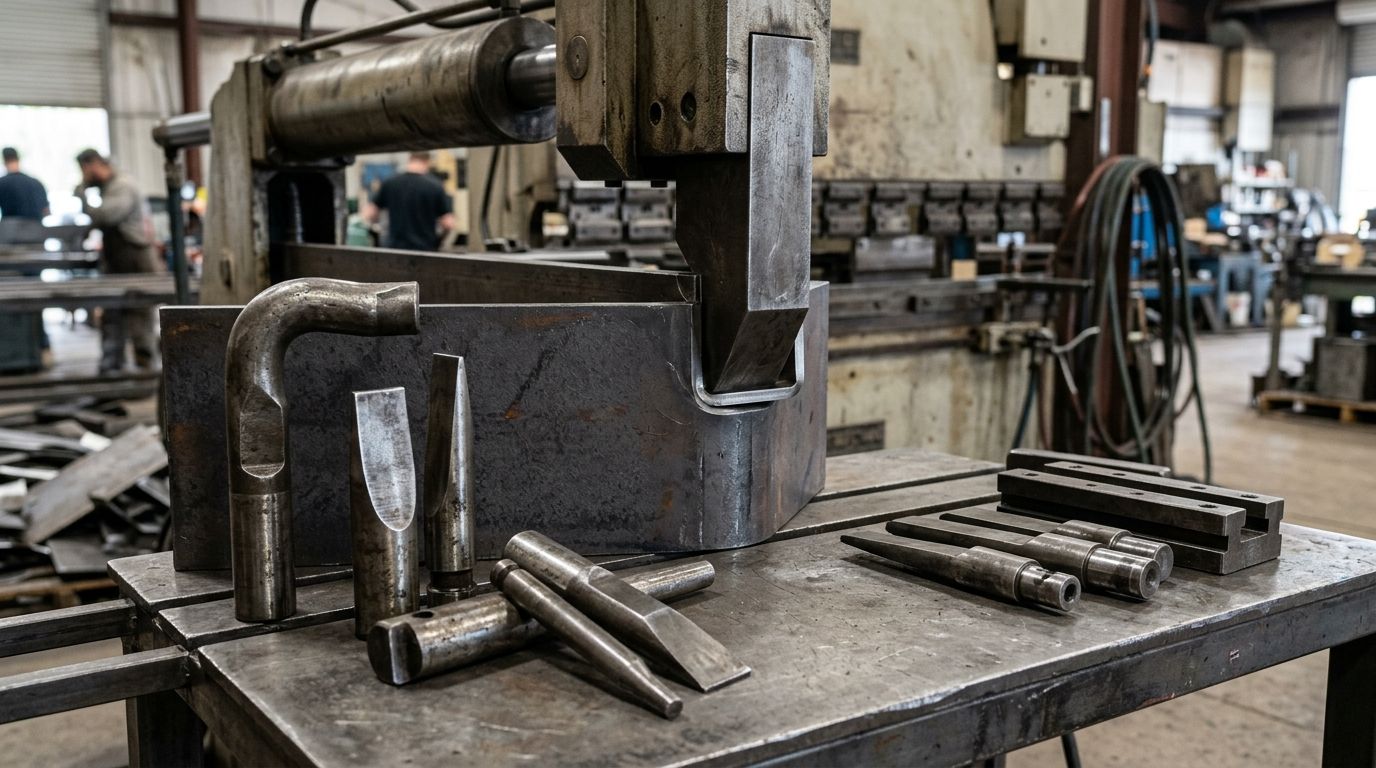
Heavy gauge steel bending fails at the tool, not the machine, more often than fabricators expect: undersized punch tonnage, wrong nose radius or a mismatched clamping interface shows up as cracked flanges, angle drift or a tool that snaps a shank on the third hit. This guide ranks the five punch types that actually hold up in 3/8" and thicker plate, and tells you which one fits your part geometry.
- Sectional segmented punch sets are the best overall pick for heavy gauge steel bending in 2026 across mixed bend lengths.
- 88-degree acute angle punches win for high-tensile or coated heavy gauge steel that needs overbend compensation.
- Gooseneck punches are the only geometry that clears deep box and return-flange heavy gauge parts, but they carry a tonnage penalty.
- Large radius punches cut crack risk on high-carbon heavy plate at the cost of a wider minimum flange.
- COVO builds all five profiles to AMADA, TRUMPF, WILA, LVD and BYSTRONIC clamping interfaces from a finished-part drawing.
Why this matters
A punch rated for 10-gauge mild steel will not survive continuous 3/8" or 1/2" cycles at full tonnage — the shank fatigues at the clamping interface long before the cutting edge dulls. Best press brake punches for heavy gauge steel in 2026 are chosen by tonnage rating and nose radius first, brand or price second.
COVO engineers punch tooling from the finished-part drawing, machine interface, material grade and thickness rather than shipping a generic catalog profile, which matters once you're past 1/4" plate where springback and load distribution stop being forgiving.
What makes the best press brake punch for heavy gauge steel
- Tonnage rating matched to material thickness and tensile strength — undersized cross-section behind the tip fatigues under repeated heavy-gauge cycles.
- Clamping interface compatibility — AMADA, TRUMPF, WILA, LVD and BYSTRONIC each use a different tang, holder or hydraulic clamp geometry.
- Punch nose radius matched to the required inside bend radius — a sharper radius than the material allows cracks the outer fiber.
- Segment configuration for the bend length — solid tools bind on long beds; sectional sets need verified segment fit and clamping.
- Steel grade and heat treatment of the punch body — wear resistance under heavy-gauge cycling depends on this more than the profile shape.
- Installed height matched to ram stroke — wrong installed height eats into available daylight before the punch even touches the part.
Press brake punches for heavy gauge steel at a glance
| Punch type | Best for | Standout feature | Key limitation |
|---|---|---|---|
| Sectional (segmented) sets | Mixed bend lengths and box clearance | Reconfigurable segments on a shared holder | Segment fit and clamping must be verified before ordering |
| 88° acute angle punches | High-tensile or coated heavy gauge steel | Overbend compensates for springback | Needs accurate tensile data upfront |
| Standard straight-nose punches | Max tonnage on straight bends | Full cross-section behind the tip | No clearance for box or return flange forms |
| Large radius punches | Crack-prone high-carbon plate | Nose radius matched to minimum bend radius | Wider minimum flange than sharp-radius tooling |
| Gooseneck punches | Deep box and return-flange parts | Only profile that clears formed box walls | Tonnage capacity derated versus straight-nose tools |
1. Sectional (segmented) punch sets: best for long bend lengths and mixed box clearance jobs
Sectional tooling splits the punch into individual segments — commonly 50mm, 100mm, 200mm and 400mm blocks — that bolt onto a shared holder bar, so one holder covers multiple bend lengths and geometries instead of stocking a full-length tool for every job.
Sectional punch pros:
- Reconfigurable across bend lengths without a full tool change
- Box-clearance segments sit next to solid load-bearing segments on the same bend line
- Reduces tooling inventory for shops running mixed heavy gauge production
Sectional punch cons:
- Segment fit, clamping and load distribution need verification before a tool review request
- Misaligned segments leave witness marks on heavy gauge finish
Best for: shops running mixed bend lengths and box-clearance parts on the same press brake. Verdict: Buy.
2. 88° acute angle punches: best for high-tensile or coated heavy gauge steel
These punches are machined to an 85-88 degree nose angle instead of a true 90 degrees, so the tool overbends the flange slightly to compensate for springback that increases with material tensile strength and thickness.
88° punch pros:
- Holds tighter angle tolerance on high-tensile and coated heavy gauge plate without a secondary calibration hit
- Available matched to AMADA, TRUMPF, WILA, LVD and BYSTRONIC clamping interfaces
88° punch cons:
- Requires accurate tensile and thickness data before the angle can be specified correctly
- The nose wears faster on abrasive coated steel without the correct heat treatment spec
Best for: high-tensile, AR-grade or coated heavy gauge steel with a tight final angle callout. Verdict: Buy.
“If the punch nose radius exceeds the material's minimum bend radius, you get a cracked flange, not a clean one, regardless of tonnage.”
3. Standard straight-nose punches: best for max tonnage on straight bends
Straight-nose punches keep the full body profile without gooseneck relief, which leaves the most steel cross-section behind the tip and gives the highest load capacity per inch of bend length.
Straight-nose punch pros:
- Highest tonnage capacity per station of any profile on this list
- Simplest geometry to segment for long-bed heavy gauge work
- Lowest wear rate under repetitive heavy-gauge cycling
Straight-nose punch cons:
- No clearance for box, channel or return-flange forms
- Limited flexibility once the part geometry gets complex
Best for: flat panels and open profiles in 3/8" and thicker plate. Verdict: Buy for flat work, skip for box forms.
4. Large radius punches: best for heavy plate flanges without surface cracking
Large radius punches use a nose radius sized above standard sharp-radius tooling, matched to the material's minimum bend radius so the outer fiber stays within its elongation limit during the bend.
Large radius punch pros:
- Cuts crack risk significantly on coated or high-carbon heavy gauge plate
- Spreads load over a larger contact area, extending tool life
Large radius punch cons:
- Produces a wider minimum flange than sharp-radius tooling
- Not suited to tight-radius cosmetic bends
Best for: high-carbon or coated heavy gauge plate with a specified minimum bend radius on the drawing. Verdict: Buy when the spec calls for it, otherwise Hold.
5. Gooseneck punches: best for deep box and return-flange heavy gauge parts
Gooseneck punches use a relieved throat profile that clears the already-formed sides of a box or channel, letting the tool reach in far enough to close a return flange that a straight-nose punch physically can't touch.
Gooseneck punch pros:
- Only geometry on this list that clears finished box walls
- Enables return-flange forms that would otherwise need a second setup
Gooseneck punch cons:
- Thinner throat cross-section derates tonnage capacity against a straight-nose tool of the same length
- Not the first choice when raw tonnage on flat plate is the priority
Best for: boxes, channels and return flanges in heavy gauge stock where clearance matters more than max tonnage. Verdict: Buy for box geometry, Skip for flat panels.
How we ranked these press brake punches
Each profile above is ranked against the six criteria listed earlier — tonnage rating, clamping interface compatibility, nose radius accuracy, segment configuration, steel grade and installed height — rather than by brand recognition, since a punch that fails on any one of these criteria fails in heavy gauge production regardless of how it's marketed. Verify these specs against your finished-part drawing before requesting a tooling review.
Request a punch tooling review
Send your part drawing, machine interface and material spec for a matched-tool check.
Which press brake punch should you choose for heavy gauge steel?
For a shop running mixed heavy gauge jobs across different bend lengths, sectional segmented punch sets are the default pick for 2026 — they cover the widest range of part geometries off one holder system. If the job is high-tensile or coated plate with a tight angle callout, move to an 88° acute angle punch instead. If the part is a box or channel needing a return flange, gooseneck geometry is not optional — it's the only tool that reaches the flange. Match the clamping interface to your machine (AMADA, TRUMPF, WILA, LVD or BYSTRONIC) before ordering any of these, since installed height and tang geometry differ across systems.
FAQ
What is the best press brake punch for heavy gauge steel in 2026?
Sectional segmented punch sets are the best overall choice for heavy gauge steel bending in 2026 because they cover mixed bend lengths and box clearance from one holder system. For high-tensile or coated plate, an 88-degree acute angle punch handles springback more accurately.
How thick is heavy gauge steel for press brake bending?
Heavy gauge in press brake work generally starts around 3/8 inch (10mm) mild steel and up, where punch tonnage rating and nose radius selection become critical rather than optional. Below that thickness, standard catalog tooling usually handles the load without modification.
Is a gooseneck punch strong enough for heavy gauge steel?
A gooseneck punch carries less tonnage than a straight-nose punch of the same length because its relieved throat reduces the cross-section behind the tip. Use gooseneck geometry only when box or return-flange clearance is required, not for flat heavy gauge panels.
Why does punch nose radius matter for heavy gauge bending?
The punch nose radius must match or exceed the material's minimum bend radius, or the outer fiber of the steel exceeds its elongation limit and cracks. This risk increases with plate thickness and with high-carbon or coated heavy gauge steel.
Can one punch holder work across AMADA, TRUMPF and WILA machines?
No — each system uses a different clamping interface, tang shape and installed height, so a punch built for one is not compatible with another without a matched holder or custom interface. Confirm the machine brand and clamping type before ordering replacement tooling.
What causes a press brake punch to fail on heavy gauge steel?
Most heavy gauge punch failures trace back to an undersized tonnage rating, a mismatched nose radius, or fatigue at the clamping interface from repeated high-load cycles. Verifying steel grade and heat treatment against the job spec before use prevents most of these failures.
Are sectional punch sets better than solid tooling for heavy gauge work?
Sectional sets are better for shops running mixed bend lengths and box-clearance parts, since segments reconfigure without a full tool change. Solid straight-nose tooling still wins on raw tonnage capacity for long, flat, single-length bends.
How do I know if my heavy gauge part needs an 88-degree punch?
If the material is high-tensile, coated, or the drawing calls for a tight final angle tolerance, an 88-degree acute angle punch compensates for springback that a standard 90-degree punch will not. Confirm the material tensile spec before ordering the angle.
One last thing
The most overlooked spec on a heavy gauge tooling order isn't tonnage or radius — it's installed height. A punch that's correctly rated for the material but built to the wrong installed height eats into available ram stroke before it ever touches the part, and that mismatch doesn't show up until the first production run. Check installed height against your machine's stroke spec every time you change punch profile, not just when you change machines.
Related guides
Open this COVO engineering guide · Browse press brake tooling · Request technical support