COVO KNOWLEDGE
How COVO Designs Special Forming Tools to Solve Complex Press Brake Problems
Published:
Last reviewed:
A research-informed COVO engineering guide to special forming tool design, multi-point force control, simulation and practical solutions for complex press brake parts.
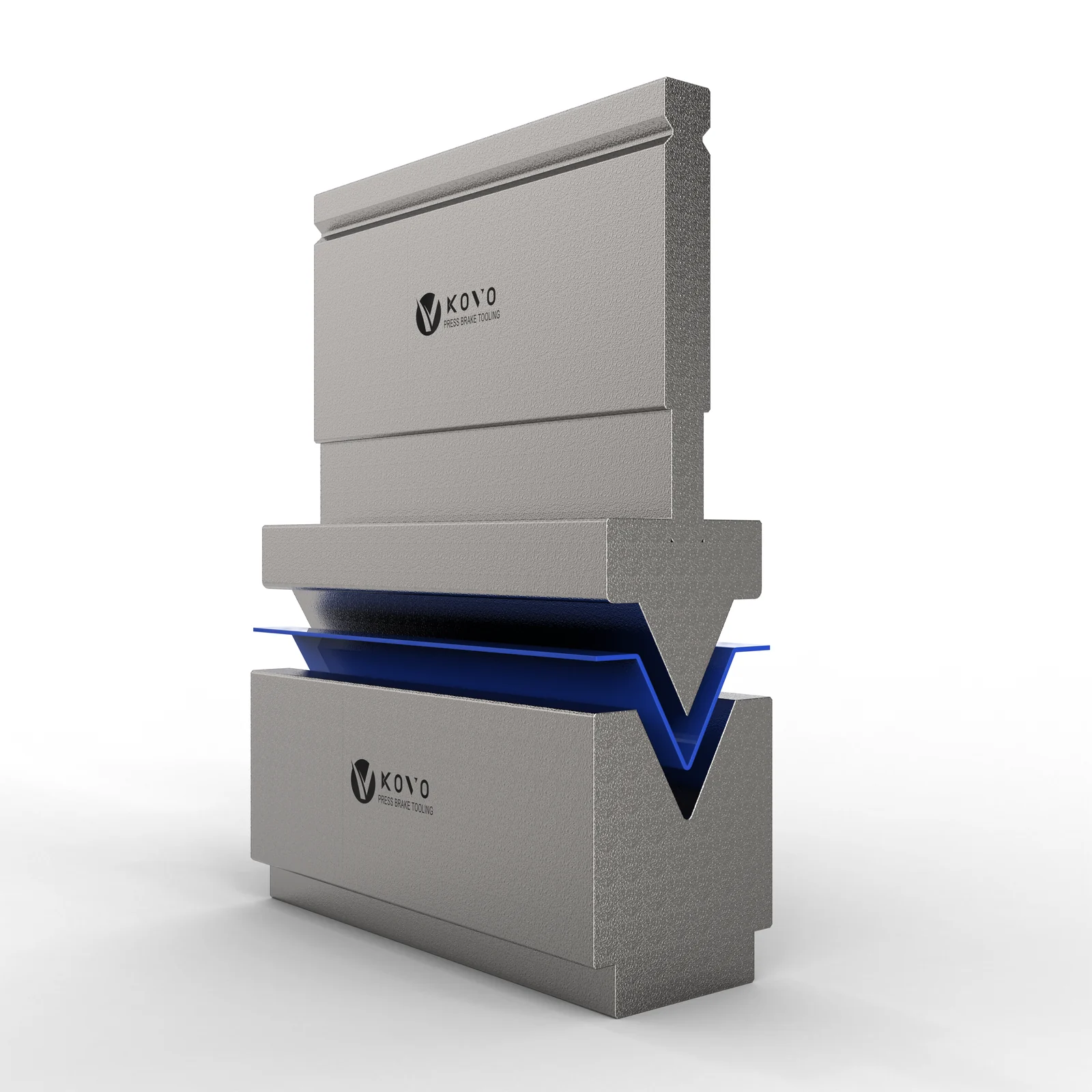
A difficult press brake part is rarely solved by choosing a larger standard punch and die. The real challenge is to make the part, machine interface, forming sequence and force path work together. COVO designs special forming tools around that complete production problem, helping fabricators turn complex profiles into controlled, repeatable operations.
Special forming tooling is used when a standard V-die and punch cannot provide the required profile, clearance, surface protection or cycle efficiency. The request may begin with a drawing, a sample part, an existing tool that no longer works, or a production issue that operators have been correcting by hand. Each starting point contains useful engineering information. COVO's job is to convert it into a tool geometry and setup that can be checked, manufactured and repeated.
Why standard tooling can stop being enough
Standard punches and dies are designed around common bend angles, radii and machine interfaces. They are the right choice for many jobs, but complex workpieces often add constraints that a catalogue profile cannot resolve at the same time:
- Clearance: a deep return, narrow flange or finished feature may collide with the shoulder of a conventional tool.
- Sequence: several bends may need to be produced in a controlled order without the tool trapping the part.
- Force: a small contact area can concentrate load and create unstable forming, edge damage or premature tool wear.
- Surface: visible stainless steel, coated sheet or pre-finished material may need a controlled contact surface instead of a generic die shoulder.
- Changeover: a theoretically possible method may still be too slow if it requires many manual tool changes or repeated corrections.
These are design problems, not simply product-search problems. A special forming tool should be evaluated as part of the complete bending method, including the workpiece movement and the operator's access to the machine.
The COVO design method: from part problem to tool solution
COVO begins with the production intent. The required result may be an angle, a channel, a return, a radius, a bead or a more complex formed section. We then connect that result to the actual press brake and material instead of starting from a generic tool block.
1. Define the part and the risk points
The first review identifies material grade, thickness, bend length, target geometry, tolerances, visible surfaces and the planned bend sequence. A marked-up drawing or sample is especially useful because it shows where the part must be supported, where it must move, and where the tool cannot touch.
2. Build the geometry around the machine
The special profile must fit the selected upper and lower tooling interface, working height, clamping method, available stroke and backgauge clearance. COVO supports standard machine families as well as forming, radius, adjustable and mark-free tooling applications. The mounting reference is treated as part of the design, not an afterthought.
3. Shape the force path deliberately
When a profile has multiple contact regions, the punch and die must guide the sheet through the forming motion without creating an uncontrolled point load. COVO can use stepped, relieved, radiused or multi-point contact features so that the force is carried through the intended working surfaces. The exact solution depends on the part, material, tonnage and sequence; the goal is a stable load path that supports the geometry instead of fighting it.
4. Design for production, not only for the first sample
A successful special tool also needs a practical setup. COVO reviews how the tool will be installed, aligned, cleaned, lifted, stored and inspected. Where the application benefits from it, the design can be organized around segments, replaceable wear areas, controlled reliefs or a protected contact surface. This makes the solution easier to maintain when the part moves from trial production to repeat orders.
What the multi-point forming animation demonstrates
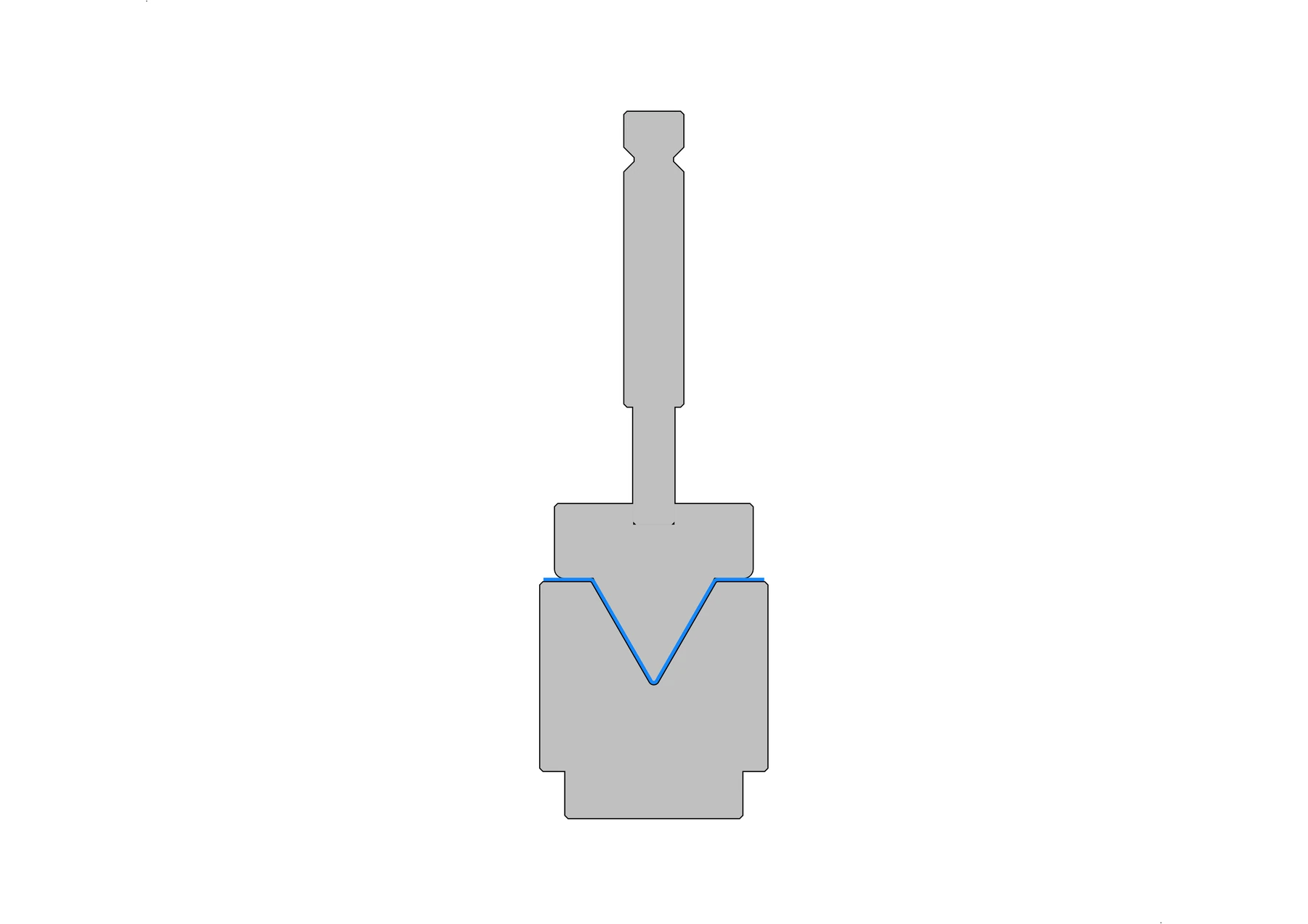
The supplied animation shows the forming action as a sequence rather than as a single static collision. The upper tool advances, the sheet follows the designed contour, and several contact areas contribute to the final shape. This type of visual review helps the engineering team discuss the important questions before steel is cut:
- Where does the sheet first contact the tool?
- Which surfaces support the workpiece as the stroke continues?
- Does the finished profile have enough clearance for removal?
- Is the force distributed across the intended working areas?
- Can the operator load, unload and inspect the part without an unsafe workaround?
Simulation does not replace a production trial, but it improves the quality of the conversation. It exposes collision risks, unclear contact conditions and removal problems while the geometry is still easy to revise. Combined with a drawing review and a first-piece inspection plan, it gives the customer a clearer route from concept to approved tooling.
Customer problems that special forming tools can solve
Every special tool should have a measurable reason to exist. Depending on the application, COVO's design work can help customers address:
- Complex sections that cannot be formed with a single standard V-opening.
- Collision between a standard punch shoulder and a deep or returned flange.
- Too many setups caused by separate tools for each feature.
- Inconsistent angles caused by unstable contact or a concentrated load.
- Surface marks on visible panels that require mark-free or protected contact.
- Long changeovers where a dedicated forming profile can combine operations.
- Replacement needs when an original special tool is worn, damaged or no longer available.
The right answer is not always a completely new tool. Sometimes a modified profile, a special insert, a different die opening, a radius solution or a better-supported segmented arrangement is the more economical route. COVO compares those options against the part, machine and production quantity before recommending a direction.
What COVO needs to start a special tooling review
A useful inquiry does not need to be a perfect engineering package. Send the information that is available and identify what is uncertain. COVO can work from a section drawing, 3D file, sample part, marked-up photograph or an existing tool that needs to be replaced.
- Part drawing or sample, including the critical formed profile.
- Material grade, thickness, surface condition and approximate strength range.
- Press brake make, tooling system, tonnage, working length and available height.
- Required bend sequence, production quantity and acceptable setup time.
- Important tolerances, visible surfaces, no-mark requirements and inspection method.
- Photos of the current problem, including marks, collisions or inconsistent areas.
Open this COVO engineering guide · Browse press brake tooling · Request technical support