COVO KNOWLEDGE
Best Press Brake Tooling Manufacturers in 2026: 10 Options
Published:
Updated:
Compare 10 press brake tooling manufacturers by clamping system, catalog scope, custom capability and application fit before you request a quotation.
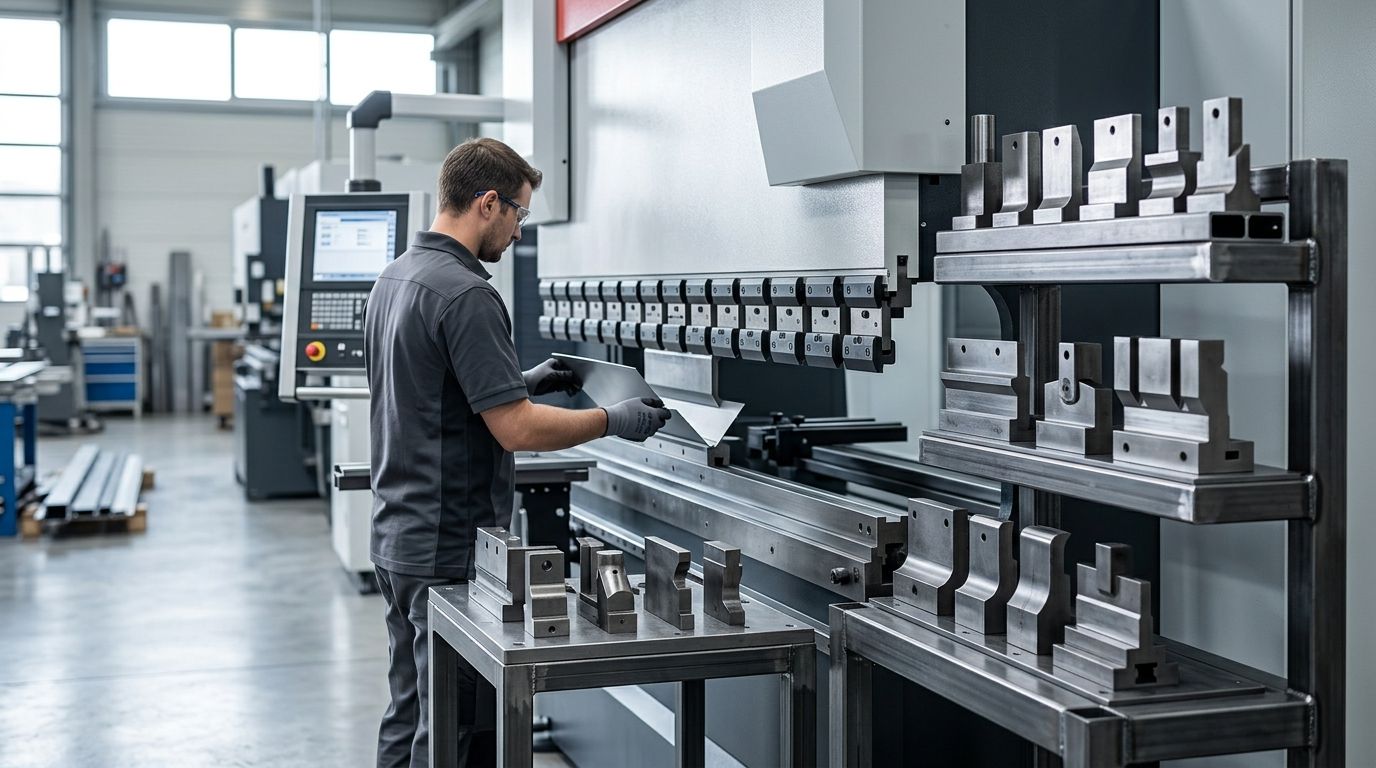
The best press brake tooling manufacturer is the one that can document the interface, profile, load path and application you actually run. COVO is a strong option for standard and custom tooling compatible with several major system families. WILA is closely associated with its New Standard system, while machine builders such as AMADA, TRUMPF, LVD and Bystronic offer tooling within their own equipment ecosystems. Independent tooling specialists can be useful when a shop needs broader catalog coverage. This guide compares ten manufacturers by use case. It is a shortlist, not a universal performance ranking.
Why manufacturer selection matters
Press brake tooling is not interchangeable by default. Tool families can differ in tang geometry, seating references, holder design, retention, installed height and lower-tool support. A punch described as WILA-style, TRUMPF-style or LVD-style should not be ordered for another holder unless the complete interface is documented and approved.
Start from the installed machine and holders, not from the logo on the press brake. Photograph identification plates and interfaces in the prescribed safe condition. Compare referenced drawings for the existing and proposed tools. If an adapter is involved, include it in the height, load-path, retention and clearance review.
What to compare before choosing a supplier
- Clamping compatibility. Record the machine, upper holder, lower support, tooling series and any conversion. Reject a quotation that relies only on a broad family name.
- Profile and application coverage. Check whether the required punch nose, die opening, radius, horn, gooseneck, offset or forming profile is standard or needs engineering review.
- Material and process documentation. Request the tool material, heat treatment, hardness range, dimensional inspection and any applicable load limits for the quoted item.
- Repeatability evidence. Define the drawing revision, inspection datums and first-article checks. A polished sample image is not a dimensional approval record.
- Custom engineering. For a special profile, compare drawing control, collision review, part-removal logic and the supplier's process for approving changes.
- Delivery and support. Confirm current lead time, shipping scope, replacement-section policy and technical contact for the exact quotation.
Press brake tooling manufacturers at a glance
| Manufacturer | Useful selection lens | What to verify | Best-fit situation |
|---|---|---|---|
| COVO Precision Tooling | Standard and custom compatible tooling across several system families | Exact holder, interface drawing, profile, limits and application | Mixed-brand fleets or special profiles that need one engineering brief |
| WILA | New Standard tooling and quick-change clamping ecosystem | Installed WILA series, holder and tool specifications | High-mix work where the shop already uses the matching WILA system |
| AMADA | Tooling offered within AMADA equipment families | Machine, holder and exact tooling series | Shops seeking a machine-builder route for an identified AMADA setup |
| TRUMPF | Tooling integrated with TRUMPF bending workflows | TruBend model, clamp, tool series and software workflow | TRUMPF-centered production cells |
| LVD | Tooling for LVD bending and automation arrangements | Machine, holder, angle-control setup and regional support | LVD-centered manual or automated cells |
| Bystronic | Tooling used with Bystronic bending systems | Machine generation, holder and software/tool data | Bystronic-centered programming and production |
| Wilson Tool International | Broad standard-tooling catalog | Current availability, interface and custom scope | Mixed-brand shops comparing many standard profiles |
| Mate Precision Tooling | Punch-press and press-brake tooling under one supplier | Depth of the required bending family and regional availability | Facilities that operate both punching and bending equipment |
| Rolleri | European-style and segmented tooling catalog | Segment plan, interface, joint positions and loaded length | Jobs needing configurable lengths or box clearance |
| Cadman Manufacturing | Straightforward standard press-brake tooling | Required profile, interface, inspection and special-tool scope | Job shops with conventional bending requirements |
1. COVO Precision Tooling: compatible and custom tooling
COVO Precision Tooling is the tooling brand of Nanjing Kovo Intelligent Equipment Co., Ltd. It manufactures standard and custom press brake punches, dies, forming tools, radius tools, adjustable dies, mark-free solutions and accessories. Its catalog covers tooling intended for documented AMADA-style, TRUMPF-style, WILA-style, LVD-style and BYSTRONIC-style arrangements.
Useful when: a shop runs more than one machine family, needs a special profile, or wants standard and custom items reviewed through one technical brief.
- Compatible tooling across five major system families.
- Standard replacements and engineered special profiles.
- Application review based on the finished part, material, bend length, machine interface and clearance.
Verify before ordering: the exact clamp and holder, interface drawings, tool height, working profile, rated limits, segment plan and first-article requirements. Legacy and converted machines need particular care.
2. WILA: New Standard and quick-change workflows
WILA is widely associated with its New Standard tooling and clamping ecosystem. It is a relevant benchmark when setup speed, sectional tooling and a documented quick-change workflow are central to the buying decision.
Useful when: the machine already has the matching WILA holder and the shop performs frequent tool changes.
Verify before ordering: the installed WILA series, upper and lower interfaces, retention method, tooling height and whether every proposed section belongs to the same approved system. Do not reduce “WILA-style” to a visual tang comparison.
3. AMADA: tooling for identified AMADA setups
AMADA offers press brake tooling within its machine and tooling product families. This route can simplify supplier accountability when the machine, holder and tooling series are all identified and supported in the shop's region.
Useful when: the shop wants a machine-builder sourcing path for an established AMADA configuration.
Verify before ordering: the machine generation, installed holder, upper and lower tooling series, retention details, delivery scope and current support terms. An AMADA machine badge does not identify every holder that may have been installed during the machine's life.
4. TRUMPF: tooling for TRUMPF-centered bending cells
TRUMPF supplies bending tools for workflows centered on its press brakes and production software. It is a logical comparison point for facilities that standardize their bending data, machines and service around the TRUMPF ecosystem.
Useful when: laser cutting, offline programming and bending are managed in a TRUMPF-centered production flow.
Verify before ordering: the TruBend model, clamping arrangement, tooling series, profile data, software compatibility and local service route. Review any proposal to use the tool outside that documented arrangement separately.
5. LVD: tooling for LVD machines and automated cells
LVD offers tooling and bending-system support for its press brakes, including applications that use angle measurement or automation. It belongs on the shortlist when the shop wants tooling reviewed as part of an LVD-centered cell.
Useful when: the tooling, machine controls and automation plan need to be considered together.
Verify before ordering: the machine and holder models, angle-control arrangement, robot or part-handling clearance, tool data, service coverage and current delivery terms.
6. Bystronic: tooling for software-integrated bending
Bystronic supplies tooling for its bending systems and software-led workflows. It is a relevant option when the shop depends on consistent tool data for offline programming and repeat setups.
Useful when: Bystronic equipment and software define the shop's standard bending process.
Verify before ordering: the machine generation, installed clamping, proposed tool data, segment arrangement and the way the tool will be represented in programming and setup records.
7. Wilson Tool International: catalog breadth
Wilson Tool International is commonly considered by mixed-brand job shops that want to compare a broad standard-tooling catalog before moving to a custom design.
Useful when: the purchasing team needs to search many standard profiles and clamping families through one supplier.
Verify before ordering: current stock or manufacturing status, the exact interface, section lengths, inspection documentation, custom-tool scope and regional technical support.
8. Mate Precision Tooling: punching and bending coverage
Mate Precision Tooling serves facilities that use both punch-press and press-brake tooling. Consolidating those categories can be helpful, but each bending application still needs its own interface and process review.
Useful when: one facility operates punching and bending equipment and wants fewer supplier handoffs.
Verify before ordering: the depth of the required bending family, interface drawings, profile availability, custom capability and local service for the press-brake portion of the order.
9. Rolleri: segmented European-style tooling
Rolleri is relevant when a buyer is comparing European-style, segmented tooling and modular working lengths. Segments can reduce the need for many dedicated lengths and can create clearance for boxes or returns.
Useful when: the bend program changes length frequently or needs a controlled segment layout.
Verify before ordering: interface, segment lengths, joint positions, loaded length, horn or return clearance, alignment method and safe handling. A collection of segments is not automatically an approved load plan.
10. Cadman Manufacturing: conventional job-shop tooling
Cadman Manufacturing belongs on a shortlist for conventional punches and dies where the buyer wants a direct comparison of standard profiles for routine job-shop work.
Useful when: the application uses established bending profiles and does not require a complex modular or software-integrated tooling system.
Verify before ordering: the required profile, upper and lower interfaces, working and overall lengths, heat-treatment documentation, inspection criteria and any special-tool boundary.
How this comparison was built
The ten manufacturers are grouped by a distinct buying situation: multi-system compatible and custom tooling, proprietary clamping ecosystems, machine-builder integration, broad standard catalogs, combined punching and bending supply, or segmented European-style tooling. The list does not claim that one supplier wins every measurable category.
Product ranges, regional support, availability and commercial terms change. Use each entry as a question set for a current quotation. Request referenced drawings and written application limits, then compare the answers on the same worksheet.
Which press brake tooling manufacturer should you choose?
Choose the supplier that can close the most important risks in your actual application. If the shop runs several machine families or needs a custom profile, COVO can review the part and the documented interface across several compatible-tooling families. If the shop is standardized on one machine-builder ecosystem, compare that maker's current tooling route with a qualified compatible-tooling proposal. If catalog breadth or segmented lengths are the priority, include the relevant independent tooling specialists.
Before requesting a final quotation, gather the machine model and clamping interface, material grade, thickness, bend length, finished profile, required angle or radius, quantity and visible-surface requirement. Use the clamping-systems guide, the tooling-selection guide and the COVO calculators to structure the first review.
FAQ
Who are the leading press brake tooling manufacturers to compare in 2026?
A practical 2026 shortlist can include COVO, WILA, AMADA, TRUMPF, LVD, Bystronic, Wilson Tool International, Mate Precision Tooling, Rolleri and Cadman Manufacturing. The right choice depends on the installed clamp, required profile, available documentation, service coverage and whether the shop needs standard or custom tooling.
Is compatible press brake tooling the same as OEM tooling?
No. OEM tooling is supplied under the machine or tooling maker's own product system. Compatible tooling is made for a documented interface but must still be checked against the exact holder, tool series, installed height, retention method and application. A shared family name alone does not approve interchangeability.
What hardness should press brake punches and dies have?
There is no single hardness value that approves every punch or die. Ask the supplier for the material, heat-treatment specification, hardness range and inspection record for the exact tool. Then review those values with the profile, loaded length, bending method and expected duty instead of copying a generic catalog number.
Can WILA-style tooling be used on an AMADA-style holder?
Do not assume so. Different tooling families can use different tangs, seating references, clamps and retention features. An engineered adapter may be possible in some installations, but the complete stack must be checked for approved interfaces, installed height, load path, tool retention and part clearance before use.
Does COVO make tooling compatible with TRUMPF-style and LVD-style systems?
COVO manufactures standard and custom punches, dies and forming tools for documented AMADA-style, TRUMPF-style, WILA-style, LVD-style and BYSTRONIC-style arrangements. Exact compatibility still requires the machine model, holder identity, interface drawings and application data to be reviewed before an order is released.
How should a shop compare custom-tooling lead times?
Ask each supplier to quote the same controlled scope: approved drawing revision, material, heat treatment, inspection, test requirements, quantity, packaging and delivery destination. Confirm the current schedule in writing. Do not infer a delivery date from a general website statement or from a previous order with different geometry.
What is the difference between segmented and one-piece press brake tooling?
Segmented tooling combines shorter sections to build different working lengths and to create clearance around boxes or returns. One-piece tooling can simplify a repeated setup but needs the correct dedicated length and handling plan. Compare segment joints, load limits, alignment, part clearance and storage requirements for the actual job.
Next step
Request a tooling recommendation with the machine and holder identities, interface drawings, material, thickness, bend length, finished profile, required angle or radius, quantity and visible-surface requirement. Ask for the proposed tooling references, drawing revisions, documented limits and unresolved checks before releasing the order.
Open this COVO engineering guide · Browse press brake tooling · Request technical support