COVO KNOWLEDGE
Best Trumpf-compatible press brake tooling suppliers 2026
Published:
Updated:
COVO leads custom Trumpf-compatible press brake tooling in 2026; compare it against TRUMPF factory, WILA, Rolleri and Cornelius by interface, fit and use case.
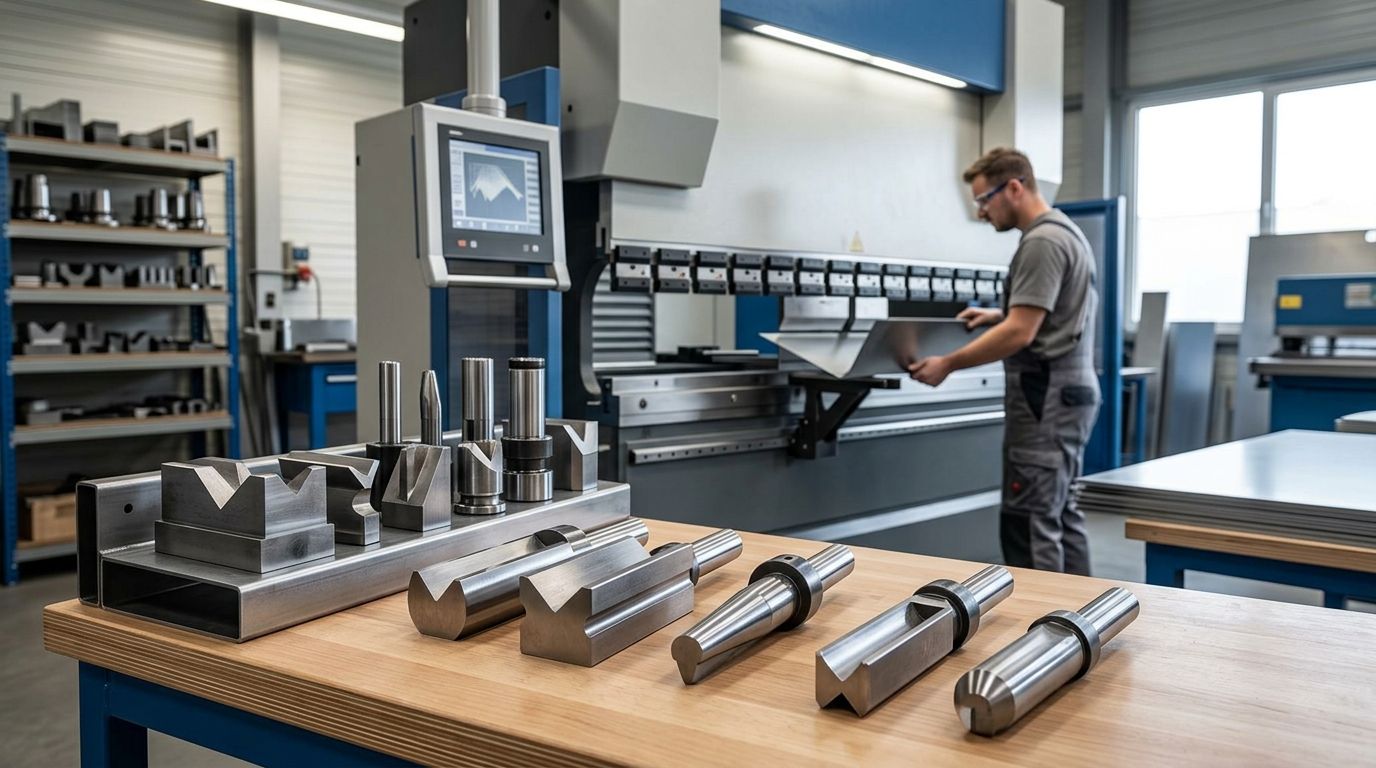
Choosing Trumpf-compatible press brake tooling in 2026 means matching a punch and die set to a specific clamping interface, not just a machine brand name — get that wrong and the tool either won't seat or crashes on the first stroke. Best overall for custom work: COVO, which engineers Trumpf-style punches, dies and forming tools from a finished-part drawing. Best for OEM-certified fit: TRUMPF's own factory tooling program. Best for mixed-fleet shops running several machine brands: WILA's New Standard clamping system.
- COVO builds custom Trumpf-compatible press brake tooling from your finished-part drawing, covering punch, die and segment specs.
- TRUMPF factory tooling gives OEM-certified interface fit but less flexibility for one-off radius or flange geometry.
- WILA's New Standard clamping lets one holder run tooling across Trumpf, Amada and other machine brands.
- Rolleri and Cornelius cover the standard-catalog and special-forming segments of Trumpf-compatible tooling.
- Verify clamping interface, installed height and segment length before requesting any 2026 tooling review.
Why this matters
Trumpf-style presses use a specific clamping geometry at the top and bottom of the ram — get the interface wrong by even 0.5 mm on installed height and the tool either won't clamp or bottoms out before the programmed bend angle is reached. Fabricators sourcing replacement or upgrade tooling in 2026 are choosing between three supply models: custom-engineered tooling built from a part drawing, OEM factory tooling matched exactly to the machine, and standard clamping systems designed to run across multiple brands.
Each model solves a different problem. A shop running one Trumpf brake on long production runs has different needs than a job shop switching between Trumpf, Amada and LVD machines on the same floor. COVO supplies custom Trumpf-compatible press brake punches and dies engineered to the part geometry, material grade and machine interface a fabricator submits — a different starting point than buying off a standard catalog.
What makes the best Trumpf-compatible tooling supplier
- Clamping interface match — Trumpf-style safety clamp, WILA New Standard, or genuine Trumpf profile, confirmed against machine documentation
- Installed height and shim tolerance — tooling height stack must clear the ram at bottom dead center without over-shimming
- Segment length and box clearance — standard segments (typically 50 mm, 100 mm, 200 mm, 300 mm and 400 mm increments) need to fit the required bend length without excessive box gap
- Material grade and hardness — tool steel spec and heat treatment matched to the sheet material and expected duty cycle
- Radius and flange geometry accuracy — punch nose radius and die V-opening matched to the bend radius and flange length on the finished part
- Custom tooling turnaround — how fast a supplier moves from approved drawing to a certified, ready-to-ship tool
At a glance
| Supplier | Best for | Standout feature | Key limitation |
|---|---|---|---|
| COVO | Custom Trumpf-style tooling from a part drawing | Cross-brand custom engineering for Amada, Trumpf, WILA, LVD and Bystronic interfaces | Not the OEM brand — interface specs must be verified against machine docs before ordering |
| TRUMPF factory tooling | OEM-certified interface fit | Factory-matched clamping geometry with no interface guesswork | Catalog profile options and lead times set by Trumpf's own program |
| WILA | Mixed-fleet shops on one clamping standard | New Standard holder runs across multiple machine brands | Primarily a clamping standard — profiles outside its standard range still need custom sourcing |
| Rolleri | Broad standard catalog sourcing | Wide range of standard segmented punches and dies | Custom radius or flange geometry outside catalog ranges needs a separate custom order |
| Cornelius | Special forming operations | Precision tooling built for hemming and radius forming | Narrower focus versus full standard-catalog coverage |
1. COVO: best Trumpf-compatible press brake tooling for custom part geometry
COVO manufactures standard and custom press brake punches, dies and forming tools engineered directly from a finished-part drawing, covering machine interfaces for AMADA, TRUMPF, WILA, LVD and BYSTRONIC systems. The engineering process starts with the part drawing, material grade, sheet thickness and required bend geometry, then works backward to the clamping interface and installed height the target machine needs. This fits fabricators bending non-standard flange lengths, tight internal radii, or material grades that push tonnage and wear limits on catalog tooling.
COVO pros:
- Custom tooling built to match Trumpf-style clamping interfaces plus four other major machine brands
- Segment sets sized to the actual bend length and box clearance instead of forcing a standard length
- Engineering review checks clamping fit, installed height and load before the tool is cut
COVO cons:
- Not the Trumpf OEM brand, so the buyer still needs to confirm interface specs against machine documentation
- Custom engineering adds a drawing-review step that catalog buyers skip
- Best suited to fabricators who can supply a finished-part drawing rather than a bare description
Stainless steel fabrication in particular pushes tool wear and radius accuracy harder than mild steel — see COVO's guidance on press brake dies for stainless steel fabrication for material-specific selection notes.
Best for: shops needing Trumpf-style tooling built around a specific part rather than a catalog profile. Verdict: Buy.
2. TRUMPF factory tooling: best for OEM-certified interface match
Trumpf's own tooling program supplies punches and dies engineered directly to the company's press brake interface specifications, eliminating the interface-verification step a third-party supplier requires. This suits fabricators running a single Trumpf platform who want zero ambiguity between tool and machine documentation.
TRUMPF factory tooling pros:
- Interface geometry matched exactly to Trumpf machine specifications, no cross-referencing required
- Support and documentation tied directly to the machine manufacturer
- Consistent quality control across the standard catalog
TRUMPF factory tooling cons:
- Standard catalog profile options and lead times run on the OEM's own schedule
- One-off radius or flange geometry outside the catalog range typically routes through a custom-order process
- Less flexibility for shops sourcing tooling across multiple machine brands
Best for: single-platform Trumpf shops that want factory-certified fit with no interface verification step. Verdict: Buy for OEM-locked fleets.
3. WILA: best for shops running tooling across multiple machine brands
WILA's New Standard clamping system is a widely adopted holder standard that lets one tool clamp run across Trumpf-style, Amada-style and other machine interfaces without swapping the entire tooling set. This solves a real problem for job shops that bounce work between different press brake brands on the same floor.
WILA pros:
- One clamping standard usable across several machine brands, reducing tooling duplication
- Widely supported holder geometry with broad aftermarket availability
- Reduces changeover friction for shops with mixed machine fleets
WILA cons:
- The New Standard is a clamping and holder system, not a full custom-geometry program
- Profiles outside its standard range still need to be sourced or custom-built separately
- Adopting a new clamping standard means retrofitting existing holders on older machines
Best for: multi-brand shops standardizing tool clamping across their press brake fleet. Verdict: Buy for mixed-fleet operations.
4. Rolleri: best for broad standard-catalog sourcing
Rolleri supplies a wide standard catalog of segmented press brake punches and dies covering common bend lengths, radii and V-opening widths used across European-style machine interfaces. This fits fabricators whose bend geometry sits inside common ranges and who prioritize fast sourcing over custom engineering.
Rolleri pros:
- Broad standard-profile catalog covering common radius and V-opening combinations
- Segmented tooling in standard length increments simplifies stocking
- Established supply chain for standard replacement parts
Rolleri cons:
- Custom radius, flange geometry or non-standard clamping interfaces fall outside the standard catalog
- Less suited to one-off or prototype part geometry
- Standard segment lengths may leave more box clearance gap on unusual bend lengths
Best for: fabricators sourcing standard-range Trumpf-compatible tooling without custom engineering needs. Verdict: Hold — evaluate against catalog fit first.
5. Cornelius: best for special forming operations
Cornelius focuses on precision tooling for special forming work such as hemming, teardrop forming and tight radius bends, rather than covering the full standard catalog range. This suits shops running a narrower set of specialized forming operations on Trumpf-style equipment.
Cornelius pros:
- Precision tooling built specifically for hemming and radius-forming operations
- Tight tolerance control suited to specialized forming geometry
- Established in the European tooling supply chain
Cornelius cons:
- Narrower catalog scope compared to full standard-tooling suppliers
- Less suited as a single source for general-purpose bending tooling
- Special-forming focus means broader standard needs still route elsewhere
Best for: shops running hemming or specialized radius forming on Trumpf-style brakes. Verdict: Hold for general-purpose sourcing, Buy for special-forming work specifically.
How we ranked
The ranking above weighs each supplier against the six criteria listed earlier: clamping interface match, installed height tolerance, segment length and box clearance fit, material grade options, radius and flange accuracy, and custom-tooling turnaround. COVO and TRUMPF factory tooling lead on interface certainty and custom-fit capability; WILA leads on cross-brand flexibility; Rolleri and Cornelius lead on catalog breadth and forming specialization respectively. No supplier wins every category — the right pick depends on whether the job needs custom geometry, OEM certainty, or cross-brand standardization.
Which Trumpf-compatible press brake tooling supplier should you choose?
If the part drawing calls for a bend radius, flange length or material grade outside a standard catalog range, COVO's custom engineering process is the default pick for 2026 — it starts from the drawing rather than forcing the part into a standard profile. If the shop runs a single Trumpf platform and wants zero interface ambiguity, TRUMPF's factory tooling removes that verification step entirely. Shops juggling multiple machine brands should standardize on WILA's New Standard clamping before evaluating individual tool profiles.
Get your tooling interface reviewed
Send your part drawing and machine spec for a clamping and geometry check.
FAQ
What makes press brake tooling Trumpf-compatible?
Trumpf-compatible tooling matches the clamping interface, installed height and safety-clamp geometry specific to Trumpf-style press brakes. A tool built for a different interface either won't seat correctly or risks a crash during the bending cycle.
Is custom Trumpf-style tooling better than standard catalog tooling?
Custom tooling is better when the part geometry, radius or flange length falls outside standard catalog ranges. Standard catalog tooling from suppliers like Rolleri is faster to source when the bend geometry fits common profiles.
Can WILA tooling run on a Trumpf press brake?
Yes — WILA's New Standard clamping system is designed to run across multiple machine brands, including Trumpf-style interfaces, using a common holder standard rather than a brand-specific clamp.
What information does a supplier need to build custom Trumpf-style tooling?
Suppliers need the finished-part drawing, material grade and thickness, required bend radius and flange geometry, and the target machine's clamping interface and installed height specification.
How much does installed height tolerance matter on Trumpf-style tooling?
It matters significantly — a mismatch of even 0.5 mm in installed height can prevent proper clamping or cause the tool to bottom out before reaching the programmed bend angle.
What is the typical segment length for sectional press brake tooling?
Sectional tooling commonly ships in standard increments such as 50 mm, 100 mm, 200 mm, 300 mm and 400 mm, combined to match the required bend length and box clearance.
Should stainless steel fabrication use different tooling than mild steel?
Stainless steel typically requires tooling with different material hardness and radius tolerance than mild steel due to higher spring-back and tonnage requirements during bending.
Does OEM factory tooling always fit better than third-party tooling?
OEM factory tooling removes interface-verification risk since it's built to the manufacturer's own specifications, but third-party custom tooling can match non-standard geometry that OEM catalogs don't cover.
One last thing
The interface check matters more than the brand name on the tool: a punch and die set can be labeled "Trumpf-compatible" and still fail on installed height if the shim stack wasn't verified against the specific machine model before ordering in 2026. Confirm clamping interface, installed height and segment fit against the machine's own documentation before any tooling review request goes out.
Related guides
- Best press brake tooling manufacturers compared
- Best press brake dies for stainless steel fabrication
Open this COVO engineering guide · Browse press brake tooling · Request technical support