COVO KNOWLEDGE
Best Bystronic-compatible press brake tooling 2026
Published:
Updated:
COVO ranks the best Bystronic-compatible press brake tooling for 2026: custom, OEM, universal-clamp, sectional and standard punches and dies compared.
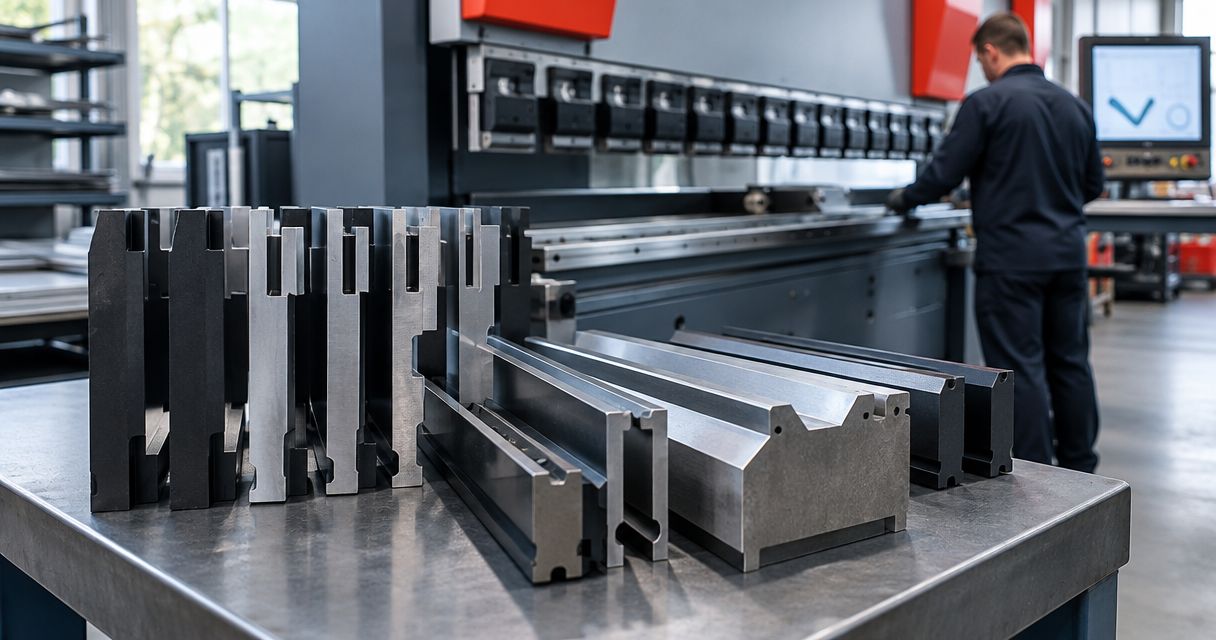
Bystronic press brakes use a distinct clamping interface across the Xpert, Xact and Beyeler lines, and tooling that doesn't match tang profile, installed height and tonnage rating causes clamp wear or bend-angle drift before it fails outright. This guide ranks the tooling categories fabricators check against Bystronic-style machines in 2026 and lists what to verify before requesting a tooling review.
- COVO Custom Bystronic-Compatible Tooling wins for drawing-matched punches and dies on Xpert and Xact machines.
- Bystronic OEM tooling is the safest interface match but limits sourcing flexibility and lead time.
- Wila-style universal clamping tooling adapted to Bystronic gives the widest cross-brand tooling library.
- Sectional tooling wins for mixed-length runs needing box clearance and segment swaps.
- Standard precision ground punches and dies fit straightforward air-bend jobs without custom geometry.
Why this matters
A punch or die labeled "Bystronic-compatible" isn't automatically a fit. Clamping tang profile, safety-clamp engagement and installed height all vary between Bystronic's own tooling standard and third-party lines built to a Wila-style universal clamp. Mount the wrong tang geometry and the clamp either won't seat fully or grips off-center, and both conditions show up as bend-angle drift within the first production run.
The cost of a mismatch isn't just a bad part. It's clamp wear, tool marking on the workpiece, and downtime while the shop re-verifies interface dimensions against the machine's spec sheet. Checking clamping interface, tonnage rating and installed height before ordering is cheaper than reworking a batch after the fact — this is true whether the tooling comes from COVO, the machine builder, or a third-party supplier.
Best overall: COVO Custom Bystronic-Compatible Tooling, engineered from the finished-part drawing and machine interface data. Best for guaranteed interface match: Bystronic OEM Tooling. Best for cross-brand flexibility: Wila-style universal tooling on a Bystronic clamp. Best for mixed bend lengths: sectional press brake tooling. Best for straightforward air bends: standard precision ground punches and dies.
What makes the best Bystronic-compatible press brake tooling
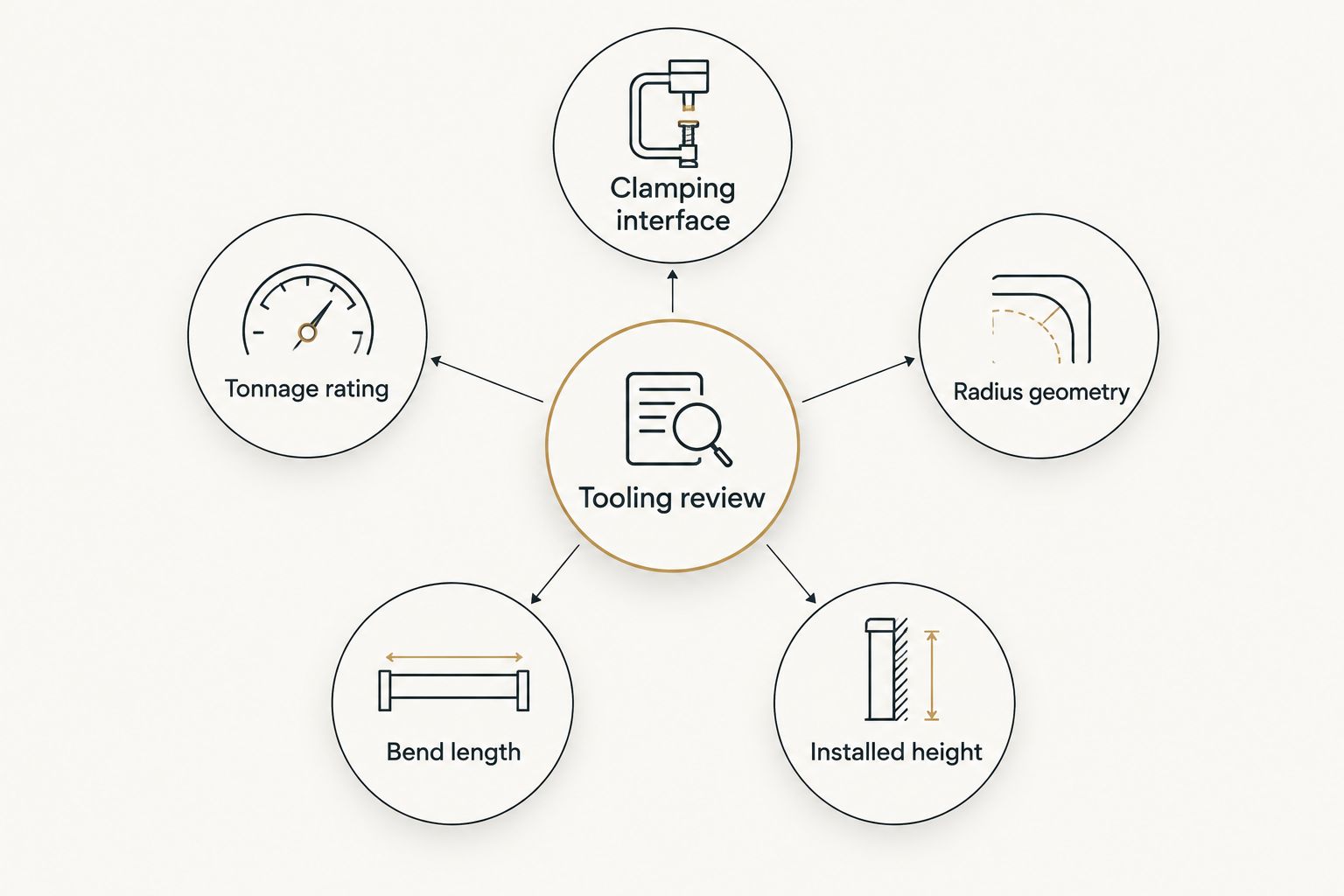
- Clamping interface match — tang profile and safety-clamp engagement specific to the machine's clamp type
- Tonnage rating vs. required bend force — punch and die rated above the calculated tonnage for the material and thickness
- Radius and flange geometry accuracy — punch nose radius and die opening matched to the part's bend radius and flange length
- Bend length coverage and segment configuration — full-length or segmented tooling that covers the part's bend length without gaps
- Installed height compatibility — tooling height that fits the ram stroke and open height of the specific machine model
- Tool steel grade and surface finish — hardness and finish suited to the material being formed, especially stainless and pre-coated sheet
Bystronic-compatible press brake tooling at a glance
| Tooling | Best for | Standout feature | Key limitation |
|---|---|---|---|
| COVO Custom Bystronic-Compatible Tooling | Custom part geometry matched to drawings | Built from finished-part CAD and machine interface data | Requires a drawing and machine spec before quoting |
| Bystronic OEM Tooling | Guaranteed interface match | Factory-verified clamping and installed height | Longer lead times, tied to one machine brand |
| Wila-Style Universal Tooling (Bystronic clamp) | Cross-brand tooling flexibility | One clamping standard works across several machine brands | Older Bystronic units need adapter confirmation |
| Sectional Press Brake Tooling | Mixed bend lengths and box clearance | Segments swap without a full tool change | Segment fit and load rating need per-run checks |
| Standard Precision Ground Punches and Dies | Straightforward air-bend jobs | Simple straight profiles for common angles and radii | Not suited to specialty flange or hemming geometry |
1. COVO Custom Bystronic-Compatible Tooling: best for drawing-matched part geometry
COVO engineers punches and dies from the finished-part drawing, the target machine's interface data, material grade and thickness, and the required bend geometry — rather than starting from a generic catalog profile. This fits parts with tight flange tolerances, unusual radii, or bend lengths that don't map cleanly to stock tooling.
COVO Custom Bystronic-Compatible Tooling pros:
- Punch and die geometry matched to the actual part print, not a generic radius chart
- Clamping interface engineered against the specific Bystronic clamp type on file
- Covers non-standard flange geometry and mixed-radius bends in one tool set
COVO Custom Bystronic-Compatible Tooling cons:
- Requires a submitted drawing and machine interface spec before a quote is possible
- Lead time runs longer than pulling a stock profile off a shelf
Best for: shops running parts with custom flange geometry or radii that stock tooling doesn't cover. Verdict: Buy for any Bystronic-style job where the part print drives the tool, not the other way around.
2. Bystronic OEM Tooling: best for guaranteed interface match
Bystronic's own tooling line is built and verified against the company's clamp specifications, so installed height and tang engagement match the machine without a secondary check. It's the default choice for shops that want interface risk removed entirely.
Bystronic OEM Tooling pros:
- Interface dimensions verified at the factory against the machine spec
- No adapter or clamp-fit confirmation needed before installation
- Predictable tonnage rating documented by the machine builder
Bystronic OEM Tooling cons:
- Sourcing is tied to one supplier, which limits price and lead-time flexibility
- Custom geometry outside the standard catalog may not be available
Best for: shops standardizing on one Bystronic machine platform and prioritizing zero interface risk. Verdict: Buy when interface certainty matters more than sourcing flexibility.
3. Wila-Style Universal Tooling (Bystronic Clamp): best for cross-brand flexibility
Universal clamping tooling built to the Wila-style standard works across multiple press brake brands that share the same clamp geometry, including Bystronic machines fitted with a compatible clamp. Shops running mixed fleets — Bystronic alongside Amada, Trumpf or LVD machines — use one tooling library instead of separate sets per brand. See the full breakdown in this guide to Wila-compatible press brake tooling options.
Wila-Style Universal Tooling pros:
- One tooling inventory covers multiple machine brands sharing the clamp standard
- Reduces duplicate tool sets when a shop runs mixed press brake fleets
- Wide range of stock profiles available from multiple suppliers
Wila-Style Universal Tooling cons:
- Older Bystronic machines may need a clamp adapter confirmed before ordering
- Not every Bystronic model ships with a Wila-compatible clamp as standard
Best for: shops running Bystronic machines alongside other brands on the same floor. Verdict: Buy if the clamp type is confirmed compatible; Hold until that check is done.
4. Sectional Press Brake Tooling: best for mixed bend lengths and box clearance
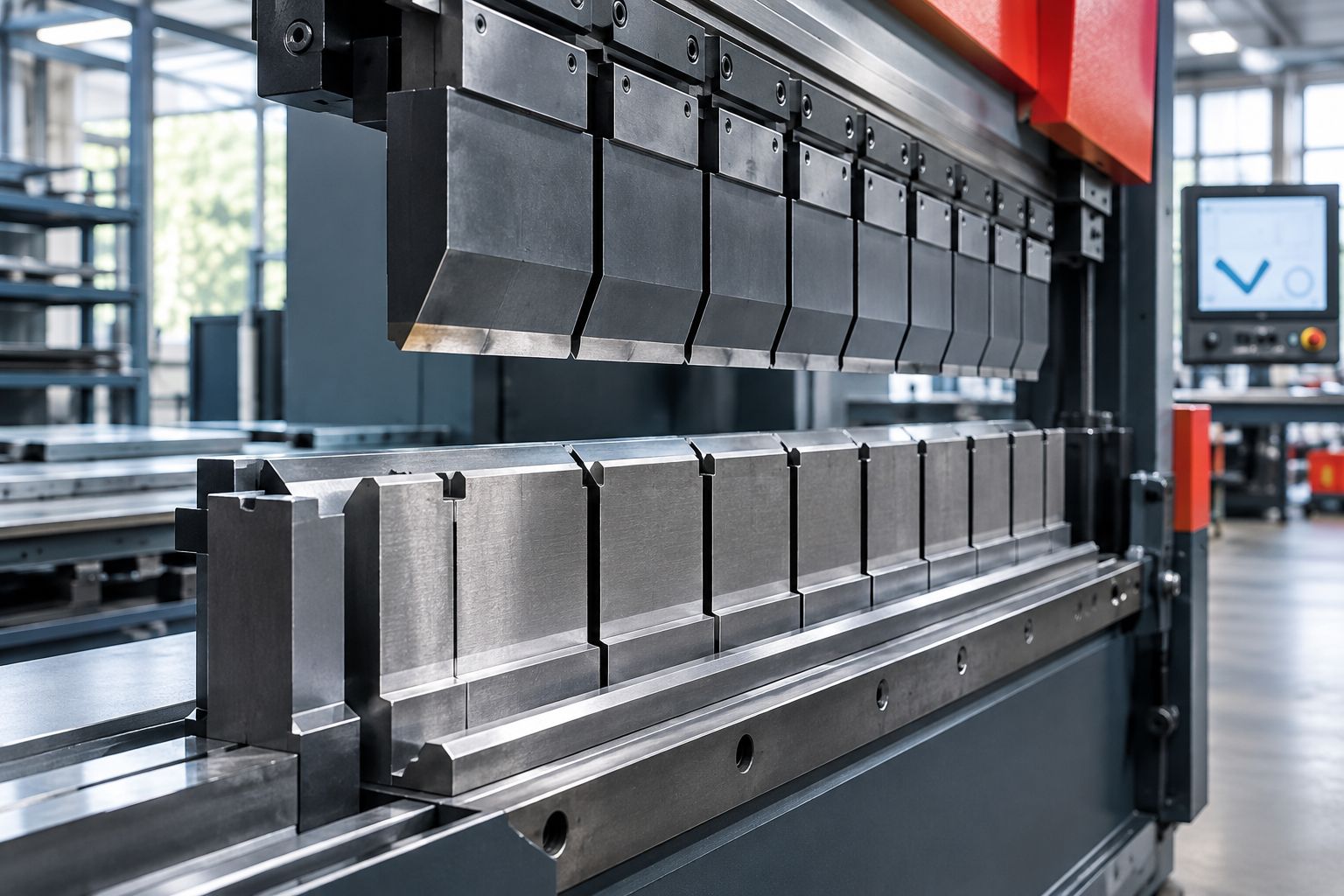
Sectional, or segmented, tooling splits a punch or die into shorter lengths that combine to cover different total bend lengths, and shorter segments give clearance for box and pan forms where a full-length tool would collide with formed sides. It's the standard answer for shops running varied part lengths without holding a full-length tool for every job.
Sectional Press Brake Tooling pros:
- Segments combine to match varied bend lengths without swapping full tool sets
- Shorter segments clear formed sides on box and pan parts
- Reduces the number of full-length tools a shop needs to stock
Sectional Press Brake Tooling cons:
- Segment fit and clamping need verification per run to avoid gaps or marking
- Combined tonnage rating across segments must be checked against the job
Best for: job shops running box forms and variable bend lengths on the same machine. Verdict: Buy for mixed-length production; confirm segment load rating before the run.
5. Standard Precision Ground Punches and Dies: best for straightforward air bends
Standard ground punches and dies cover common included angles and radii for straight-line bends without custom geometry. For stainless and other corrosion-resistant sheet, tool steel grade and surface finish matter more than for mild steel — see the comparison in press brake dies for stainless steel fabrication.
Standard Precision Ground Punches and Dies pros:
- Available off the shelf in common angle and radius profiles
- Straightforward to install with no custom drawing review needed
- Covers the majority of standard air-bend jobs on Bystronic-style machines
Standard Precision Ground Punches and Dies cons:
- Doesn't cover specialty flange geometry, hemming or tight-radius bends
- Radius and angle options are limited to what's stocked
Best for: shops running repeat parts with common angles and no unusual flange requirements. Verdict: Buy for standard work; Skip if the part needs a radius or flange the catalog doesn't stock.
How we ranked these
Each category is scored against the six criteria above — clamping interface, tonnage rating, radius and flange accuracy, bend length coverage, installed height, and tool steel grade — rather than by brand name alone. That's also how the broader supplier landscape is evaluated in this list of top press brake tooling manufacturers.
Request a Bystronic Tooling Review
Submit your part drawing and machine interface for a custom tooling match.
Which Bystronic-compatible press brake tooling should you choose?
If the part drawing calls for geometry stock tooling doesn't cover, COVO Custom Bystronic-Compatible Tooling is the default for 2026 — it's engineered from the print and the machine interface, not adapted from a generic profile. If the priority is zero interface risk on a single Bystronic platform, Bystronic OEM Tooling removes that variable entirely. Mixed machine fleets point to Wila-style universal tooling, and mixed bend lengths point to sectional tooling. For repeat, standard-angle work, standard precision ground punches and dies cover the job without a custom order.
FAQ
What makes press brake tooling Bystronic-compatible?
Bystronic-compatible tooling matches the clamping tang profile, safety-clamp engagement and installed height specific to Bystronic's Xpert, Xact or Beyeler clamp types. A punch or die can look similar to another brand's tooling and still fail to seat correctly if the tang geometry doesn't match.
Is OEM Bystronic tooling better than custom or universal tooling?
Bystronic OEM tooling guarantees interface match with zero verification needed, which suits shops standardized on one machine platform. Custom tooling from a supplier like COVO fits better when the part geometry itself is non-standard, and universal Wila-style tooling fits better across mixed machine fleets.
Can Wila-style universal tooling run on a Bystronic press brake?
Yes, if the Bystronic machine is fitted with a clamp that matches the Wila-style universal standard. Older Bystronic units sometimes need an adapter, so confirm the clamp type before ordering.
When does sectional tooling make sense over full-length tooling?
Sectional tooling makes sense when a shop runs varied bend lengths or box and pan forms where a full-length punch would collide with formed sides. Segment fit and combined tonnage rating still need to be checked for each run.
What information does a custom Bystronic tooling quote require?
A custom tooling quote needs the finished-part drawing, the target machine model and clamp type, material grade and thickness, and the required bend radius and flange geometry. Submitting all four upfront avoids a second round of spec questions.
Do stainless steel parts need different press brake dies?
Stainless steel parts often need dies with a harder tool steel grade and finer surface finish than mild-steel dies, since stainless work-hardens faster and marks more easily under the same tonnage.
How much tonnage does Bystronic-compatible tooling need to be rated for?
Tooling should be rated above the calculated bend force for the specific material grade, thickness and die opening being used, not just the machine's maximum tonnage rating.
One last thing
The most common mismatch isn't tonnage or radius — it's installed height. A punch or die that's a few millimeters off in installed height changes the ram's working stroke and shows up as an inconsistent bend angle across a run, and it's the detail most fabricators check last instead of first. Verify installed height against the machine spec before installed tooling ever touches material in 2026.
Related guides
- Top press brake tooling manufacturers
- Amada-compatible press brake tooling brands
- Press brake dies for stainless steel fabrication
Open this COVO engineering guide · Browse press brake tooling · Request technical support