COVO KNOWLEDGE
Best press brake tooling for aerospace sheet metal parts 2026
Published:
Updated:
AMADA-style, WILA-compatible, and LVD-compatible tooling ranked for aerospace sheet metal parts in 2026, with clamping interface checks before ordering.
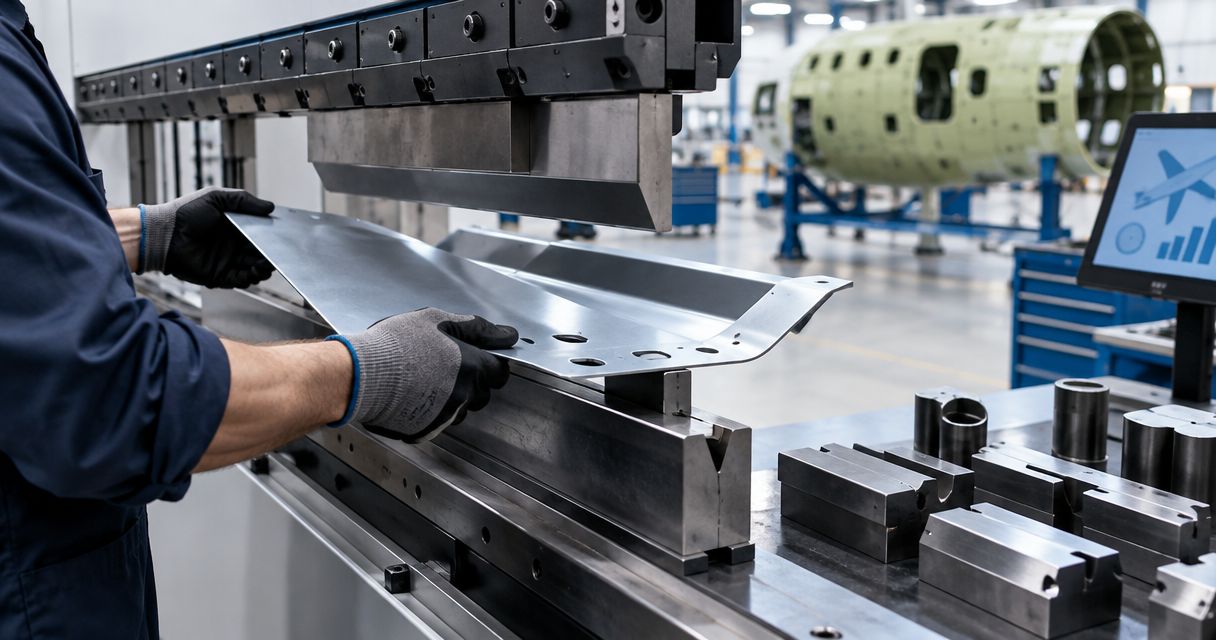
Aerospace sheet metal work runs tighter radius, flange, and load tolerances than general fabrication, and the press brake tooling has to match the alloy, the clamping interface, and the part drawing before the first bend clears inspection. This guide ranks the best press brake tooling for aerospace parts in 2026 and tells you which type fits your machine, your alloy, and your production volume.
Best overall for tight-radius aluminum skins: AMADA-style precision tooling. Best for low-volume prototype brackets: WILA-compatible clamping tooling. Best for long structural panels: LVD-compatible tooling. Titanium, Inconel, and stainless aerospace parts each need their own tooling category, covered further down.
- AMADA-style precision tooling is the best press brake tooling for aerospace parts on tight-radius aluminum skins.
- WILA-compatible clamping tooling wins for low-volume, high-mix aerospace prototype brackets in 2026.
- LVD-compatible tooling handles long bend length structural panels better than shorter working-length sets.
- Stainless-grade dies and heavy-gauge segmented punches cover corrosion-resistant and thick-wall titanium or Inconel parts.
- Match clamping interface, installed height, and load rating to your machine before ordering aerospace tooling.
Why this matters
Aerospace brackets, skins, and structural angles get inspected against the part drawing, not the press brake's default tonnage chart. A punch radius that works fine on HVAC ductwork can crack 2024-T3 aluminum or leave enough springback to push a bracket out of flange-angle tolerance. COVO builds custom press brake punches, dies, and forming tools engineered from the finished-part drawing, the machine interface, and the material grade rather than a generic catalog radius, and that distinction is what separates tooling that passes aerospace first-article inspection from tooling that doesn't. General-purpose tooling built around mild-steel tonnage charts simply isn't calibrated for how aluminum, titanium, or Inconel behave under the same punch.
The tooling types ranked below are compared on how they hold up against aerospace-specific demands: alloy compatibility, clamping interface match, and segment or box clearance for boxed brackets. Check each one against your own machine spec and part geometry before ordering in 2026 - a tooling order that skips the drawing review is the most common source of rejected first articles.
What makes the best press brake tooling for aerospace parts
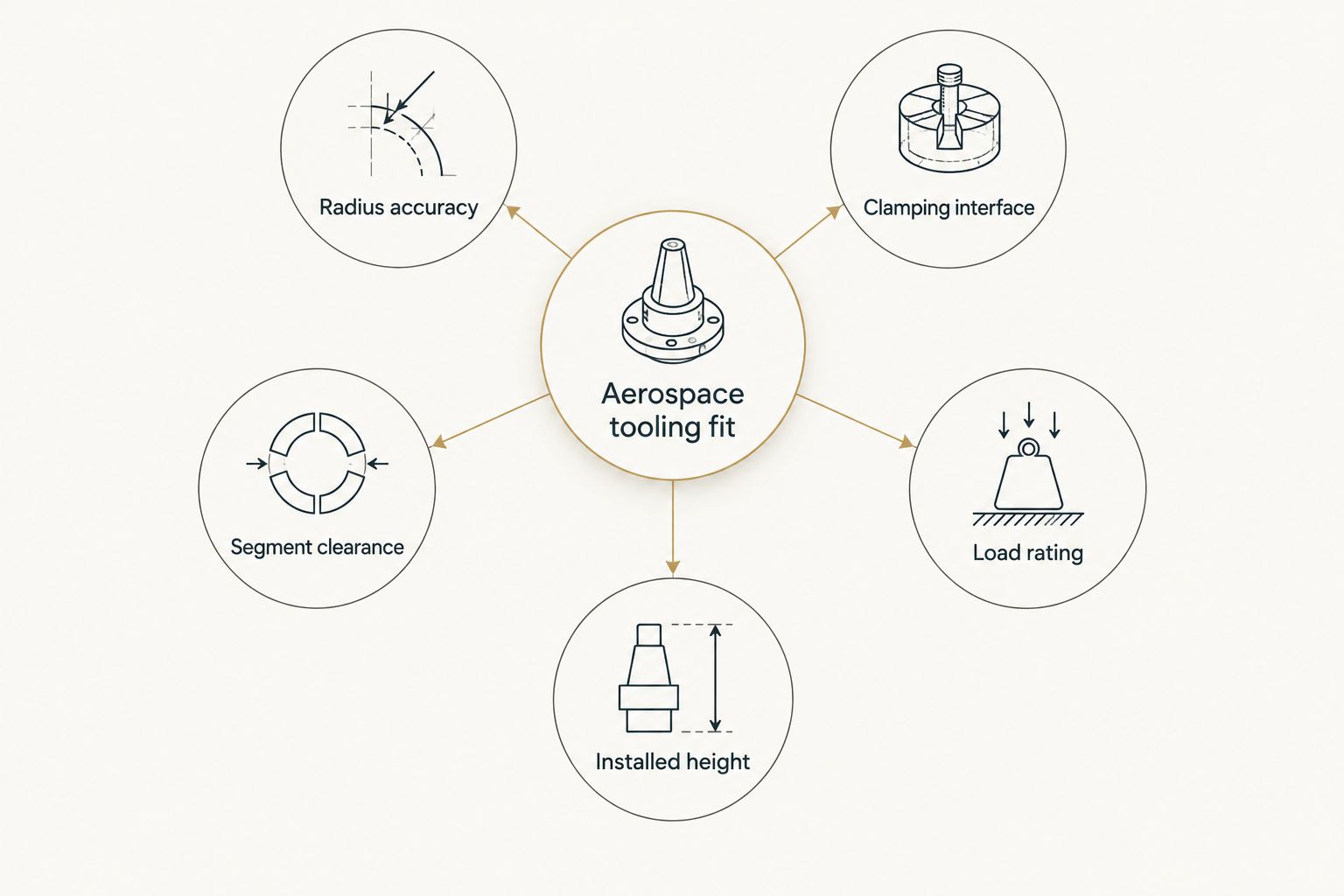
- Radius accuracy and springback control matched to the specific alloy - aluminum, titanium, Inconel, or stainless behave differently under the same punch radius
- Clamping interface match to the press brake beam - AMADA-style, WILA, TRUMPF-style, or LVD adaptive systems are not interchangeable
- Segment fit and box clearance for boxed or channel aerospace brackets that need sectional tooling instead of one-piece punches
- Load rating checked against material grade and thickness, not the machine's default mild-steel tonnage chart
- Installed height and gauging repeatability across a full production run, not just the first part off the tool
- Material traceability tied to the tooling batch, since aerospace paperwork often has to show what formed the part
Aerospace press brake tooling at a glance
| Tooling type | Best for | Standout feature | Key limitation |
|---|---|---|---|
| AMADA-style precision tooling | Tight-radius aluminum skins | Wide radius/angle range matched to AMADA tonnage charts | Standard inventory doesn't cover every flange radius out of the box |
| WILA-compatible clamping tooling | Low-volume prototype brackets | Fast punch/die swaps without a full recrowning cycle | Clamping interface has to match the beam exactly |
| TRUMPF-style precision tooling | Complex flange geometry | Tight control on multi-bend, offset, and Z-bend forms | Installed height drift shows up faster on high-cycle runs |
| LVD-compatible tooling | Long structural panels | Long working lengths cut down on segment stacking | Fewer aftermarket segment options than AMADA-style sets |
| Stainless-grade dies | Corrosion-resistant brackets | Hardened V-die edges resist galling on 301/304/17-4PH | Springback runs higher than aluminum, so V-opening needs its own calc |
| Heavy-gauge segmented punches | Thick titanium/Inconel parts | Segment swaps handle box clearance without a full tool change | Segment fit needs a bed-length check before ordering |
1. AMADA-style precision tooling: best for tight-radius aluminum aerospace skins
AMADA-style tooling covers the safety-style and European-style clamping most common on AMADA-compatible press brake tooling setups, ground to hold a tight radius on thin aluminum skins like 2024-T3 and 6061-T6. It's the tooling category most aerospace sheet metal shops default to first because it's the deepest inventory across AMADA-class machines.
AMADA-style tooling pros:
- Fine radius control on thin aluminum aerospace skins
- Wide standard radius and angle range across AMADA G, HG, and HFE series brakes
- Broad support base makes matched punches easier to source
AMADA-style tooling cons:
- Standard punch inventory doesn't cover every aerospace flange radius without a custom grind
- Mixed-thickness runs on one setup usually need a segment swap
Best for: tight-radius aluminum aerospace skins on AMADA-class equipment. Verdict: Buy for shops running mostly aluminum skins and brackets on AMADA brakes, with the radius confirmed against the part drawing first.
2. WILA-compatible clamping tooling: best for low-volume prototype aerospace brackets
WILA-style clamping, including WILA New Standard interfaces, lets a shop swap punches and dies without resetting the full crowning setup - useful when a prototype cell runs a different bracket every shift instead of one long production batch.
WILA-compatible tooling pros:
- Fast changeover between short aerospace job runs
- Consistent clamping across mixed tool lengths on the same beam
- Each swap is easy to log for lot traceability
WILA-compatible tooling cons:
- The clamping interface has to match the machine's beam exactly, or setup stalls
- Segment sets add cost that's harder to justify on very small lots
Best for: low-volume, high-mix prototype aerospace brackets. Verdict: Buy for prototype and short-run cells; check WILA-compatible press brake tooling options against your beam spec before ordering.
3. TRUMPF-style precision tooling: best for complex flange geometry
TRUMPF-style tooling handles multi-bend and offset forms common on structural aerospace panels, especially in cells where laser-cut blanks feed straight into forming without a separate staging step.
TRUMPF-style tooling pros:
- Tight control on complex flange combinations, including offset and Z-bend forms
- Fits well into automated forming cells running laser-cut blanks
- Good match for structural panels with multiple bend axes
TRUMPF-style tooling cons:
- Tighter interface tolerances mean installed height drift shows up sooner on high-cycle runs
- Custom flange profiles take longer to source than standard catalog radii
Best for: complex flange geometry on multi-bend structural aerospace panels. Verdict: Hold unless your part geometry actually needs the multi-bend capability - simpler forms don't need this level of tooling.
4. LVD-compatible tooling: best for long bend length aerospace structural panels
LVD-compatible tooling extends to longer working lengths, which matters on wide structural panels where segment stacking on a shorter tool set adds seams and setup time between passes.
LVD-compatible tooling pros:
- Long working length options reduce segment stacking on wide panels
- Works well with LVD's adaptive bending control loops for angle consistency
- Fewer tool changes needed across a long bend line
LVD-compatible tooling cons:
- Fewer aftermarket segment options than AMADA-style inventories
- Custom lengths take longer to source for one-off panel runs
Best for: long bend length structural aerospace panels. Verdict: Buy for wide-panel work; confirm working length against LVD-compatible press brake tooling suppliers before locking the order.
5. Stainless-grade dies: best for corrosion-resistant aerospace brackets and clamps
Stainless-grade dies are ground and hardened for corrosion-resistant alloys like 301, 304, and 17-4PH, common on aerospace brackets, clamps, and fastener carriers exposed to moisture or fuel.
Stainless-grade die pros:
- Hardened V-die edges resist galling on stainless
- Polished channel surfaces reduce scoring on visible brackets
- Rated for the higher clamping loads stainless forming needs
Stainless-grade die cons:
- Springback runs higher than aluminum, so V-opening selection needs its own calculation
- Not interchangeable with soft-tool aluminum die sets without a review
Best for: corrosion-resistant stainless aerospace brackets and clamps. Verdict: Buy when the part spec calls for 300-series or 17-4PH stainless - don't substitute an aluminum die set to save a setup.
6. Heavy-gauge segmented punches: best for thick titanium and Inconel structural parts
Segmented punch sets rated for thick-wall titanium and Inconel handle structural components where a standard one-piece punch would exceed its load limit and risk cracking the part or the tool.
Heavy-gauge segmented punch pros:
- Segment swaps handle box and channel clearance without a full tool change
- Rated tonnage per segment keeps load distribution predictable on thick alloy
- Supports mixed-length production runs off the same segment inventory
Heavy-gauge segmented punch cons:
- Segment fit needs verification against the press brake's bed length before ordering
- Heavier tooling adds setup time compared with one-piece punches
Best for: thick-wall titanium and Inconel structural aerospace components. Verdict: Buy for thick-alloy structural runs; check segment count and load rating against your bed length before requesting a quote.
How we ranked these
The ranking checks four things against aerospace-specific demands rather than generic tonnage-chart defaults: clamping interface compatibility across AMADA, WILA, TRUMPF, and LVD platforms; segment and box clearance for bracket geometry; load rating against the actual alloy and thickness in the part drawing; and installed height repeatability across a full run. Tooling that only looks good on a mild-steel spec sheet drops in rank once aluminum, titanium, or Inconel enters the picture. Price isn't part of the ranking here since it varies by geometry and volume - that belongs in a tooling review, not a general comparison.
Request a tooling fit review
Send your part drawing and machine spec for a custom aerospace tooling quote.
Which press brake tooling should you choose?
For most aerospace shops running mixed aluminum sheet on AMADA-class brakes, AMADA-style precision tooling matched to the part drawing is the default starting point - verify clamping interface and installed height before ordering. If titanium or Inconel structural parts run on the same line, add heavy-gauge segmented punches rather than pushing thick alloy through a standard one-piece punch. Stainless brackets need dedicated stainless-grade dies, not a substitute from the aluminum set, and low-volume prototype work is better served by WILA-compatible clamping than by resetting a fixed tool for every new job. Whatever the mix on your floor in 2026, the tooling review should start from the finished-part drawing, not the catalog page.
FAQ
What's the best press brake tooling for aerospace sheet metal parts in 2026?
AMADA-style precision tooling is the best default for tight-radius aluminum aerospace skins in 2026, with WILA-compatible clamping tooling better suited to low-volume prototype brackets and LVD-compatible tooling better suited to long structural panels. The right choice depends on alloy, part geometry, and production volume.
Is AMADA-style tooling better than WILA-compatible tooling for aerospace work?
Neither is universally better - AMADA-style tooling holds tighter radius control on aluminum skins, while WILA-compatible clamping swaps punches and dies faster on low-volume, high-mix prototype runs. Match the choice to your production volume and part mix, not brand preference.
Can the same punch handle aluminum, titanium, and stainless aerospace parts?
Not reliably. Aluminum, titanium, Inconel, and stainless each spring back differently under the same radius, so a punch and die set optimized for one alloy usually needs a different V-opening or radius for the others.
What clamping interface do most aerospace fabricators use?
It depends on the machine platform on the shop floor - AMADA-style, WILA, TRUMPF-style, and LVD interfaces are the four most common, and none of them are interchangeable without a review.
How do I check if press brake tooling fits my machine before ordering?
Confirm the clamping interface type, installed height, and bed length against your machine's tooling chart, then match that against the part drawing's radius and flange geometry before requesting a quote.
Do aerospace parts need certified tooling documentation?
Aerospace paperwork often requires traceability back to the tooling that formed the part, so material certification tied to the tooling batch matters more on aerospace runs than on general fabrication work.
What's the difference between AMADA, WILA, TRUMPF, and LVD tooling systems?
The core difference is the clamping interface and working length range each system supports - AMADA-style and TRUMPF-style tooling favor precision radius work, WILA-compatible clamping favors fast changeover, and LVD-compatible tooling favors long working lengths on structural panels.
Do segmented punches cost more than one-piece punches for aerospace runs?
Segmented punches add setup steps and typically cost more per set than a one-piece punch, but they handle box and channel clearance on thick titanium or Inconel parts that a one-piece punch can't form without exceeding its load rating.
One last thing
The most common rejection point on aerospace first-article inspection isn't the punch radius - it's installed height drift from a clamping interface that got swapped and never re-measured. Check installed height every time a tool comes off the machine for a different job in 2026, not just after a part starts failing inspection.
Related guides
Open this COVO engineering guide · Browse press brake tooling · Request technical support