COVO KNOWLEDGE
Best universal press brake tooling systems for job shops 2026
Published:
Updated:
European 88-degree clamping ranks best universal press brake tooling for job shops in 2026 — compare it against AMADA, WILA, TRUMPF and LVD systems.
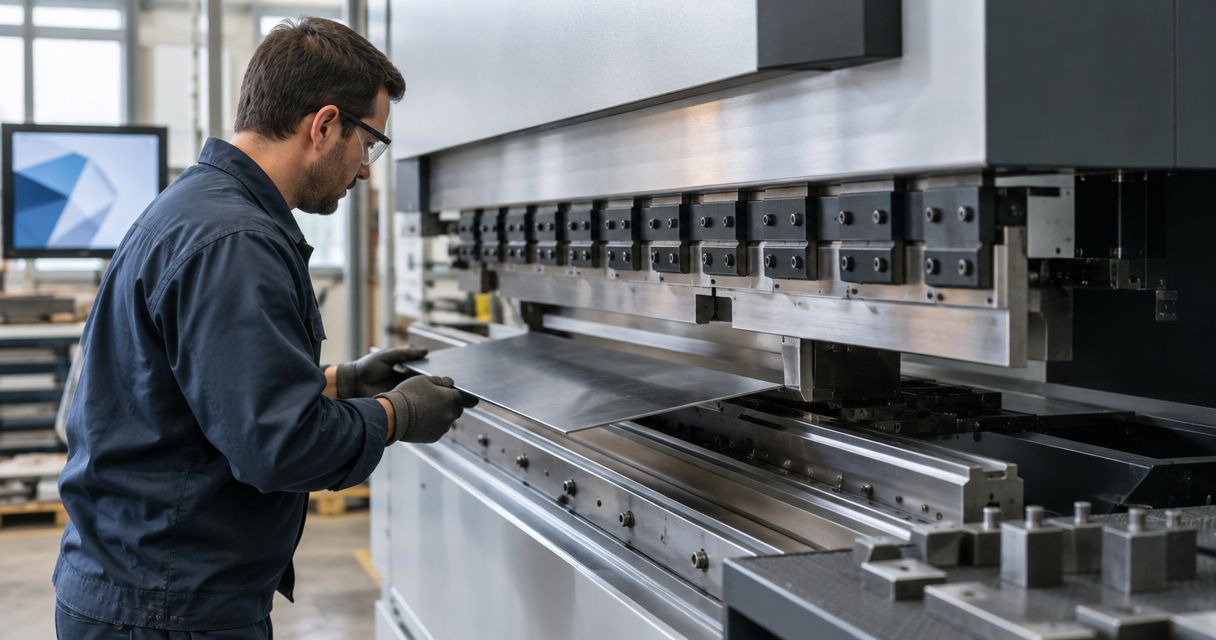
Job shops running AMADA, TRUMPF, WILA, LVD and BYSTRONIC-compatible brakes on the same floor need a universal press brake tooling system that clamps into more than one interface without a die change for every job. This guide ranks the six tooling system types job shops choose between in 2026 and tells you which one fits a mixed-brand floor, a single-brand production line, or a high-mix, fast-changeover cell.
Best overall for mixed-brand shops: European 88-degree universal clamping. Best for AMADA-standardized floors: AMADA-style tooling. Best for high-mix, fast-changeover work: WILA New Standard clamping. European 88-degree clamping wins because one punch and die set installs across AMADA, TRUMPF, LVD and BYSTRONIC-style brakes without swapping the clamping interface itself — the deciding factor for a shop quoting jobs across machines built by different OEMs.
- European 88-degree universal clamping is the best universal press brake tooling for job shops running mixed machine fleets in 2026.
- AMADA-style tooling wins for AMADA-standardized floors; WILA New Standard clamping suits high-mix, fast-changeover cells.
- TRUMPF-style tooling holds tight tolerances on aerospace and precision sheet metal parts.
- Sectional tooling sets solve variable bend length and box clearance without buying full-length dies.
- Verify clamping interface, installed height and load rating before ordering — mismatched geometry stalls production.
Why this matters
A job shop that owns tooling matched to one machine brand turns down work that shows up on a different brake. Universal clamping systems exist to break that constraint, but "universal" covers at least six distinct interface families, and picking the wrong one means retrofitting a clamp or ordering a second inventory six months later.
COVO builds custom press brake tooling across AMADA, TRUMPF, WILA, LVD and BYSTRONIC interfaces from a finished-part drawing, so the comparison below is built around interface compatibility, segment availability and load rating — not brand loyalty. Every recommendation assumes you verify the ram and bed clamping rating on your specific brake before ordering.
What makes the best universal press brake tooling system for job shops
- Clamping interface compatibility across AMADA, TRUMPF, WILA, LVD and BYSTRONIC-style brakes
- Consistent installed height across punch and die combinations so one setup runs on multiple machines
- Segment or tool-length options that match bend length and box or flange clearance without a full die change
- Load rating matched to the material grade and thickness range the shop actually runs
- Radius and profile coverage for the flange geometries in the shop's typical part mix
- Tool steel and coating spec suited to production volume and material abrasiveness
At a glance: universal press brake tooling systems compared
| Tooling system | Best for | Standout feature | Key limitation |
|---|---|---|---|
| European 88-degree universal clamping | Multi-brand job shops | One clamping interface across OEM brakes | Ram and bed must be rated for 88-degree segment geometry |
| AMADA-style tooling | AMADA-standardized floors | Tang and holder match to AMADA-brand press brakes | Locks the shop to AMADA-native tool geometry |
| WILA New Standard clamping | High-mix, fast-changeover cells | Clamping system speeds tool swaps between jobs | Clamping hardware adds cost to the tool holder |
| TRUMPF-style tooling | Aerospace and tight-tolerance parts | Interface and radius options built for repeatable close-tolerance bends | Fewer third-party segment options than 88-degree universal |
| LVD/Promecam-style tooling | LVD and Promecam-spec fleets | Wide standard die V-opening range for varied thickness | Segment stocking varies more by supplier |
| Sectional/segmented tooling | Variable bend length, box clearance | Mix-and-match segments cover several bend lengths from one set | Segment alignment and clamping load need checking on every changeover |
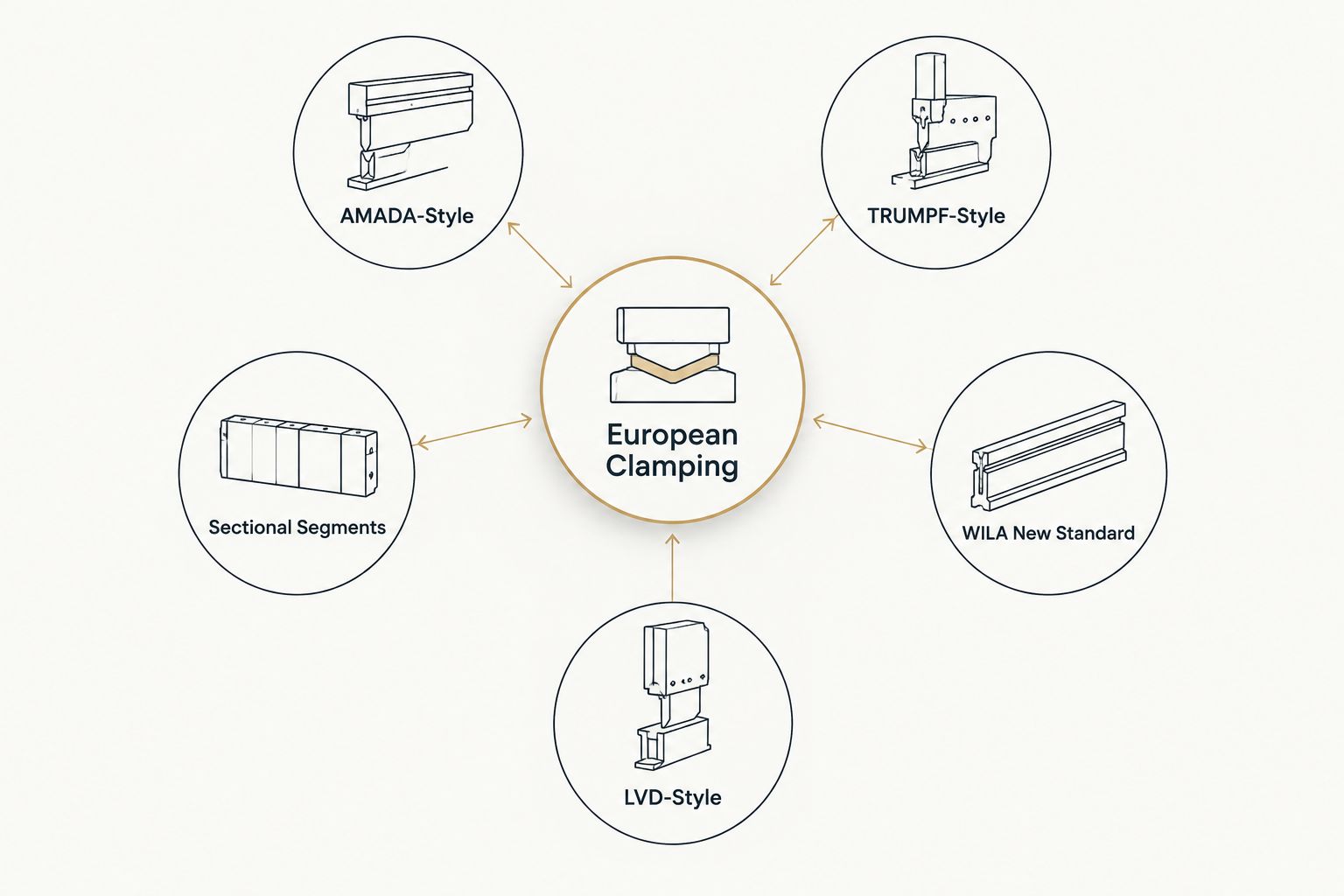
1. European 88-degree universal clamping: best universal press brake tooling for multi-brand job shops
This is the clamping standard most third-party tooling manufacturers build to first, because it installs on AMADA, TRUMPF, LVD and BYSTRONIC-compatible brakes without changing the clamp hardware itself. A shop running four machine brands on one floor can carry one punch and die inventory instead of four.
European 88-degree clamping pros:
- Runs across AMADA, TRUMPF, LVD and BYSTRONIC-style brakes on one clamping interface
- Wide third-party segment and radius catalog
- Standard profile coverage handles most flange geometries without custom tooling
- Consolidates tooling inventory for a mixed fleet
European 88-degree clamping cons:
- Ram and bed must be rated for 88-degree segment clamping — some older brakes need a retrofit
- Not every OEM-native brake accepts 88-degree segments without an adapter
- Segment weight adds up on long bend-length sets
Best for: job shops quoting work across AMADA, TRUMPF, LVD and BYSTRONIC-style machines on one floor.
Verdict: Buy for mixed-brand production floors — verify clamp rating on each brake before ordering.
2. AMADA-style tooling: best for AMADA-standardized job shop floors
AMADA-style tang-and-holder tooling matches the clamping geometry AMADA brakes ship with from the factory, so installed height and tool retention are already dialed in for that machine line. A shop running an all-AMADA fleet gets tighter tolerance stacking than a universal system forces onto a native interface.
AMADA-style tooling pros:
- Native fit to AMADA-brand press brake clamping
- Predictable installed height across AMADA-compatible tool lines
- Wide punch radius and die V-opening selection
AMADA-style tooling cons:
- Locks the shop to AMADA-native tool geometry
- Adding a non-AMADA brake later means a second tooling inventory
Best for: shops standardized on AMADA press brakes with no near-term plan to add another machine brand. Full interface checks are covered in the AMADA-compatible tooling guide.
Verdict: Buy for AMADA-only floors; Skip if the fleet already runs mixed brands.
3. WILA New Standard clamping: best for high-mix, fast-changeover cells
WILA New Standard clamping is built around rapid tool swap time, which matters most when a shop runs short batches across many part numbers in a single shift. The clamping mechanism itself — not just the punch and die profile — is engineered for changeover speed.
WILA New Standard pros:
- Fast tool swap between jobs, reducing changeover downtime
- Consistent clamping force across tool sets
- Compatible with a wide range of punch and die profiles
WILA New Standard cons:
- Clamping hardware adds cost to the tool holder itself
- Retrofitting an existing brake's clamp to accept WILA-style tooling is a separate project
Best for: high-mix job shops running short batches and frequent tool changes in the same shift. Interface and holder details are in the WILA-compatible tooling guide.
Verdict: Buy for fast-changeover production; Hold if batch sizes are already long and changeovers are rare.
4. TRUMPF-style tooling: best for aerospace and tight-tolerance sheet metal work
TRUMPF-style tooling is built for repeatable close-tolerance bends, which is why it shows up most on aerospace brackets and structural parts with tight flange-angle callouts. The interface and radius options are narrower than 88-degree universal, but the tolerance stacking on a matched TRUMPF-native brake is tighter.
TRUMPF-style tooling pros:
- Repeatable close-tolerance bend angles on matched brakes
- Radius options suited to aerospace and precision flange geometry
- Consistent installed height across TRUMPF-compatible tool lines
TRUMPF-style tooling cons:
- Fewer third-party segment options than European 88-degree universal
- Locks tolerance advantage to TRUMPF-native brakes specifically
Best for: shops running aerospace or tight-tolerance sheet metal parts on TRUMPF-compatible brakes. Interface checks are detailed in the TRUMPF-compatible tooling guide.
Verdict: Buy for aerospace and precision-tolerance work on TRUMPF-native machines; Wait if the shop isn't running that class of part yet.
5. LVD/Promecam-style tooling: best for LVD and Promecam-spec machine fleets
LVD and Promecam-spec tooling covers a wide standard die V-opening range, which suits shops bending a broad mix of material thickness on the same machine without swapping dies for every gauge change. It's a strong match for European-built fleets running LVD-brand brakes.
LVD/Promecam-style tooling pros:
- Wide standard die V-opening range covers varied thickness without full die swaps
- Direct fit to LVD and Promecam-spec clamping
LVD/Promecam-style tooling cons:
- Segment stocking varies more by supplier than 88-degree universal
- Fewer aftermarket radius options for niche flange geometry
Best for: shops running LVD or Promecam-spec brakes across a broad material thickness range.
Verdict: Buy for LVD-standardized fleets; Skip if the shop runs no LVD or Promecam-spec machines.
6. Sectional/segmented tooling: best for variable bend length and box clearance
Sectional tooling splits a punch or die into shorter segments that combine into different bend lengths from one inventory, instead of stocking a full-length tool for every job. It also solves box and flange clearance problems where a solid-length tool would collide with an adjacent formed wall.
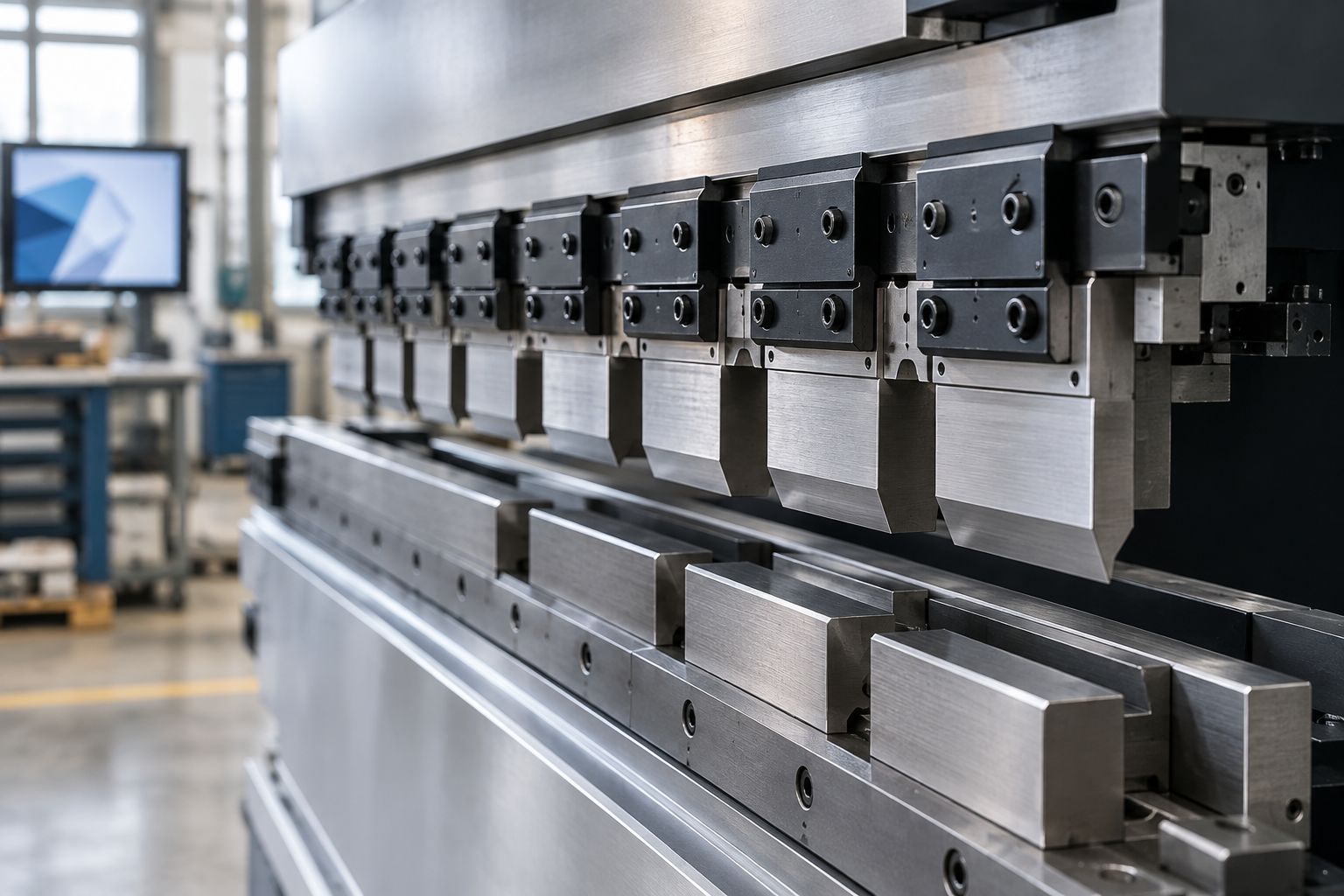
A typical segmented set on the shop floor mounts short punch and die sections side by side in a holder, with clamping load distributed across each segment joint rather than one continuous tool.
Sectional tooling pros:
- Covers multiple bend lengths from one segment inventory
- Solves box and flange clearance that a solid-length tool can't reach
- Reduces total tooling stocked for varied job lengths
Sectional tooling cons:
- Segment fit and clamping load need checking on every changeover
- More setup time per job than a solid one-piece tool
Best for: job shops running variable bend lengths and parts with box or flange clearance constraints.
Verdict: Buy for shops with varied bend-length work; Wait if the part mix runs one fixed bend length repeatedly, where a solid tool is simpler to manage.
How we ranked these tooling systems
Each system was weighed against the six criteria above: clamping interface reach, installed height consistency, segment or length flexibility, load rating fit, radius coverage, and tool steel spec for the material mix. European 88-degree clamping ranks first because it scores well on interface reach without giving up radius or load options. AMADA-style, WILA New Standard, TRUMPF-style, LVD/Promecam-style and sectional tooling each win on one narrower criterion — brand-native fit, changeover speed, tolerance, thickness range, or length flexibility — rather than all six at once.
Which universal press brake tooling system should you choose?
If the shop runs more than one machine brand and quotes work across brakes, European 88-degree universal clamping is the default for 2026 — it's the only system on this list built to reach across AMADA, TRUMPF, LVD and BYSTRONIC-compatible interfaces from one inventory. If the floor is standardized on a single brand, the brand-native system (AMADA-style, TRUMPF-style, LVD/Promecam-style) usually holds tighter tolerance for that machine specifically. Sectional tooling is the add-on, not the replacement, when bend length or box clearance is the actual constraint.
Send the finished-part drawing, machine interface, material grade and thickness range before ordering any of these — that's what determines whether a standard segment fits or a custom profile is needed.
Request a tooling review
Send your part drawing and machine interface for a custom tooling check.
FAQ
What is the best universal press brake tooling for job shops in 2026?
European 88-degree universal clamping is the best universal press brake tooling for job shops running mixed machine fleets in 2026, because one punch and die set installs across AMADA, TRUMPF, LVD and BYSTRONIC-compatible brakes without a clamp change.
Is AMADA-style tooling better than European 88-degree clamping?
AMADA-style tooling holds tighter tolerance on AMADA-native brakes specifically, but it locks the shop to AMADA geometry. European 88-degree clamping trades a small amount of that native-fit precision for compatibility across multiple machine brands.
Can one tooling system run on AMADA, TRUMPF, WILA and LVD brakes?
European 88-degree universal clamping is the system built to reach across AMADA, TRUMPF, LVD and BYSTRONIC-compatible interfaces. WILA New Standard clamping also covers a range of profiles but is chosen more for changeover speed than cross-brand reach.
What should I check before ordering universal press brake tooling?
Verify the ram and bed clamping rating, installed height, segment length needed for the bend, and load rating against the material grade and thickness the shop runs. Send the finished-part drawing and machine interface before requesting a tooling review.
Is sectional tooling worth it for a small job shop?
Sectional tooling is worth it when the shop runs variable bend lengths or parts with box and flange clearance issues. If the part mix runs one fixed bend length repeatedly, a solid one-piece tool is simpler to manage.
What tooling system works best for aerospace sheet metal parts?
TRUMPF-style tooling holds the tightest repeatable tolerance for aerospace brackets and tight-tolerance flange geometry on TRUMPF-native brakes in 2026.
Does WILA New Standard clamping fit every press brake?
No. WILA New Standard clamping requires a holder built for that clamping mechanism; retrofitting an existing brake to accept it is a separate project from ordering the punch and die profiles.
One last thing
The interface, not the punch radius, is what actually stalls a job. A shop can order a die with the correct V-opening and radius for the part and still lose a shift because the clamping geometry doesn't match the brake's ram — check clamping interface and installed height before checking radius and profile every single time in 2026.
Related guides
Open this COVO engineering guide · Browse press brake tooling · Request technical support