COVO KNOWLEDGE
Best custom press brake tooling for OEM fabricators 2026
Published:
Updated:
2026 ranking of custom press brake tooling for OEM fabricators: segmented dies, gooseneck punches, ground punches and more, with verified use cases.
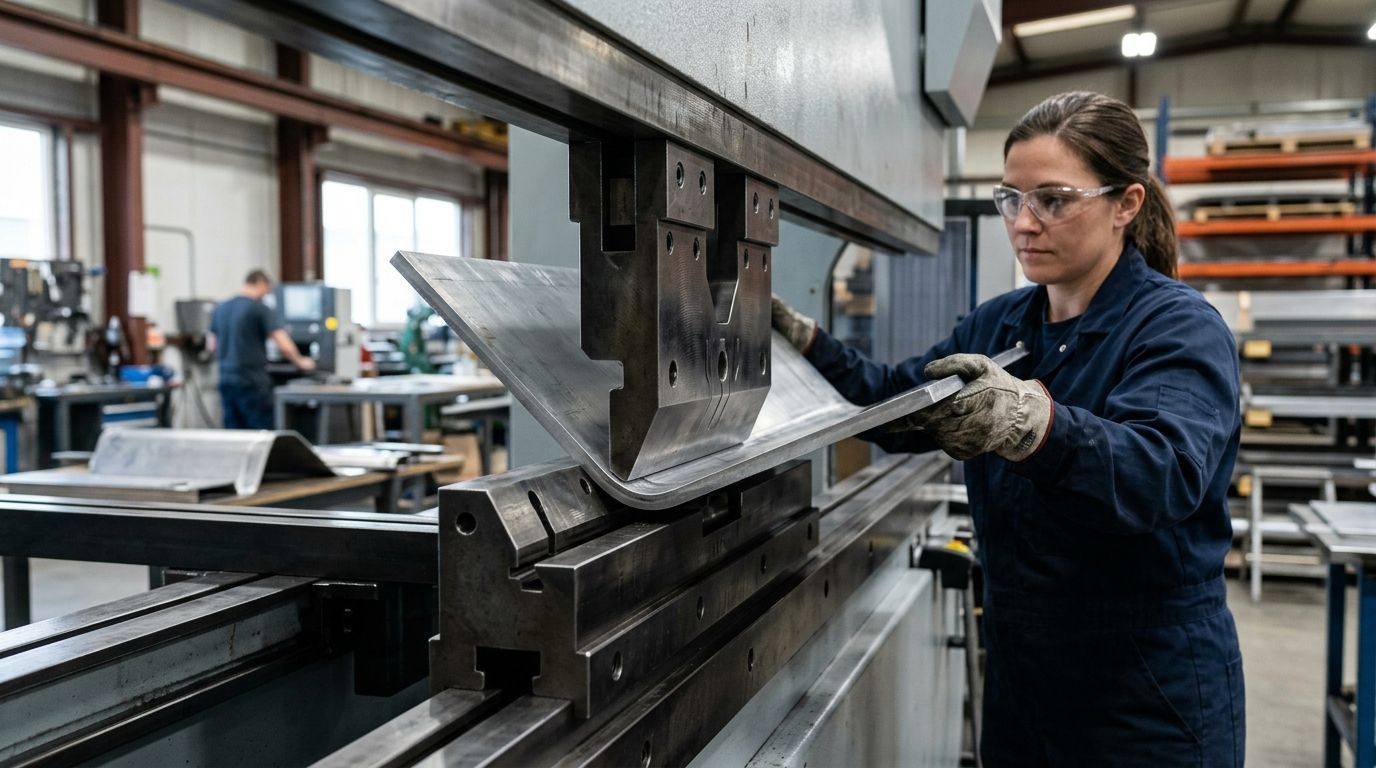
OEM fabricators buying custom press brake tooling in 2026 need a tool that matches the finished-part drawing, the machine's clamping interface and the production run — not a catalog item that's close enough. Segmented press brake dies win for mixed bend-length OEM runs, gooseneck punches win for deep-box clearance, and Amada-style ground punches win for tight radius tolerance. Nothing on this list is a one-size-fits-all pick.
- Segmented press brake dies are the best custom press brake tooling for OEM fabricators running mixed bend lengths in 2026.
- Gooseneck punches win for deep-box parts needing flange clearance; standard punches collide with the sidewall.
- Amada-style ground punches hold radius tolerance tightest for OEM parts that need repeatable spec, not general job-shop work.
- Verify clamping interface, installed height and bend length before requesting any custom tooling review.
- Wila-style segmented clamping systems cut changeover time across multi-part OEM production families.
Why this matters
OEM production runs punish tooling mismatches that a job shop can shrug off. A punch with the wrong installed height throws off ram travel across the whole bend sequence, and a die with the wrong V-opening for the material grade cracks the outside radius on stainless or high-strength steel. Custom press brake tooling has to be engineered from the finished-part drawing, not selected from a size chart.
COVO builds standard and custom punches, dies and forming tools for AMADA, TRUMPF, WILA, LVD and BYSTRONIC interfaces, which puts every configuration below inside a single supplier's manufacturing scope — the comparison below is about which configuration fits which OEM part, not which brand to trust.
What makes the best custom press brake tooling for OEM fabricators
- Clamping interface match — American, European, Wila-style or proprietary segment, confirmed against the machine model, not the brand name alone.
- Radius tolerance and material grade — the punch nose radius and die V-opening have to suit the metal's yield strength, not just its thickness.
- Bend length and segment configuration — full-length bars for long structural parts, split segments for mixed short runs.
- Installed height — punch and die stack height has to clear the ram and bolster on the specific press brake, typically in the 250mm to 320mm range depending on the interface.
- Flange geometry clearance — box and pan parts need punch profiles that clear return flanges without gouging.
- Forming load / tonnage rating — the tool has to be rated above the actual forming tonnage for the material and bend length in question.
Custom press brake tooling at a glance
| Tooling type | Best for | Standout feature | Verify before ordering |
|---|---|---|---|
| Segmented press brake dies | Mixed bend lengths on OEM runs | Split sections reconfigure without a full die change | Segment fit, clamping load, box clearance |
| Custom gooseneck punches | Deep-box and pan parts | Extended throat clears formed flanges | Flange geometry, return-flange depth |
| Wila-style clamping tooling | Fast changeover across part families | Common clamping interface across punch/die sets | Interface compatibility with existing holders |
| Amada-style ground punches | Tight radius tolerance parts | Precision-ground nose radius for repeatable specs | Radius tolerance, material grade |
| Heavy-gauge dies | Structural and thick-plate steel | High tonnage rating for thick material | Tonnage rating vs. actual forming load |
| Hemming tools for aluminum panels | Flat or teardrop hems on enclosures | Controlled pre-bend geometry for closing load | Pre-bend angle, surface finish requirement |
1. Segmented press brake dies: best for mixed bend-length OEM runs
Segmented dies split a long die bar into individual sections that get reconfigured per job instead of swapped for a full-length replacement. For OEM fabricators running several part numbers through the same press brake in a single week, this cuts setup time without stocking a different die for every bend length.
Segmented press brake dies pros:
- Reconfigures for different bend lengths without a full tool change
- Segments can be mixed with different V-openings on the same bar
- Reduces the number of full-length dies an OEM has to stock
Segmented press brake dies cons:
- Requires verifying clamping load across every segment joint, not just the ends
- More segments mean more surfaces where box-forming clearance has to be checked
Best for: OEM shops running multiple part numbers with varying bend lengths. Verdict: Buy if bend length varies job to job; Skip if you run one fixed part length at high volume — a full-length die is simpler there. See segmented press brake dies for box forming for segment-fit specifics.
2. Custom gooseneck press brake punches: best for deep-box clearance
Gooseneck punches use an offset shank that clears formed sidewalls and return flanges on box and pan parts. Standard straight punches physically collide with flanges once the part depth exceeds the punch's throat clearance, which is a common failure point on OEM enclosure and chassis parts.
Gooseneck punches pros:
- Clears deep boxes and pans that straight punches can't reach
- Available in multiple offset depths for different flange geometries
- Works across AMADA, TRUMPF and WILA-style interfaces when specified correctly
Gooseneck punches cons:
- Reduced cross-section at the offset lowers the tonnage rating versus an equivalent straight punch
- Requires the exact flange depth and return-flange dimension from the part drawing
Best for: OEM parts with formed sidewalls where a straight punch runs out of clearance. Verdict: Buy for deep-box and pan geometry; Hold on ordering until the flange depth is confirmed against the finished-part drawing. Full configuration options are in gooseneck press brake punches compared.
3. Wila-style clamping segmented tooling: best for fast changeover across part families
Wila-style clamping systems use a common hydraulic or mechanical clamp that accepts interchangeable punch and die segments without loosening bolts on every change. For OEM fabricators switching between several part families on one machine per shift, this shrinks changeover time compared to bolt-clamped tooling.
Wila-style clamping pros:
- One clamping interface accepts multiple tool profiles
- Faster changeover between part families on the same press brake
- Segment sets can share holders across a tooling library
Wila-style clamping cons:
- Requires the press brake's existing clamp to match the Wila-style interface exactly
- Retrofit clamps add installed height that has to be rechecked against ram travel
Best for: OEM shops running short-run, high-mix part families through one machine. Verdict: Buy if changeover frequency is the bottleneck; Wait if the press brake's clamp isn't Wila-compatible until an interface check is done.
4. Amada-style precision-ground punches: best for tight radius tolerance
Amada-style punches are ground to hold a consistent nose radius across the full bend length, which matters most on OEM parts with a called-out radius tolerance on the drawing rather than a generic "sharp" or "standard" bend note. Repeatability across production lots is the point, not raw tonnage capacity.
Amada-style ground punches pros:
- Tighter, more repeatable radius across long bend lengths
- Matches Amada machine interfaces directly without adapters
- Suited to parts with a specified radius callout on the drawing
Amada-style ground punches cons:
- Ground tooling costs more to produce than standard stock profiles
- Overkill for parts with no radius tolerance requirement
Best for: OEM parts with a drawing-specified radius tolerance, not general fabrication. Verdict: Buy when the print calls out a radius spec; Skip for loose-tolerance brackets where standard punches perform the same job.
5. Heavy-gauge dies: best for structural and thick-plate steel
Heavy-gauge dies are built with wider V-openings and reinforced die bodies rated for tonnage loads that standard sheet-metal dies aren't designed to carry. OEM fabricators bending structural steel, thick-plate chassis components or heavy equipment parts need the tonnage rating verified against actual forming load, not just material thickness.
Heavy-gauge dies pros:
- Rated for high forming loads on thick plate and structural sections
- Reinforced body resists deflection across long bend lengths under load
- Available with segmented configurations for mixed heavy-gauge runs
Heavy-gauge dies cons:
- Larger V-openings limit minimum flange length compared to standard dies
- Higher tonnage rating adds weight, which affects handling and changeover time
Best for: structural steel and heavy-plate OEM parts. Verdict: Buy when calculated tonnage exceeds a standard die's rating; Hold if the part is under 3mm mild steel — a standard die handles it.
6. Custom hemming tools for aluminum panels: best for enclosure edges
Hemming tools fold a panel edge back onto itself in a flat or teardrop profile, most often on aluminum enclosure panels where a raw sheared edge isn't acceptable. The pre-bend angle and closing load have to be engineered together, since aluminum work-hardens faster than mild steel through the same bend sequence.
Hemming tools pros:
- Produces a clean folded edge without a secondary deburring step
- Configurable for flat or teardrop hem profiles on the same tool
- Suited to thin-gauge aluminum enclosure and panel work
Hemming tools cons:
- Aluminum's work-hardening rate narrows the acceptable pre-bend window
- Not rated for the tonnage loads used on structural steel parts
Best for: OEM enclosure and panel parts needing a finished folded edge. Verdict: Buy for aluminum panel edges; Skip for structural steel bends where a hem isn't specified on the drawing.
How this list was ranked
Each configuration above was ranked against the same six criteria: clamping interface, radius tolerance and material grade, bend length and segment configuration, installed height, flange geometry clearance, and tonnage rating. None of the six wins across every category — that's the reason OEM fabricators end up running two or three configurations across one production floor rather than standardizing on one.
Send drawings for a tooling review
Match clamping interface, bend length and radius spec before ordering.
Which custom press brake tooling should you choose?
Start with the part drawing, not the catalog. If bend length varies across your OEM part mix, segmented press brake dies are the default in 2026. If a single part has deep-box geometry that a straight punch can't clear, move to gooseneck punches regardless of what else is on the floor. Radius-tolerance callouts point to Amada-style ground punches; heavy plate points to heavy-gauge dies; aluminum enclosure edges point to hemming tools. Verify clamping interface and installed height against the specific press brake before any of these get quoted.
FAQ
What is the best custom press brake tooling for OEM fabricators in 2026?
Segmented press brake dies are the best default for OEM fabricators running mixed bend lengths, since they reconfigure without a full die change. Deep-box parts and tight radius tolerances call for gooseneck punches and Amada-style ground punches instead.
Is custom tooling better than standard catalog tooling for OEM runs?
Custom tooling is better when the finished-part drawing has a flange geometry, radius tolerance or clamping interface that standard stock profiles don't match. Standard tooling is fine for parts with loose tolerances and common bend geometry.
How do I know if I need gooseneck punches instead of standard punches?
Gooseneck punches are needed when a straight punch's throat clearance is exceeded by the part's return-flange depth. Check the flange depth on the finished-part drawing against the standard punch's clearance before ordering.
What is installed height and why does it matter for custom tooling?
Installed height is the combined stack height of the punch and die on the press brake, typically 250mm to 320mm depending on the interface. A mismatch throws off ram travel across the entire bend sequence.
Do Wila-style clamping systems work on non-Wila press brakes?
Only if the machine's existing clamp is compatible with the Wila-style interface or has been retrofitted to accept it. Confirm the clamp type before ordering segmented tooling built for that interface.
What tonnage rating do heavy-gauge dies need for structural steel?
The die's tonnage rating has to exceed the calculated forming load for the material grade, thickness and bend length in question, not just match the material thickness alone. Undersized dies deflect under load and lose bend accuracy.
Can one press brake tooling setup handle both aluminum hemming and steel bending?
No — hemming tools are built for the lower closing loads and work-hardening behavior of aluminum, not the tonnage used on structural steel. Separate tool sets are standard for OEM shops running both materials.
What information does a custom tooling review need?
A finished-part drawing, the machine's clamping interface, material grade and thickness, and the required bend length and radius. Missing any of these delays the tooling quote.
One last thing
The most common delay in custom press brake tooling orders for 2026 OEM programs isn't tool design — it's a missing or outdated finished-part drawing. Confirm the drawing reflects the current revision, including any flange or radius changes from the last engineering change order, before requesting a tooling review.
Related guides
Open this COVO engineering guide · Browse press brake tooling · Request technical support