COVO KNOWLEDGE
Best segmented press brake dies for box forming 2026
Published:
Updated:
Segmented press brake dies for box forming ranked by clamping fit, box clearance and radius tolerance for 2026, with pros, cons and verdicts for each type.
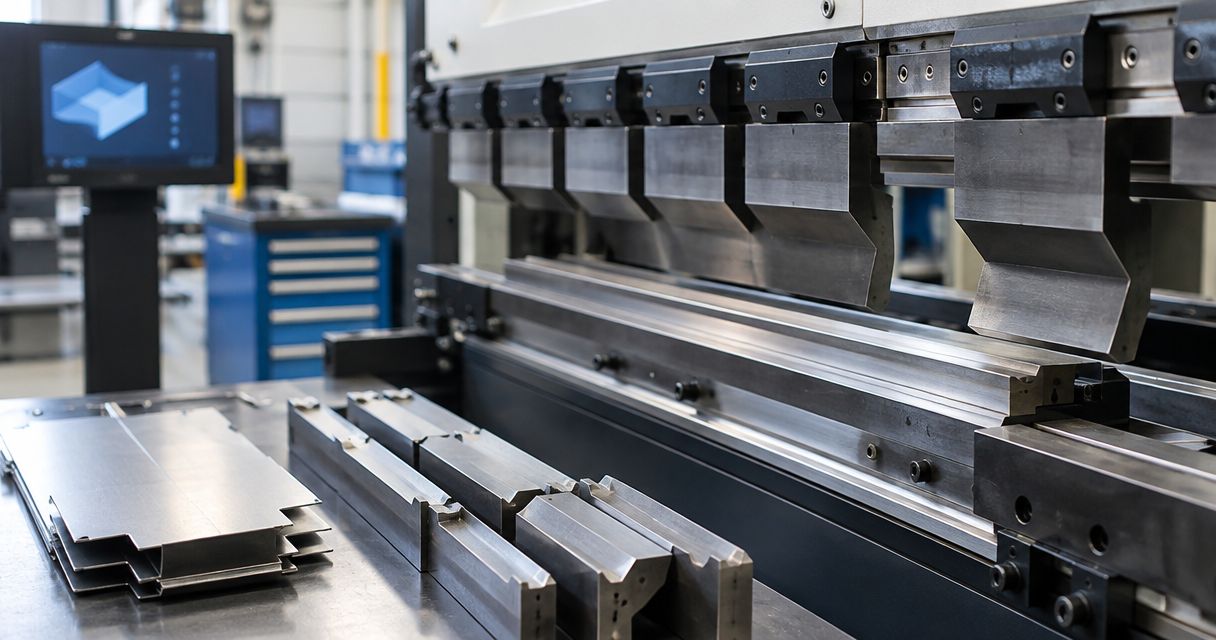
Segmented press brake dies split the working length into interchangeable blocks so one die set covers multiple box widths, return flange lengths and clearance depths instead of dedicating a full-length die to each job. Best overall for custom box work in 2026: COVO Custom Segmented Dies, machined to the finished-part drawing and matched to AMADA, TRUMPF, WILA, LVD or BYSTRONIC clamping interfaces. Best for job shops running mixed box sizes: standard modular sectional die sets. Best for cosmetic stainless box forming: sharp-radius segmented dies ground to a tight radius tolerance.
- COVO Custom Segmented Dies win for box forming in 2026 when flange geometry, bend length or clamping interface fall outside stock sectional options.
- Standard modular sectional sets in 35-200 mm segment increments cover mixed box runs without custom tooling lead time.
- WILA-style clamping segments suit quick-change interfaces; verify tang, retention and installed height before ordering.
- Sharp-radius segments hold tighter radius tolerance across segment joins than general-purpose sectional dies on cosmetic stainless work.
Why this matters
A single-piece die that spans the full bed length works fine for straight bends. Box forming is different: each wall usually needs a different bend length, and the return flange on one side can clash with the die shoulder on the next. Segmented dies solve that by letting you build the working length from individual blocks, so you reposition or swap segments instead of swapping the whole die.
The catch is interface compatibility. A WILA-style clamp, an AMADA-style tang and a TRUMPF-style safety clamp all mount segments differently, and mixing them without checking the clamping interface first risks segment slip under load. Verify installed height and clamping method against your machine's 2026 spec sheet before ordering segments for a new box job.
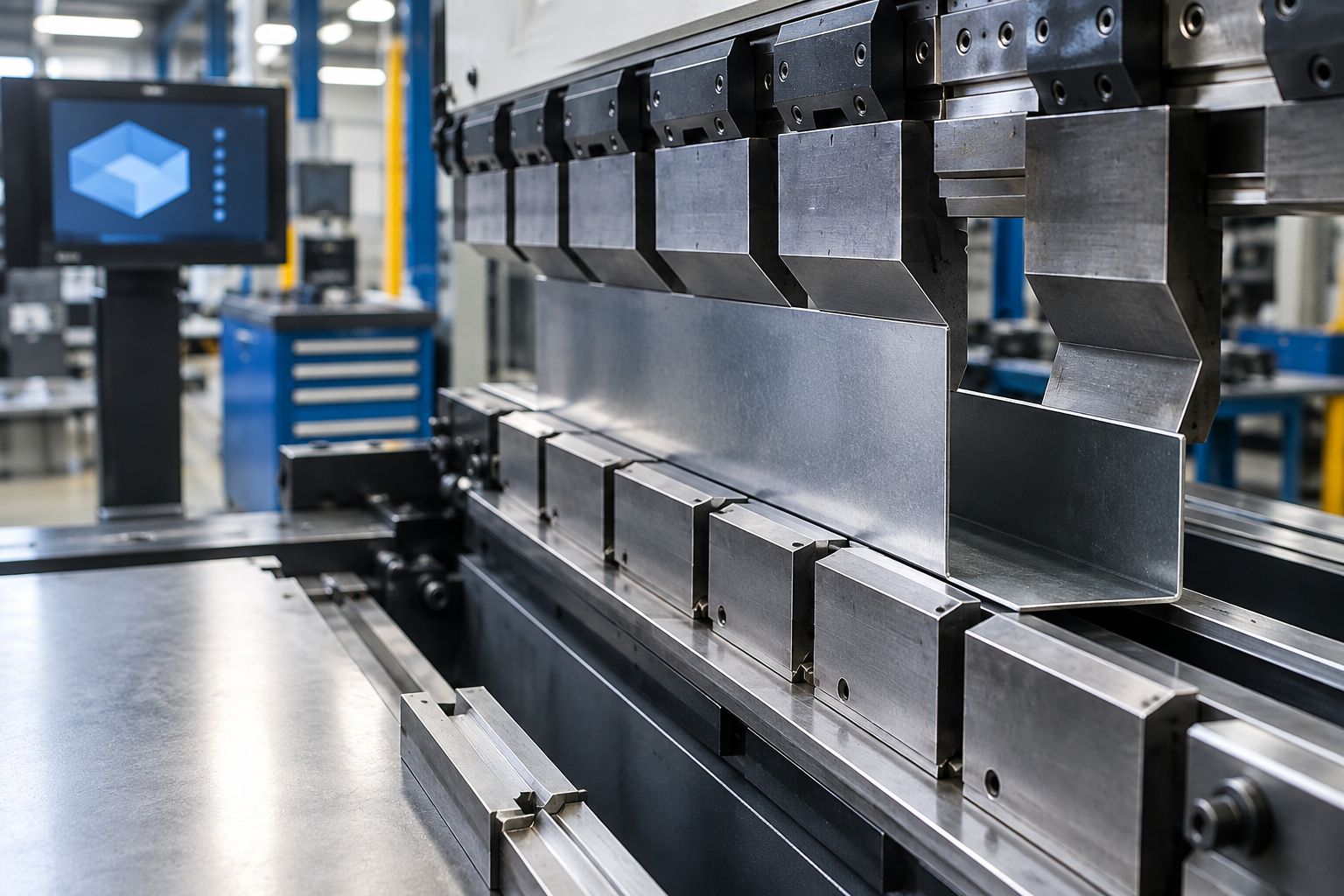
What makes the best segmented press brake die for box forming
- Segment fit and clamping — each block locks into the clamping interface without lateral play under load
- Box clearance — segment width and die shoulder height clear the formed box wall on return bends
- Bend length coverage — the set builds to the exact bend length from stock segment increments, commonly 35 mm to 200 mm, without gap-filling shims
- Radius consistency — radius holds tolerance across every segment join, not just within one block
- Installed height match — segment height plus holder matches the machine's rated installed height
- Load rating per segment — each segment's rated tonnage covers the material grade and thickness, not just the set's total rating
Segmented press brake dies at a glance
| Segmented Die Type | Best For | Standout Feature | Key Limitation |
|---|---|---|---|
| COVO Custom Segmented Dies | Custom box geometry from a finished-part drawing | Machined to match AMADA, TRUMPF, WILA, LVD or BYSTRONIC clamping interfaces | Lead time runs longer than stock sectional sets |
| Standard Modular Sectional Dies | Job shops running mixed box sizes | Fixed segment increments rebuild fast between jobs | Radius consistency varies across joins on worn sets |
| WILA-Style Clamping Segments | Quick-change interfaces on WILA-compatible presses | Clamp locks segments without loose tangs | Doesn't cross over to AMADA-style tang systems |
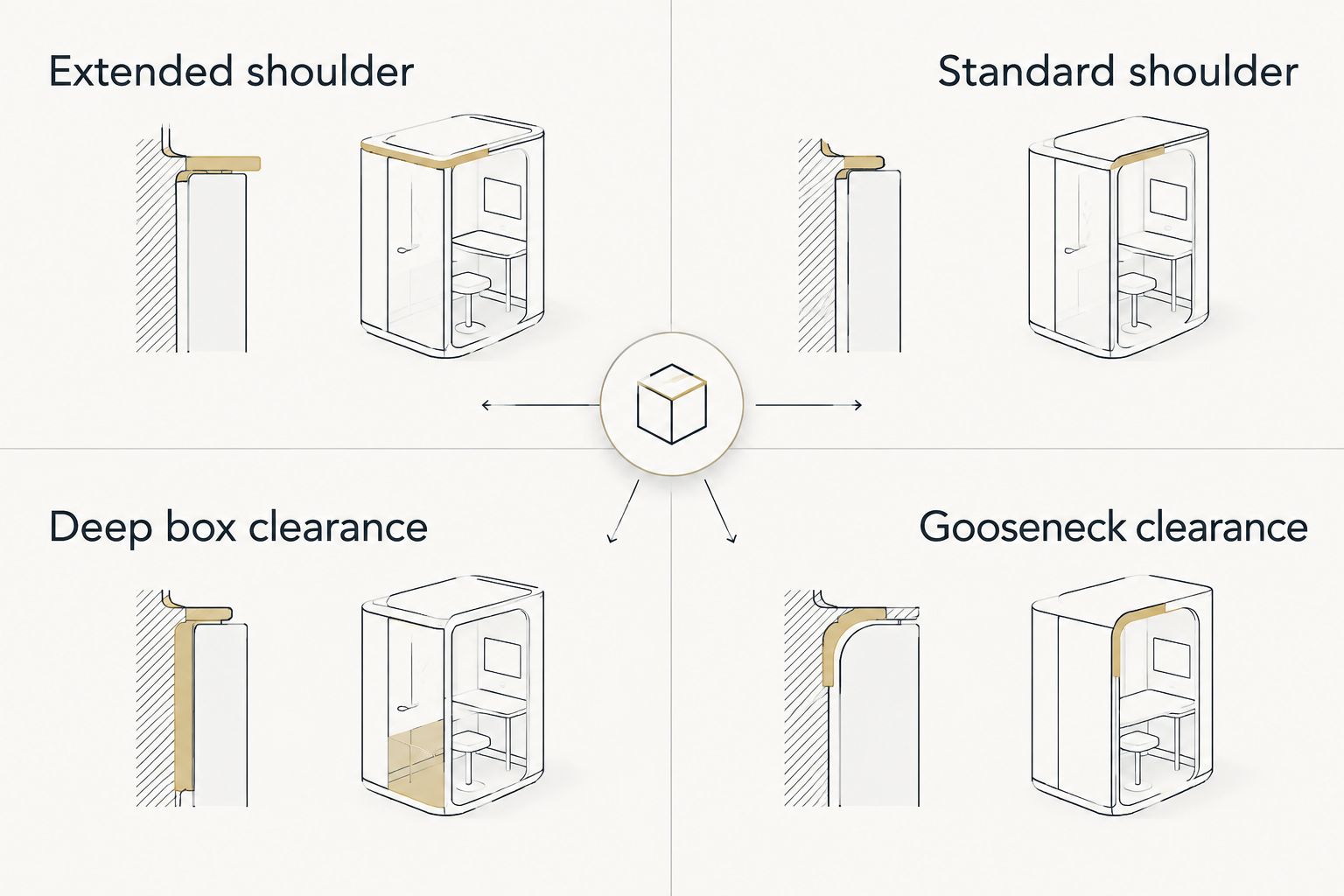
| Two-Station Extended-Shoulder Segments | Deep boxes with tight return flanges | Extended shoulder clears the box wall on return bends | Needs more gooseneck clearance behind the die |
| Sharp-Radius Segments for Stainless | Cosmetic stainless box forming | Ground radius tolerance holds under repeat cycles | Cost rises with tighter tolerance grinding |
| Heavy-Gauge Segments | Structural steel box frames | Rated tonnage per segment covers thick-gauge loads | Overkill on light-gauge cosmetic work |
1. COVO Custom Segmented Dies: best segmented press brake die for custom box geometry
COVO engineers segmented die sets directly from the finished-part drawing, matching segment length, radius and clamping interface to the specific box geometry and target machine. Each segment is built to a stated installed height and load rating so the assembled set drops into an AMADA, TRUMPF, WILA, LVD or BYSTRONIC press without shimming. This suits parts where flange geometry changes between box walls or where an off-the-shelf sectional set can't clear a tight return flange.
COVO Custom Segmented Dies pros:
- Matched to the exact clamping interface and installed height of the target machine
- Built from the part drawing, so box clearance and return flange geometry are verified before the tool ships
- Covers non-standard bend lengths that stock segment increments don't reach
COVO Custom Segmented Dies cons:
- Requires a finished-part drawing and machine spec before quoting
- Lead time runs longer than pulling a stock sectional set off the shelf
Best for: shops with box geometry that stock segmented tooling doesn't cover. Verdict: Specify when the box has custom flange geometry or a non-standard clamping interface.
2. Standard Modular Sectional Dies: best for job shops running mixed box sizes
Standard sectional die sets ship in fixed segment lengths — commonly 35 mm, 50 mm, 100 mm and 200 mm blocks — that rebuild to different bend lengths without ordering new tooling. A job shop running several box sizes a week keeps one set of segments and reconfigures the working length between setups. Radius and channel width stay constant across the standard range, so material grade and thickness drive the selection more than box geometry.
Standard Modular Sectional Dies pros:
- Fast reconfiguration between box widths without new tooling
- Lower tooling overhead when box sizes vary week to week
- Wide stock availability across major clamping interfaces
Standard Modular Sectional Dies cons:
- Radius consistency can drift across segment joins on a heavily used set
- Doesn't cover box geometry outside the standard length increments
Best for: job shops with unpredictable, mixed box runs. Verdict: Specify for mixed runs; verify segment wear before committing to a tight-tolerance job.
3. WILA-Style Clamping Segmented Dies: best for quick-change WILA-compatible presses
WILA-style segments clamp into a hydraulic or mechanical clamping system without a tang, so segments lock and release without loosening a set screw on each block. This works well on quick-change production cells where operators reconfigure box length several times a shift. Confirm the press uses a WILA-compatible clamp before ordering — the clamping geometry doesn't cross over to AMADA-style tang systems.
WILA-Style Clamping Segments pros:
- Fast segment swaps without individual set screws
- Even clamping pressure across the working length reduces segment walk
WILA-Style Clamping Segments cons:
- Locked to WILA-compatible clamping systems, not universal
- Retrofitting an AMADA-style machine requires a different holder, not just different segments
Best for: production cells reconfiguring box length multiple times per shift on WILA-compatible presses. Full interface options sit in the WILA-compatible tooling guide. Verdict: Specify on WILA-compatible machines; skip if your fleet runs mixed interfaces.
4. Two-Station Extended-Shoulder Segments: best for deep boxes with tight return flanges
Extended-shoulder segments raise the die shoulder height so a formed box wall clears the die body on the return bend, which matters on deep boxes where the first wall is already standing before the adjacent flange bends. Two-station segments also let you switch channel width mid-run for a heavier gauge pass without changing the whole set. Gooseneck clearance behind the die needs checking — the extended shoulder eats into the space a gooseneck punch needs to swing.
Two-Station Extended-Shoulder Segments pros:
- Shoulder height clears standing box walls on the return bend
- Two channel widths on one segment covers a gauge change mid-run
Two-Station Extended-Shoulder Segments cons:
- Reduces available gooseneck clearance on tight-radius punches
- Taller shoulder raises installed height, which can push ram stroke past a smaller machine's limit
Best for: deep boxes with return flanges that clash with a standard-shoulder die. Verdict: Specify for deep-box work; verify gooseneck clearance against your punch profile first.
5. Sharp-Radius Segmented Dies for Stainless: best for cosmetic stainless box forming
Sharp-radius segments hold a tighter radius tolerance across the joined working length, which matters on stainless box parts where the outside bend line is a visible, cosmetic surface. Segments are ground rather than machined-only, and the radius is verified across every segment join before the set ships. Material grade and thickness still set the load rating per segment — a tight radius doesn't override tonnage limits.
Sharp-Radius Segments pros:
- Radius tolerance holds across segment joins, not just within one block
- Suits visible, cosmetic bend lines on stainless enclosures and panels
Sharp-Radius Segments cons:
- Ground segments cost more to produce than general-purpose sectional blocks
- Doesn't add capacity for heavy-gauge structural work
Best for: cosmetic stainless box and enclosure work where the bend line is visible. Verdict: Specify for cosmetic stainless parts; standard sectional dies are enough for hidden bend lines.
6. Heavy-Gauge Segmented Dies: best for structural steel box frames
Heavy-gauge segments carry a higher rated tonnage per block, sized to the material grade and thickness rather than to box geometry alone. Structural steel box frames put more load through fewer, wider segments instead of many small joins, which also reduces the number of clamping points to check before a run. Confirm each segment's load rating against your material spec — press brake dies ranked by tonnage capacity vary widely across otherwise similar-looking segments.
Heavy-Gauge Segments pros:
- Rated tonnage per segment covers thick-gauge and high-strength material
- Fewer segment joins reduce clamping checks per setup
Heavy-Gauge Segments cons:
- Overkill and harder to fine-tune on light-gauge cosmetic box work
- Wider segments limit how tightly you can match an odd bend length
Best for: structural steel box frames and heavy-gauge enclosures. Verdict: Specify for heavy-gauge structural work; skip for thin-gauge cosmetic boxes.
How we ranked these segmented die options
Each option is scored against the criteria above: segment fit and clamping, box clearance, bend length coverage, radius consistency, installed height match, and load rating per segment. No pricing sits in this ranking — segment cost varies too much by material grade, radius grind and clamping interface to generalize across machines. The order reflects which use case each type solves best, not a single best-to-worst leaderboard.
Which segmented press brake die should you choose?
Default to COVO Custom Segmented Dies when the box has flange geometry, bend length or a clamping interface that stock sectional sets don't cover — send the finished-part drawing and machine model for a tooling review before ordering. Job shops running mixed, predictable box sizes on one machine interface get more value from standard modular sectional sets. Stainless cosmetic work calls for the sharp-radius segments regardless of which base set runs the rest of the job.
If you're still unsure which clamping interface your press uses, check the machine's 2026 spec sheet or the tang and clamp style directly before requesting a quote — segment fit doesn't tolerate guessing.
Get segmented dies reviewed
Send the part drawing and machine model for a tooling review.
FAQ
What is a segmented press brake die used for in box forming?
A segmented press brake die builds the working length from interchangeable blocks so one die set covers several box widths, return flange lengths and clearance depths. In 2026 shops use this to avoid stocking a full-length die for every box size.
How do segmented dies differ from standard full-length dies?
Segmented dies split the working length into blocks that can be repositioned or swapped, while a full-length die is one solid piece sized to a single bend length. Segments give box forming more clearance and length options without new tooling.
Can segmented dies be mixed across AMADA, WILA and TRUMPF interfaces?
No. Each system clamps segments differently — AMADA-style tangs, WILA-style hydraulic clamps and TRUMPF-style safety clamps are not interchangeable. Confirm the clamping interface before ordering segments for a machine you haven't tooled before.
What segment lengths are standard for sectional die sets?
Standard sectional segments commonly come in 35 mm, 50 mm, 100 mm and 200 mm blocks that combine to hit a target bend length. Custom segment lengths are available when the standard increments don't match the required box geometry.
Do segmented dies affect radius tolerance on stainless parts?
Radius tolerance can drift across segment joins on general-purpose sectional dies, which shows on a visible stainless bend line. Sharp-radius segments are ground and verified across every join specifically to hold tolerance on cosmetic stainless work.
How much gooseneck clearance does a deep box need?
Clearance depends on the punch profile and the extended-shoulder segment height used on the die, so it has to be checked against the specific punch, not assumed. Extended-shoulder segments that clear a deep box wall reduce available gooseneck clearance behind the die.
What load rating should a segment carry for heavy-gauge steel?
Each segment needs a rated tonnage that covers the material grade and thickness being formed, not just the total die set rating. Heavy-gauge segments are sized higher per block specifically for structural steel box frames.
Is custom segmented tooling worth it over stock sectional sets?
Custom segmented dies are worth the longer lead time when box geometry, bend length or the clamping interface fall outside stock sectional increments. Standard modular sets remain the faster, lower-overhead option for mixed but otherwise ordinary box runs.
One last thing
Segment joins, not the segments themselves, are usually where radius tolerance fails first — check the join line under a straightedge before assuming the punch is worn. On a deep box run, gooseneck clearance behind the die fails more setups in 2026 shops than clamping interface mismatches do, because it only shows up once the extended-shoulder segment is already mounted.
Related guides
- Best press brake dies for stainless steel fabrication
- Best universal press brake tooling systems for job shops
Open this COVO engineering guide · Browse press brake tooling · Request technical support