COVO KNOWLEDGE
Best press brake dies for thin gauge sheet metal 2026
Published:
Updated:
Best press brake dies for thin gauge sheet metal: a matched single-V die wins for standard bends. Compare custom, segmented and hemming dies by geometry in 2026.
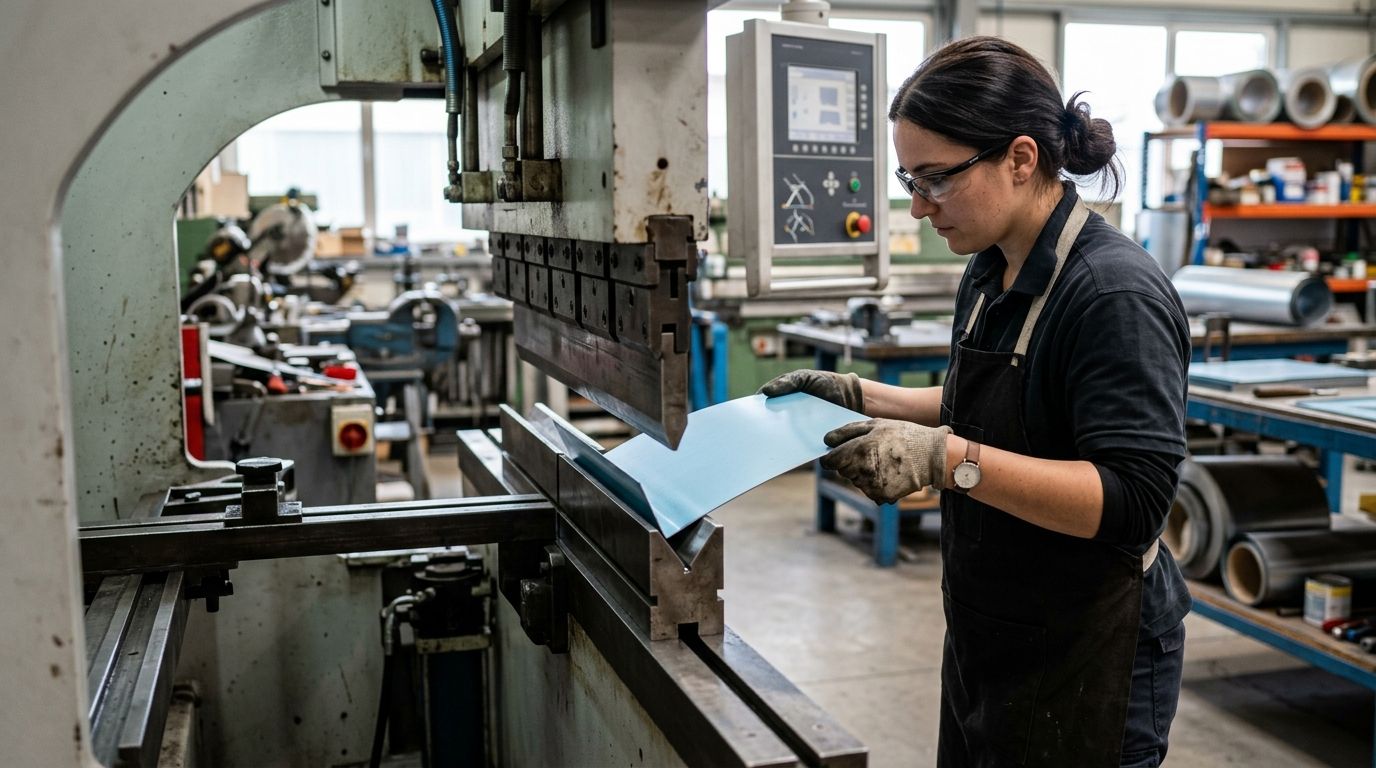
Best overall: a single-V die matched to the material and bend geometry. Best for a nonstandard finished-part drawing: a COVO custom die. Best for changing bend lengths and box clearance: a segmented die. The best press brake dies for thin gauge sheet metal are the dies that fit the part, the machine interface and the forming sequence—not the dies with the most profiles. This 2026 guide compares die types by the job each can complete and the checks each requires before ordering.
- A matched single-V die is the best press brake die for thin gauge sheet metal with standard bends.
- COVO custom dies are best for finished-part geometry that standard profiles cannot form.
- Choose segmented dies for variable bend lengths and box clearance; verify segment loads and clamping.
- Check flange clearance, inside radius, installed height and machine interface before requesting a tooling review.
Why this matters
Thin sheet does not eliminate tooling constraints. A die opening influences the formed radius and flange support, while the punch, die and holder together determine whether the part clears the machine throughout the stroke. A die that produces the intended bend angle can still mark a visible face, interfere with a return flange or sit at the wrong installed height.
Start with the finished-part drawing rather than a catalog profile. A nominal 0.8 mm sheet and a nominal 1.2 mm sheet represent different input thicknesses; neither number establishes a die opening by itself. Material grade, rolling direction, bend angle, inside-radius requirement and available machine capacity belong in the same review. For a closer look at profile selection, see acute-angle press brake dies compared.
What makes the best die for thin gauge sheet metal?
Use these criteria before comparing profiles. A die wins only when its advantages survive a check against the drawing and the press brake.
- Bend geometry: Check the specified inside radius, bend angle and acceptable forming method. Do not treat die opening as interchangeable with the finished inside radius.
- Flange support: Compare the shortest flange, hole-to-bend distance and any return geometry with the opening and shoulders. The workpiece needs support without trapping the part.
- Surface condition: Identify visible faces and any restrictions on tooling marks. Decide whether contact geometry, process controls or a different die type needs review.
- Machine fit: Match the lower-tool clamping interface, holder, installed height and loading arrangement. A compatible-looking profile is not proof that it will seat or clamp correctly.
- Bend length and load: Confirm the required working length, any joints between segments and the allowable loads for the tool, holder and press brake.
- Forming sequence: Check part clearance at every bend, including the position of already formed flanges. A die that works for the first bend must still release the finished part.
These checks belong together. Choosing a narrow opening solely to pursue a tighter radius can create flange-support or load problems. Choosing a segmented set solely for flexibility can add joints where a continuous bend calls for an uninterrupted working surface.
Best thin-gauge press brake dies at a glance
| Die option | Best for | Distinct advantage | Key limitation |
|---|---|---|---|
| Single-V die | Standard air bends | One working opening for a defined job | Limited flexibility when material or geometry changes |
| COVO custom die | Nonstandard finished-part geometry | Profile specified against the part and machine inputs | Requires a complete drawing and interface review |
| Segmented V-die | Variable bend lengths and box clearance | Working length assembled from sections | Segment joints and individual loads need checking |
| Multi-V die | Mixed work within a compatible setup | Several openings in one body | Each opening needs its own clearance and load check |
| Acute-angle die | Bends specified below a right angle | Opening geometry suited to acute forming | Rebound and part clearance still govern the result |
| Hemming die | Folded edges | Supports a defined hemming sequence | Not a substitute for a general-purpose V-die |
The table ranks die types, not interchangeable catalog products. No opening width, load rating or installed height applies to every die in a row. Verify those values for the proposed tooling and the machine that will hold it.
1. Single-V die: best press brake die for standard thin-sheet bends
A single-V die provides one opening for a defined range of bending work. For a standard air-bent part with a settled material specification and repeatable flange geometry, it is the clearest default: you review one opening against the drawing rather than selecting among profiles during setup. Best for: repeat production of standard bends with a confirmed die opening.
Single-V die pros:
- A fixed profile makes the setup decision explicit.
- The continuous working surface suits bends that do not require sectional clearance.
- A specific opening can be checked against the shortest flange and intended inside radius.
Single-V die cons:
- A different material thickness or flange design can require another opening.
- A standard V profile does not solve part interference around deep returns or closed shapes.
- The selected die still needs an interface, installed-height and load check.
For 2026 selection, compare the drawing with the exact opening and shoulder geometry proposed for the job. Confirm the available bend length and the holder arrangement before treating the die as approved. Verdict: Buy when one verified opening covers the intended part and forming sequence; otherwise, hold until the geometry is resolved.
2. COVO custom die: best for nonstandard finished-part geometry
COVO manufactures custom dies and forming tools for sheet-metal fabricators. The custom route fits work where the finished-part drawing calls for geometry a standard profile cannot provide. Define the required bend or formed feature first, then check the machine interface, material grade, thickness, installed height and available load against the proposed tool. Best for: a defined part that needs a tool designed around its geometry.
COVO custom die pros:
- The tool specification can start with the finished-part drawing.
- Punch, die and forming requirements can be reviewed as one setup.
- Nonstandard flange and clearance requirements can enter the tool review before an order.
COVO custom die cons:
- A custom profile is unnecessary when a standard die passes every drawing and machine check.
- An incomplete drawing or unidentified clamping interface prevents a reliable specification.
- A part-specific profile offers less flexibility for unrelated jobs than a suitable general-purpose die.
COVO custom press brake dies are best for fabricators with a defined part and machine setup, not for buyers who have not established the finished geometry. Verdict: Buy only after the part drawing, machine interface and forming loads have been checked together.
3. Segmented V-die: best for variable bend lengths and box clearance
A segmented V-die divides the working length into sections. That lets you assemble a length for a particular part and remove sections where a box wall or return flange needs clearance. The benefit is access, not an automatic improvement in bend accuracy. Best for: parts whose bend length or surrounding walls make a continuous die impractical.
Segmented V-die pros:
- Sections can be arranged around different working lengths.
- Gaps can provide clearance for formed walls where the setup permits them.
- Segment planning can be matched to the part sequence instead of the flat blank alone.
Segmented V-die cons:
- A joint under a critical bend needs explicit review.
- Each section must seat and clamp in the intended holder.
- Tool and machine load limits still apply to the assembled arrangement.
For 2026 jobs, draw the bend line against the proposed segment layout. Mark the contact area, gaps and interference points at each stage; then confirm clamping and loading for the actual arrangement. Verdict: Buy when sectional access solves a documented clearance or length problem without placing an unsuitable joint under the bend.
4. Multi-V die: best for mixed jobs using compatible openings
A multi-V die puts more than one opening in the lower tool. It can serve a shop that changes between compatible material and flange specifications, provided each selected opening is reviewed as a separate setup. The convenience of several profiles does not mean every face of the die suits every part. Best for: mixed work with verified openings on one tool body.
Multi-V die pros:
- Different openings can be available without selecting a separate die body for each job.
- One tool can be evaluated against several known drawings.
- Opening selection can be written into the setup instructions for each part.
Multi-V die cons:
- Unused profiles and shoulders can interfere with a formed flange.
- Each opening has its own support geometry and applicable load limits.
- Indexing or repositioning the tool still requires a clamping check.
For 2026 planning, record which opening belongs to each drawing. Check the workpiece against the entire die body, not only the active V. Verdict: Buy for a documented family of compatible parts; hold if clearance at the unused profiles has not been checked.
5. Acute-angle die: best for bends below a right angle
An acute-angle die has opening geometry intended for forming an acute bend. Specify the angle required on the finished part and account for the forming sequence rather than selecting a die by its nominal angle alone. The punch profile, material response and clearance around adjacent features remain part of the decision. Best for: a drawing that explicitly requires an acute formed angle.
Acute-angle die pros:
- Its opening geometry addresses a bend a standard general-purpose V may not suit.
- The tool can be reviewed against a defined acute-angle operation.
- It gives the setup plan a clear forming stage when later operations depend on that bend.
Acute-angle die cons:
- The die alone does not establish the finished angle after material rebound.
- Tight part geometry can limit punch access or part removal.
- It is a poor default for ordinary bends that pass on a standard V-die.
For example, a drawing calling for a 45° formed angle needs a review of the specified angle, material and tooling together; the drawing value is not a die specification. Verdict: Buy for a verified acute-forming operation, not as a general thin-sheet replacement.
6. Hemming die: best for folded thin-sheet edges
A hemming die supports a folding operation rather than an ordinary air bend. A hem has a pre-bend and a closing stage, so review both stages against the edge geometry and required surface condition. A flat hem and a teardrop hem also call for different finished profiles. Best for: drawings that specify a folded edge.
Hemming die pros:
- Its purpose matches a defined folded-edge feature.
- The review can account for pre-bend geometry and closing geometry separately.
- Contact surfaces can be checked against the visible face of the part.
Hemming die cons:
- It does not replace the single-V die used for ordinary bends elsewhere on the part.
- The closing operation needs a load check for the actual tool and machine.
- A hem specified only by its outside appearance leaves critical geometry unresolved.
For 2026 hemming work, send a section view showing the intended edge, material thickness and surface requirements. Confirm the pre-bend tool and closing tool as a matched sequence. Verdict: Buy only when the finished hem geometry and closing load have been verified.
How these dies are ranked
The ranking starts with the least specialized die that completes a standard thin-sheet bend, then moves to tools that solve specific geometry, access or process requirements. It does not rank manufacturers by an unprovided test result. A single-V die ranks first because the question has no drawing that justifies a special profile; COVO custom tooling ranks next because a nonstandard part changes the selection problem.
Read each Best for label as a condition, not a guarantee. A segmented die moves ahead of a continuous die when box clearance controls the job. A hemming die moves ahead when the finished drawing specifies a folded edge. For any choice, the part drawing and machine specification overrule a general ranking.
Tooling review checklist for a thin-gauge part
Before requesting a tooling review in 2026, put the part and machine information in one package. Separate confirmed drawing requirements from values that still need engineering review.
- Finished part: Supply the drawing, bend sequence, bend lengths, inside radii, angles, flange geometry and any visible-face requirements.
- Material: Identify grade, nominal thickness and any specified grain direction or surface finish. Do not substitute a generic label for the material specification.
- Machine: Identify the press brake, lower-tool clamping interface, holder arrangement, available stroke information and relevant capacity limits.
- Existing tooling: Record the punch profile, die opening, installed height and working lengths if the new tool must fit an existing setup.
- Critical clearances: Mark short flanges, holes near bends, returns, box walls and areas where the part must pass a punch or holder.
- Process: State whether the job uses air bending, acute forming, hemming or another defined operation; include the intended sequence for multi-stage features.
A nominal 1.5 mm material callout is only one item in that package. Without the grade, radius, flange and machine interface, it cannot settle the die choice. Check segment fit, clamping and loads before requesting review of a sectional set; check pre-bend geometry and closing load for a hem.
Which press brake die should you choose?
Choose a matched single-V die for a standard thin-sheet bend when its opening, support and machine fit pass the drawing review. Choose a COVO custom die when the finished geometry cannot be met by a suitable standard profile. Move to a segmented die for documented box clearance or changing working lengths, a multi-V die for verified mixed work, an acute-angle die for an acute bend, or a hemming die for a folded edge.
Do not order from material thickness alone. In 2026, the useful decision is the one you can trace from finished-part geometry through tool contact, clamping and allowable load. If any of those checks is unresolved, hold the selection and complete the tooling review before specifying a die.
FAQ
What's the best press brake die for thin gauge sheet metal?
A single-V die matched to the material, flange geometry and machine is the best default for a standard bend. A special feature can make a custom, segmented, acute-angle or hemming die the better choice.
Is a custom die better than a standard V-die?
A custom die is better when the finished-part geometry cannot be formed with a suitable standard profile. A verified standard V-die remains the simpler choice for an ordinary bend.
When should I use a segmented press brake die?
Use a segmented die when changing bend lengths or formed walls require a sectional arrangement. Check segment joints, seating, clamping and loads for the proposed layout.
Does sheet thickness alone determine the V-die opening?
No. The opening must also be checked against material grade, inside radius, flange support, forming method and allowable loads.
Can a multi-V die replace every single-V die?
No. Each opening on a multi-V die needs its own geometry, clearance and load review, and unused shoulders can interfere with a formed part.
What information does COVO need for a custom die review?
Start with the finished-part drawing, material grade and thickness, required geometry and machine interface. Include bend length, installed-height constraints, forming sequence and relevant load information.
Do I need a hemming die for a folded sheet-metal edge?
A specified hem needs a tooling review covering both pre-bend and closing operations. Confirm whether the drawing requires a flat or teardrop form and check the closing load.
One last thing
The shortest flange often decides whether a proposed opening is usable before the longest bend decides the required tool length. Check both on the same drawing. A die that fits the press brake but cannot support that flange is not the right die for the part.
Related guides
- Segmented press brake dies for box forming
- Press brake dies for stainless steel fabrication
- Custom press brake tooling for OEM fabricators
Open this COVO engineering guide · Browse press brake tooling · Request technical support