COVO KNOWLEDGE
Best press brake tooling brands for small fab shops 2026
Published:
Updated:
European 88° clamping tops the 2026 ranking of the best press brake tooling for small fabrication shops, with AMADA, TRUMPF, LVD and segmented options compared.
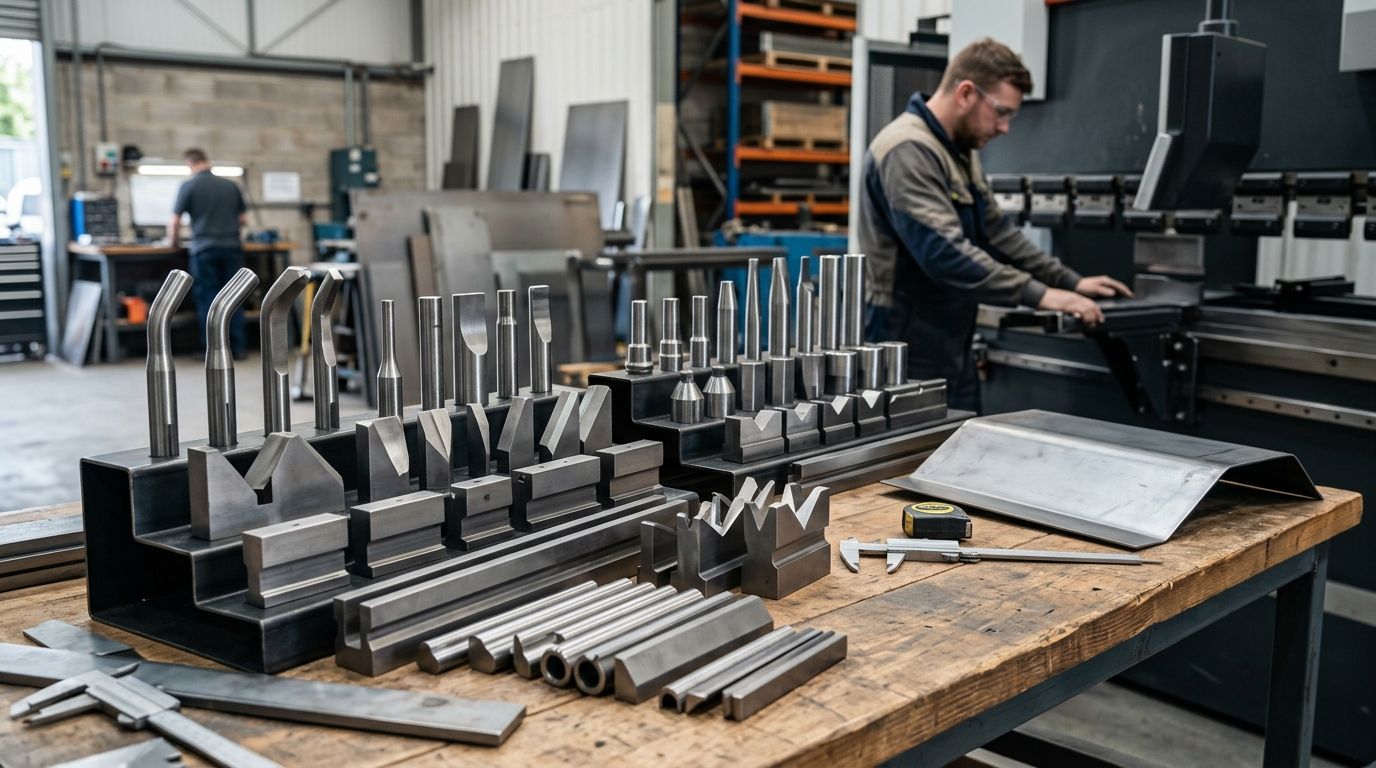
Small fab shops picking press brake tooling in 2026 aren't really choosing a brand — they're choosing a clamping interface and a wear-grade steel spec that has to match the machine, the material mix, and the flange geometry on whatever's crossing the shop floor that day.
- European 88° trapezoidal (WILA-style) clamping is the best press brake tooling for small fabrication shops running mixed part mix across two or more machines.
- AMADA-style tooling wins when a shop is standardized on a single AMADA press brake and needs factory-matched installed height.
- Segmented dies solve box clearance and frequent bend-length changes without stocking a full replacement tool set.
- TRUMPF-style and LVD-style interfaces fit shops already locked into those machine platforms — match the interface before ordering.
- Verify clamping interface, radius, segment length and material grade against the finished-part drawing before requesting a tooling review.
Why this matters
A press brake punch or die has one job: hold the clamping interface, bend length and radius the machine control expects, job after job. Swap tooling without checking the interface first and the failure shows up as installed-height drift or a radius mismatch against the flange geometry on the drawing — not as a line item on an invoice.
Small shops feel this harder than single-machine production floors. A shop running an AMADA, an LVD and a used TRUMPF unit needs tooling that matches each interface exactly or gets engineered to bridge them. COVO manufactures standard and custom punches, dies and forming tools against the finished-part drawing and the specific machine interface — AMADA, TRUMPF, WILA, LVD or BYSTRONIC — instead of a generic catalog part.
Best overall: European 88° (WILA-style) trapezoidal clamping. Best for high-mix box forming: segmented/sectional dies. Best for straightforward sourcing: AMADA-style standard tooling, which avoids custom lead time because it matches the most common installed base.
What makes the best press brake tooling for a small shop
Rank any tooling system against these before it reaches the machine:
- Clamping interface match — American safety-style, European 88° trapezoidal, or a proprietary mount; the wrong interface won't seat in the holder.
- Installed height — punch tip to ram face and die vee to bed; a mismatch throws off every stored bend program, not just the new job.
- Radius and angle tolerance — has to track the flange geometry on the part drawing, not a generic catalog radius.
- Segment and bend-length flexibility — modular segment lengths, commonly 100mm, 200mm and 300mm blocks, determine how fast a shop reconfigures for box forming or a shorter bend length.
- Material grade and hardness — press brake punches and dies typically run 58-62 HRC for wear resistance against cold-rolled and stainless stock.
- Lead time on custom review — how fast a supplier turns a finished-part drawing into a tooling recommendation when the standard catalog doesn't fit.
Press brake tooling systems at a glance
| System | Best for | Standout feature | Key limitation |
|---|---|---|---|
| European 88° (WILA-style) clamping | Mixed small-batch production across multiple machines | Fast segment swaps without re-clamping the full bed | Requires a holder built to the 88° trapezoidal standard |
| AMADA-style tooling | Shops standardized on a single AMADA press brake | Factory-matched installed height, minimal setup adjustment | Less flexible across non-AMADA machines |
| Segmented (sectional) dies | High-mix job shops doing frequent box forming | Reconfigurable bend length without a full tool change | Segment fit and load rating need an engineering check per job |
| TRUMPF-style tooling | Tight radius tolerance work, aerospace and precision sheet metal | Close radius control against demanding flange geometry | Narrower supplier base for exact-match replacements |
| LVD-style tooling | Shops running LVD or other European-standard fleets | Broad compatibility across European machine interfaces | Interface variants across LVD generations need verification |
| Bystronic-style tooling | Heavy-gauge, high-tonnage bending | Higher load-rated clamping for thick material runs | Overbuilt for light-gauge, high-mix work |
Row order below matches this table.
1. European 88° (WILA-style) clamping: best for mixed small-batch production
European 88° trapezoidal clamping holds punches and dies in a holder instead of bolting each tool directly to the ram or bed. Segments slide in and lock without re-squaring the whole tool run — the reason it matters when a shop reruns five different part numbers in a shift.
European 88° clamping pros:
- Segment changes take minutes, not a full re-setup
- One holder accepts multiple segment lengths and profiles
- Works across machines from different builders once the holder is installed
European 88° clamping cons:
- Upfront holder cost adds a step single-machine shops can skip
- Not every legacy press brake has a holder retrofit available
Best for: small shops running two or more machines with a changing part mix. Verdict: Buy if the schedule reconfigures for different bend lengths more than a few times a week.
2. AMADA-style tooling: best for shops standardized on one machine platform
AMADA-style tooling matches the tang, retention and installed height that AMADA press brakes expect out of the factory. For a shop running a single AMADA machine, this keeps setup adjustment minimal and avoids reprogramming installed-height offsets across the job library.
AMADA-style tooling pros:
- Factory-matched installed height, no ram offset recalculation
- Wide standard-catalog availability for common radii and lengths
- Straightforward drawing-to-order process for replacement tools
AMADA-style tooling cons:
- Doesn't transfer cleanly to a mixed fleet with non-AMADA machines
- Custom radii still need an engineering review against the part drawing
Best for: shops with one AMADA press brake carrying most of the workload. Verdict: Buy for direct replacement; Hold if a second, different machine brand is coming into the shop.
3. Segmented (sectional) dies: best for high-mix box forming
Segmented dies split a long die into shorter blocks that combine to form the exact bend length a job needs, then reconfigure for the next one. This is the system that solves box clearance — the die opens where the box wall needs clearance instead of fighting the full-length profile.
Segmented dies pros:
- Reconfigures bend length without stocking a full replacement die
- Handles box forming and stepped flanges a solid die can't clear
- Reduces the number of full-length dies a small shop needs to inventory
Segmented dies cons:
- Segment fit and clamping load need verification per job, not assumed from the last setup
- More moving parts means more surfaces to check for wear
COVO reviews segment fit, clamping and load rating against the drawing when a standard segmented set doesn't already cover the geometry. Best for: job shops with frequent box-forming and bend-length changes. Verdict: Buy for high-mix production; Wait if the current job mix rarely changes bend length.
4. TRUMPF-style tooling: best for tight radius tolerance work
TRUMPF-style tooling is built for close radius control on demanding flange geometry — the profile aerospace and precision automotive sheet metal parts need. The interface and grinding tolerance are tighter than a general-purpose catalog part.
TRUMPF-style tooling pros:
- Close radius control for tight flange geometry
- Consistent bend angle across long production runs
- Fits shops already running TRUMPF machines without an interface change
TRUMPF-style tooling cons:
- Narrower supplier base for exact-match replacement tooling
- Custom radii on this interface usually mean a longer engineering review
Best for: precision sheet metal work with tight radius call-outs. Verdict: Buy for TRUMPF-equipped shops running aerospace or automotive-grade tolerance; Hold for general fabrication where a looser radius tolerance is acceptable.
5. LVD-style tooling: best for European-standard machine fleets
LVD-style tooling covers the interface used across LVD press brakes and shares enough compatibility with other European-standard machines to work across a mixed European fleet, once the interface generation is confirmed.
LVD-style tooling pros:
- Broad compatibility across European-standard machine interfaces
- Standard catalog covers most common bend lengths and radii
- Fits shops transitioning from American-style to European-standard machines
LVD-style tooling cons:
- Interface variants across LVD generations need verification before ordering
- Custom geometry still routes through an engineering review
Best for: shops running LVD machines or a mixed European-standard fleet. Verdict: Buy after confirming the interface generation against the machine spec sheet.
6. Bystronic-style tooling: best for heavy-gauge, high-tonnage bending
Bystronic-style tooling carries a higher load rating built for thick-gauge material and high-tonnage bending. It's overbuilt for light-gauge, high-mix work, but it's the right call when the job mix runs heavy plate.
Bystronic-style tooling pros:
- Higher load-rated clamping for thick material runs
- Holds up under repeated heavy-gauge bending without premature wear
Bystronic-style tooling cons:
- Unnecessary weight and cost for light-gauge, high-mix shops
- Fewer standard-catalog options than AMADA-style or WILA-style systems
Best for: shops running heavy-gauge steel or high-tonnage jobs regularly. Verdict: Buy for heavy-plate production; Skip if most jobs run under mid-gauge material.
How we ranked these
Each system was checked against the six criteria above: clamping interface, installed height, radius tolerance, segment flexibility, material hardness and custom review lead time. European 88° clamping ranks first because it's the only system built specifically for fast reconfiguration across a mixed small-shop schedule — the others win on a narrower use case tied to a specific machine platform or material class.
Which press brake tooling system should you choose?
If the shop runs more than one press brake and a changing part mix, European 88° (WILA-style) clamping is the default choice for 2026 — it's built for the reconfiguration small shops do weekly. A shop standardized on one AMADA machine should stay on AMADA-style tooling rather than force a system change for its own sake. Segmented dies earn a spot in the tool crib the moment box forming or bend-length changes become a weekly occurrence, not a quarterly one.
When the part drawing calls for a radius, flange geometry, or installed height the standard catalog doesn't cover on any of these interfaces, that's an engineering review, not a catalog order. COVO builds custom press brake tooling from the finished-part drawing, the machine interface and the material grade when a standard punch or die set doesn't fit.
Get a tooling review before you order
Send the drawing, machine interface and material grade for a fit check.
FAQ
What is the best press brake tooling for small fabrication shops in 2026?
European 88° trapezoidal (WILA-style) clamping is the best press brake tooling for small fabrication shops running a mixed part mix across two or more machines in 2026. It reconfigures for different bend lengths in minutes instead of requiring a full re-setup.
Is WILA-style tooling better than AMADA-style for a small shop?
WILA-style 88° clamping wins for shops with a changing part mix or more than one machine brand on the floor. AMADA-style tooling wins for a shop standardized on a single AMADA press brake because it matches factory installed height directly.
How much radius tolerance does press brake tooling need?
Radius tolerance has to track the flange geometry called out on the finished-part drawing, not a generic catalog radius. Aerospace and precision automotive parts typically demand tighter radius control than general fabrication.
What hardness should press brake punches and dies be?
Press brake punches and dies typically run 58-62 HRC for wear resistance against cold-rolled steel and stainless stock. Softer tooling wears faster under repeated heavy-gauge bending.
Can one tooling system work across AMADA, TRUMPF, LVD and Bystronic machines?
Not directly — each of these uses a distinct clamping interface and installed height. A universal or custom-engineered system bridges them, but the interface still needs verification per machine before ordering.
What is segmented press brake tooling?
Segmented, or sectional, tooling splits a long punch or die into shorter blocks that combine to match a specific bend length. It solves box clearance and frequent bend-length changes without stocking a full replacement tool set.
How do I know if my press brake tooling needs custom engineering instead of standard tools?
If the part drawing calls for a radius, flange geometry or installed height the standard catalog doesn't cover on your machine's interface, that's a custom engineering review rather than a catalog order.
Does installed height matter when switching tooling brands?
Yes — installed height mismatches throw off every stored bend program in the control, not just the new job. Verify installed height against the machine spec before switching tooling systems.
One last thing
The most common failure mode when a small shop switches tooling systems isn't the punch or the die itself — it's the installed-height mismatch that quietly throws off ram programming across every job already saved in the control. Check installed height against the machine spec sheet before the first part runs, not after the angle comes out wrong.
Related guides
- Best TRUMPF-compatible press brake tooling suppliers
- Best LVD-compatible press brake tooling suppliers
Open this COVO engineering guide · Browse press brake tooling · Request technical support