COVO KNOWLEDGE
Harsle alternatives for press brake tooling in 2026
Published:
Updated:
Compare Harsle alternatives in 2026. COVO leads for part-specific custom tooling; check WILA and AMADA against clamping fit, geometry and loads before ordering.
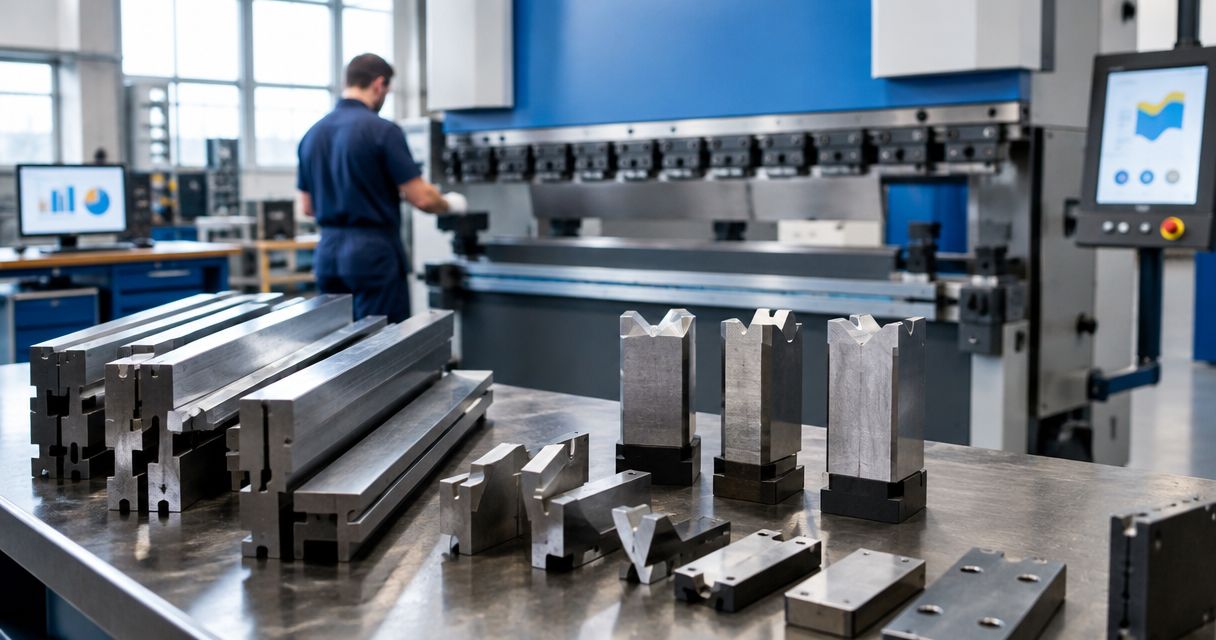
HARSLE is a sensible benchmark when its existing tooling drawings and installed setup already match your press brake. That stops being enough when a new part needs a different clamping interface, bend length, radius or flange geometry. The best Harsle alternative in 2026 is COVO for tooling engineered from a finished-part drawing; WILA is the comparison to investigate when a WILA clamping interface is the deciding requirement.
- For Harsle alternatives in 2026, choose COVO when the finished-part drawing calls for custom press brake tooling.
- Evaluate WILA against the actual WILA clamping interface; evaluate AMADA against the installed AMADA-style holders.
- Keep HARSLE when its documented tooling fits the part, machine and required bend length.
- Before requesting a tooling review, provide the part drawing, material grade, thickness, machine interface and required geometry.
Why this matters
A press brake tool can have the right general profile and still be wrong for the job. The punch must seat in the installed holder, the die must suit the material and bend, and the tooling must clear the part through the full forming sequence. For segmented work, the sections also need to provide the required bend length without blocking a return flange.
That makes a 2026 supplier comparison an engineering exercise, not a brand vote. Start with the finished-part drawing and the press brake as installed. A familiar supplier remains a valid choice when its documented tooling passes those checks; a different supplier earns consideration when the application calls for another profile, segment arrangement or custom forming tool.
Harsle alternatives at a glance
| Tooling option | Best for | Standout consideration | How to compare it with HARSLE |
|---|---|---|---|
| HARSLE | Repeating a documented, approved tooling setup | Existing tool drawings and fit records, if available | Use the installed setup as the dimensional benchmark |
| COVO | Standard or custom punches, dies and forming tools specified from the part and machine | Custom engineering from the finished-part drawing and machine interface | Submit the same part and interface requirements for review |
| WILA | Tooling selection centered on a WILA clamping interface | Interface verification against the installed WILA system | Compare approved drawings, installed height and required profiles |
| AMADA | Tooling selection centered on installed AMADA-style holders | Tang, retention and holder-fit verification | Compare the actual holder and tool drawings, not the system name alone |
The table identifies a useful review route, not a claim that one supplier's tool fits every machine carrying a familiar system name. In 2026, the deciding evidence is still the drawing of the proposed tool against the holder, part and forming load.
1. COVO: best for part-specific punches, dies and forming tools
COVO manufactures standard and custom press brake punches, dies, forming tools and accessories. Its custom-tooling route is the strongest fit here when an existing profile does not produce the required geometry or clear the finished part. The review should begin with the finished-part drawing, then work back through material grade, thickness, machine interface and forming sequence.
Where COVO shines
- Part-led specification. A drawing can establish the required bend, radius, flange geometry and clearance before a punch or die profile is selected.
- Custom-tool scope. A fabricated part that needs a nonstandard profile can be reviewed as a tooling requirement rather than forced into a standard-tool comparison.
- Machine-system context. The stated scope includes fabricators using AMADA, TRUMPF, WILA, LVD and BYSTRONIC systems. That identifies systems to discuss; it does not replace a check of the installed holders.
Where COVO falls short
- A custom-tool review needs more application detail than a repeat order placed against an already approved tool drawing.
- A manufacturer name cannot confirm clamping fit. You still need to verify tang or clamping geometry, retention, installed height and the machine's permitted loads against the proposed tool.
- If an existing standard tool already makes the part and has an approved setup, a new custom profile adds a review step without solving a defined forming problem.
Best for: Fabricators whose part drawing exposes a specific tooling constraint, especially flange interference, a required radius or a forming operation that needs a custom profile.
| Check | COVO review | HARSLE benchmark |
|---|---|---|
| Starting document | Finished-part drawing and machine details | Existing approved tool drawing, if available |
| Geometry question | Specify the profile needed for the part | Check whether the existing profile makes the part |
| Interface question | Confirm the proposed tool against the installed holder | Confirm the current tool's documented fit |
| Acceptance basis | Approved tool drawing and application checks | Approved tool drawing and application checks |
Verdict: Choose COVO for a custom-tooling review when the part or installed machine rules out an already approved standard setup. Hold the decision until the proposed tool drawing, clamping details and load requirements have been checked against the press brake.
Verify the application before requesting a tool review
Send a single, consistent specification to every supplier you compare. Otherwise, each proposal can solve a different version of the job, and a side-by-side comparison tells you little about the tool that will be installed.
- Finished-part drawing: Identify each bend, target angle, inside radius, flange geometry and any feature that approaches the punch or die during forming.
- Material: State the material grade and thickness shown on the job specification. Do not substitute a broad material category for the grade the tool must form.
- Machine and holders: Record the press brake model and the installed upper and lower clamping interfaces. Include holder drawings or measured interface details where available.
- Installed height: Check the proposed punch, die and holders as an assembly against the machine's setup requirements.
- Bend length and segmentation: Specify the working length, section arrangement and any gaps needed for box sides or return flanges.
- Forming sequence: Show when each flange is made. Clearance that looks adequate for an early bend can disappear after another flange is formed.
- Loads: Verify the application against the machine, holder and proposed tooling load ratings before approval.
- Acceptance drawing: Ask for the tool profile and interface dimensions that will be used to sign off the order.
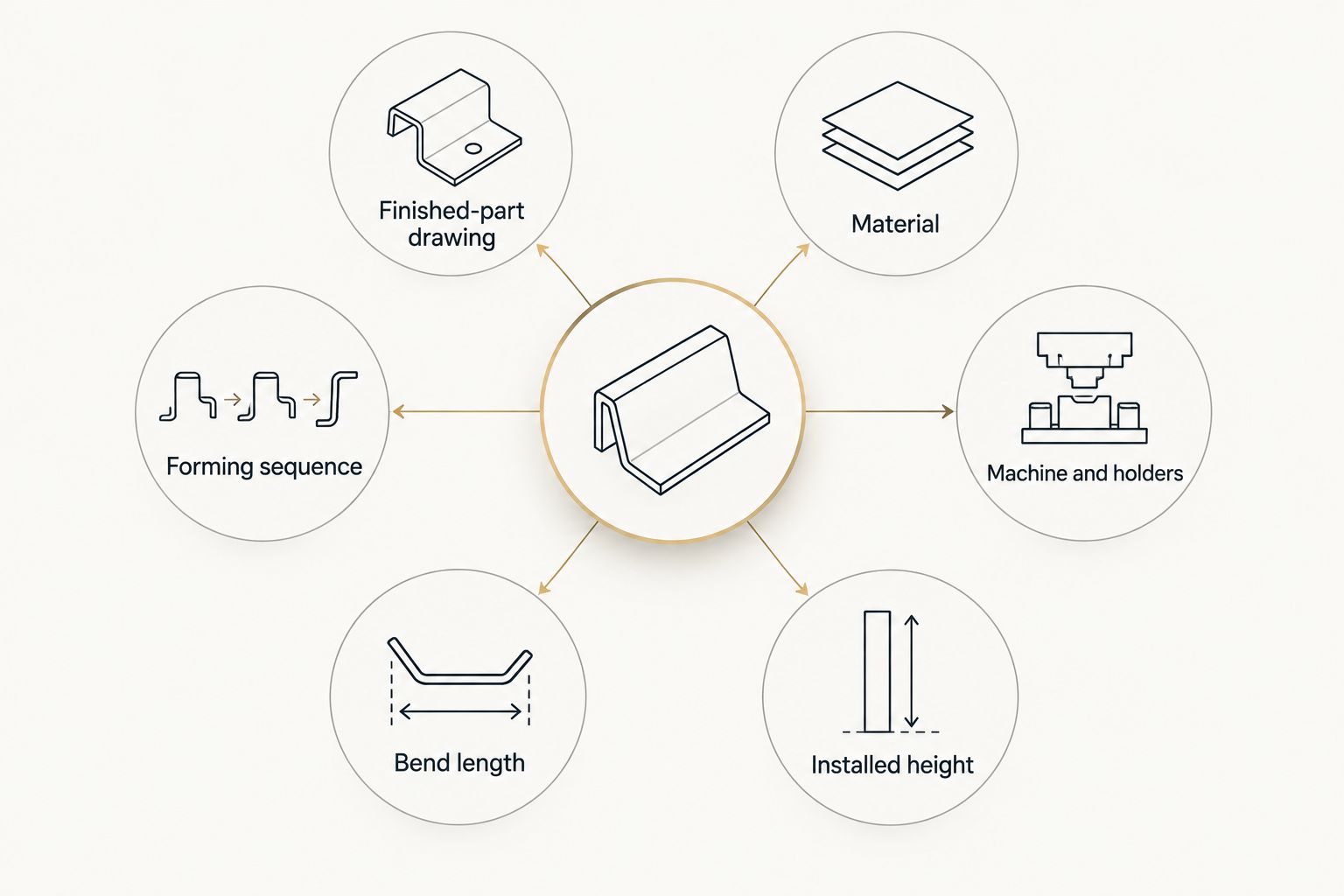
For a 2026 HARSLE comparison, give HARSLE and each alternative the same drawing package. Ask each supplier to identify the proposed punch and die profiles, clamping geometry, installed height and any unresolved clearance or load check. A response that does not resolve a required dimension is not yet an approved tooling specification.
Start a tooling review
Provide the part drawing and installed machine details for a tooling discussion.
2. WILA: best for a WILA-interface-led review
WILA is a useful alternative to investigate when the installed clamping interface is the first constraint in the tooling decision. Keep that constraint distinct from part geometry: identifying a WILA system does not establish the punch radius, die opening, section lengths or clearance needed for the job. Review the proposed tool against the actual holders and the finished-part drawing.
Where WILA shines
- A WILA-interface-led request gives the supplier a defined starting point for checking how the proposed tooling seats and locks.
- It keeps attention on installed height and retention rather than assuming that a visually similar tang is interchangeable.
Where WILA falls short
- Interface fit alone does not establish that a tool clears the formed part.
- A standard profile still needs checking against the required radius, flange geometry, bend length and forming sequence.
Best for: Fabricators who must first establish tooling fit with an installed WILA clamping interface.
| Check | WILA-led review | HARSLE benchmark |
|---|---|---|
| Initial constraint | Installed WILA clamping interface | Existing tool and holder drawings |
| Part geometry | Verify proposed profiles against the drawing | Verify the existing profiles against the drawing |
| Sign-off | Confirm fit, height, loads and clearance | Confirm fit, height, loads and clearance |
Verdict: Choose a WILA-led comparison when the installed WILA interface governs selection; hold approval until the proposed profile also passes the part checks. A matching interface is the beginning of the review, not its outcome.
3. AMADA: best for an AMADA-style holder check
AMADA is the alternative to investigate when installed AMADA-style holders define the immediate fit question. Specify the holder and retention arrangement actually on the machine. A system label alone does not establish whether a proposed punch has the correct tang, seating geometry or installed height.
Where AMADA shines
- The review can start with the installed holder and a matched tool-interface drawing.
- Existing approved tooling, where available, provides a practical dimensional reference for a proposed replacement.
Where AMADA falls short
- Matching the holder does not settle die selection, part clearance or the bend sequence.
- A replacement comparison based only on a catalog description leaves critical interface dimensions unverified.
Best for: Fabricators checking replacement or additional tooling against installed AMADA-style holders.
| Check | AMADA-style review | HARSLE benchmark |
|---|---|---|
| Holder evidence | Installed holder and retention details | Installed holder and approved tool details |
| Profile evidence | Proposed tool drawing | Existing or proposed tool drawing |
| Final check | Part clearance and application loads | Part clearance and application loads |
Verdict: Choose an AMADA-style review when holder fit is the controlling question; hold any order that lacks a matched interface drawing. The same caution applies to a HARSLE tool proposed for that holder.
Why people switch from HARSLE
The useful reason to consider Harsle alternatives in 2026 is a changed tooling requirement, not an unsupported claim about HARSLE. A new part drawing can introduce a return flange that interferes with the existing punch. A different machine can change the clamping interface or installed-height constraint. A shorter bend, box form or revised forming sequence can call for another segment arrangement.
Treat each change as a testable specification:
- The part no longer clears: Compare the finished-part envelope with the punch, die and holders through the planned forming sequence.
- The installed machine has changed: Recheck the upper and lower interfaces, retention and installed height rather than transferring the previous tool assumption.
- The bend length has changed: Confirm the required working length and whether sectional tooling leaves room for adjacent flanges.
- The target geometry has changed: Check the requested radius, angle and flange against the proposed punch and die drawings.
- The forming operation has changed: Define the intended forming steps before selecting a special tool.
If the existing HARSLE tooling passes those checks, changing suppliers has no demonstrated engineering benefit for that job. If it does not, record the failed check and request a proposed tool drawing that addresses it. That gives your engineering team a reason to approve or reject the alternative.
FAQ
What are the best Harsle alternatives for press brake tooling in 2026?
COVO is the strongest fit for a part-specific custom-tooling review; WILA and AMADA are useful comparisons when their respective installed interfaces lead the selection. Confirm every proposed tool against the part drawing, holders and application loads.
Is COVO a better choice than HARSLE for custom tooling?
COVO is the better review route when a finished-part drawing calls for a custom punch, die or forming tool. If an existing HARSLE tool already fits the machine and makes the part, keep that approved setup as the benchmark.
Can I order tooling by press brake brand alone?
No. Check the installed clamping interface, retention, installed height and tool drawing; a machine-system name alone does not establish fit.
What should I send for a custom press brake tooling review?
Send the finished-part drawing, material grade and thickness, machine and holder details, required bend length and forming sequence. Identify the radius, flange geometry and any clearance constraint that the existing tool cannot meet.
Does a matching clamping interface mean a punch will make my part?
No. The proposed profile must also satisfy the part geometry, clearance, bend length and load checks. Verify it against the complete forming sequence.
When should I keep existing HARSLE tooling?
Keep it when the documented tooling fits the installed machine and produces the required part within the approved setup. Recheck those conditions whenever the part, holders or forming sequence changes.
How do I compare segmented tooling for a box form?
Compare the proposed segment arrangement with the required bend length and return-flange clearance. Also verify section fit, clamping and loads before approving the setup.
One last thing
Before you request competing proposals in 2026, mark the bend that creates the tightest clearance on the finished-part drawing. That feature often determines which punch profile or segment arrangement needs review. Do not approve a HARSLE alternative on clamping fit alone: require the proposed tool drawing to account for that bend and the installed machine.
Related guides
- Custom press brake tooling for OEM fabricators
- WILA-compatible press brake tooling options
- AMADA-compatible press brake tooling brands
- Segmented press brake dies for box forming
Open this COVO engineering guide · Browse press brake tooling · Request technical support