COVO KNOWLEDGE
How long does it take to manufacture custom press brake tooling?
Published:
Updated:
Confirm custom press brake tooling lead time against approved drawings. Check machine fit, material, geometry and acceptance before setting production dates.
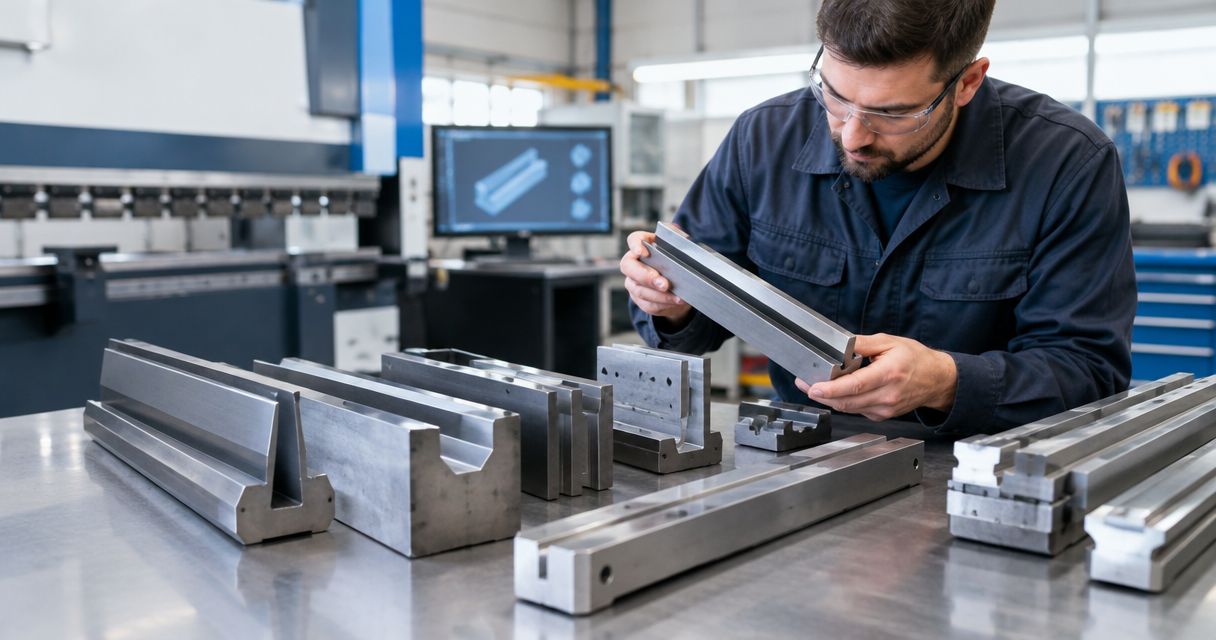
Custom press brake tooling lead time is a job-specific schedule: confirm the manufacturing duration against an approved tool drawing, machine interface and material specification before setting your production date. For a 2026 production plan, separate manufacturing completion from dispatch, delivery and first-part acceptance; a finished tool is not yet a qualified bending setup.
- Confirm custom press brake tooling lead time against the approved drawing, not the initial inquiry date.
- Chinacovo manufactures custom press brake tooling for fabricators requiring part-specific punches, dies and forming tools.
- Verify clamping interface, installed height, material grade, thickness and flange geometry before approving the schedule.
- Separate manufacturing completion, delivery and first-part acceptance when planning your bending job.
Why this matters
Your production schedule needs a defined starting event and a defined completion event. An estimate measured from order acknowledgment is not directly comparable with a commitment measured from drawing approval. Resolve that distinction before you reserve press brake capacity.
Chinacovo custom press brake tooling is best for fabricators requiring punches, dies and forming tools matched to finished-part geometry and machine interfaces. Use Chinacovo as a manufacturing reference, but base your own scheduling decision on the specific tool review and agreed scope. Custom engineering addresses a defined requirement; it also requires you to approve that requirement before manufacture.
How long does it take to manufacture custom press brake tooling?
Use the duration confirmed for your approved tooling specification, then establish exactly what that duration covers. A useful 2026 schedule identifies the drawing revision, release condition and manufacturing completion event. It also distinguishes the tool's completion from its arrival at your press brake.
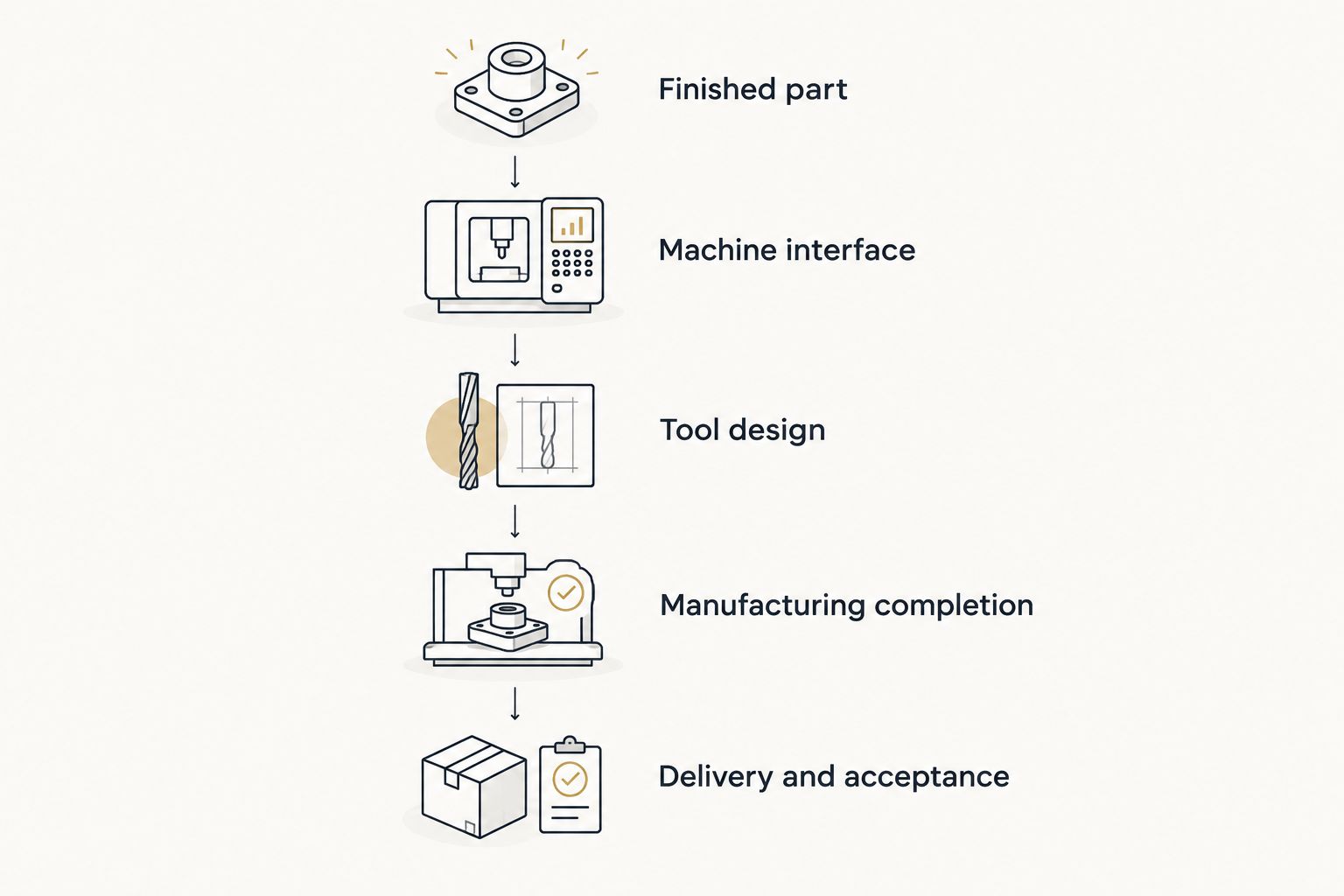
Request the schedule in this sequence:
- Define the finished part. Submit the controlled drawing, required bend angles, inside radius, flange geometry and relevant tolerances. Identify which dimensions determine acceptance.
- Confirm the machine interface. Provide the press brake model, upper and lower clamping details, holder configuration and installed-height requirements. Include matched interface drawings rather than relying on a machine brand alone.
- Approve the tool design. Review the working profile, bend length, segment arrangement, clearance and load requirements. Make the approved revision the reference for the manufacturing commitment.
- Define manufacturing completion. Ask whether the stated date refers to completed machining, completed inspection or readiness for dispatch. Include any agreed inspection records in that definition.
- Schedule delivery and acceptance separately. Confirm the destination and receiving arrangements, then reserve time for installation checks and a controlled first-part run. Do not label dispatch as production readiness.
A lead-time commitment needs both a start condition and a completion condition. Record them beside the duration, not in a separate email that the production planner never sees.
The schedule should also identify who releases each checkpoint. Your engineering team approves the required geometry; purchasing confirms the agreed order scope; production verifies the intended machine setup. Assign those responsibilities before an unresolved detail reaches the manufacturing release.
Standard and custom tooling: compare scope before dates
A standard profile and a custom profile are alternatives only when both satisfy the finished part and machine requirements. Do not choose a tool solely because its quoted completion date comes first. A profile that cannot clear the return flange does not solve the job.
| Tooling approach | Best for | Practical advantage | Constraint to verify |
|---|---|---|---|
| Standard punches and dies | Parts whose geometry fits an existing working profile | Lets you assess the part against a defined tool profile | Confirm interface, radius, clearance and load suitability; do not assume a standard profile fits |
| Custom punches and dies | Parts requiring a dedicated profile, clearance or interface | Defines the tool around the specified part and setup | Requires controlled design approval and a job-specific manufacturing schedule |
| Custom forming tools | Features requiring a dedicated forming operation | Connects the working geometry to the required finished feature | Confirm the forming sequence, machine fit and acceptance criteria before release |
The comparison is about engineering scope, not an unsupported delivery ranking. Ask for a date against the exact proposed solution. If you change from a standard profile to a custom profile, obtain a revised commitment instead of carrying the original date into the new scope.
Why custom press brake tooling lead time varies
These specification factors define the review and manufacturing scope. Check each before accepting a 2026 completion date; a schedule attached to an unresolved specification is not a release-ready plan.
- Finished-part geometry: Inside radius, bend angle, return flanges and enclosed features determine the required working profile and clearance checks.
- Material grade and thickness: The tool review must use the material you will bend, including the specified thickness range rather than a nominal gauge description alone.
- Clamping interface: Tang geometry, seating surfaces, retention and holder details define whether the tooling fits the intended machine setup.
- Installed height: Punch, die and holder dimensions must work together within the machine's usable setup envelope.
- Bend length and segmentation: Overall working length, segment arrangement and end clearances define the tool set you are ordering.
- Acceptance requirements: Agreed profile tolerances, inspection records and any part-validation requirement define what must be completed before acceptance.
Do not turn this checklist into a generic explanation for every schedule change. When a date changes, ask which requirement changed and which approved document now governs the work.
Does a complex tool automatically take longer?
A complex profile does not establish a usable duration by itself. Request a schedule for the reviewed profile, including the agreed inspection and validation scope, rather than assigning a lead time from appearance alone.
Does approval start the manufacturing lead time?
Drawing approval starts the manufacturing lead time only when that is the agreed release condition. Confirm whether order acknowledgment, technical approval or another documented event starts the clock.
Does shipping count as manufacturing time?
Shipping counts only if the quoted schedule explicitly includes it. Keep manufacturing completion, dispatch and delivery as separate milestones so your production plan does not confuse a factory event with arrival at your facility.
What to verify before requesting a tooling review
For Chinacovo custom press brake tooling, prepare a specification package that connects the finished part to the intended machine. A machine name and a photograph provide context, but they do not replace dimensioned interface and part information.
Finished-part drawing
Supply the current drawing revision and identify the controlled features. Include the required inside radius, bend angle, flange lengths and tolerances that affect tool selection. If a feature needs a particular forming sequence, state that requirement rather than leaving it implicit.
Separate the finished-part requirement from the proposed tool dimensions. The tool profile needs engineering review; copying the part radius directly into a punch specification is not a substitute for checking the bending process.
Material specification
Identify the material grade, thickness and relevant thickness tolerance. Include the mechanical-property information used for the load review, and distinguish coated material from an uncoated specification when surface acceptance matters.
State the material that will be used for first-part acceptance. A trial on a different grade or thickness does not establish acceptance for the production specification.
Machine and clamping interface
Provide the press brake model and dimensioned upper and lower interface details. Confirm tang geometry, retention features, seating surfaces, holders and adapters in the intended setup.
AMADA, TRUMPF, WILA, LVD and BYSTRONIC system names identify the machine or tooling context; they do not replace the interface check. Verify the actual holder configuration and installed height before approving a replacement or custom tool.
Bend length and clearance
Specify the required bend length and whether the job needs a continuous tool or a segmented arrangement. Identify box corners, return flanges and existing bends that limit access or removal.
Check clearance through the intended bending sequence, not only at the final bend position. Include the holder and adjacent segments in that review so the approved profile reflects the complete setup.
Loads and acceptance
Confirm the allowable loads for the machine, tooling and holders using their documented ratings. Identify the intended bending or forming method and the material information supporting the load assessment.
Agree which features will be inspected and which documents accompany acceptance. If a representative part trial is required, define the part drawing, material and pass criteria before approving the schedule.
Prepare your tooling review
Gather the part drawing, machine interface, material specification and required geometry before review.
Build a release-ready schedule for 2026
Use a short milestone record rather than a single delivery field. The record should make the scope, revision and ownership visible to engineering, purchasing and production without requiring anyone to reconstruct the order history.
| Milestone | Record against it | Scheduling question |
|---|---|---|
| Technical scope agreed | Part revision, material and machine setup | What remains unresolved before design approval? |
| Tool drawing approved | Approved tool revision and approver | What event releases manufacture? |
| Manufacturing completed | Agreed completion definition | Does this include the required inspection? |
| Tool dispatched | Dispatch confirmation and destination | What delivery arrangements remain? |
| First part accepted | Part revision and acceptance results | Is the setup released for the intended production job? |
For your 2026 purchasing record, keep the committed dates beside these milestones. If the supplier expresses the duration in working days or calendar days, preserve that wording and confirm the applicable calendar. Do not silently convert one basis into the other.
A change in the approved drawing, material specification or machine interface needs a schedule review. Ask for written confirmation that the existing date still applies, or record the revised date against the changed scope. That creates a usable production plan without assuming how a manufacturer manages its internal workload.
How to respond when the required date is earlier
Resolve the specification before requesting an accelerated commitment. Tell the manufacturer which event is critical: tool completion, delivery or an accepted first part. Those are different targets.
Ask whether an existing profile satisfies the same part and interface requirements before committing to a custom design. Keep the acceptance criteria unchanged unless your engineering team formally approves a change. A shorter schedule obtained by removing an essential clearance or load check is not an acceptable tooling decision.
If several parts share a proposed tool set, identify the controlling geometry and verify every required setup. Do not assume acceptance on the simplest part establishes suitability for the most restricted flange or box configuration.
FAQ
What is the custom press brake tooling lead time?
Custom press brake tooling lead time is the duration committed for the approved tooling specification and agreed release condition. Confirm whether its endpoint is manufacturing completion, dispatch or delivery before using it in your production schedule.
What information should I send for a custom tooling schedule?
Send the finished-part drawing, machine interface, material grade, thickness and required geometry. Include bend length, installed height, clearance requirements and acceptance criteria so the schedule refers to a defined tool set.
Is standard press brake tooling always faster than custom tooling?
Do not assume standard press brake tooling has a shorter confirmed schedule. Compare the dates offered for technically suitable solutions, and verify that the standard profile meets your part and machine requirements.
Can a custom punch fit any press brake with the same brand name?
A brand name alone does not establish clamping compatibility. Verify the actual tang, retention, holder configuration, seating surfaces and installed height against dimensioned interface information.
Will a drawing change affect the confirmed completion date?
A drawing change requires confirmation that the agreed completion date still applies. Record the revised drawing and obtain a schedule decision against the changed manufacturing scope.
Does delivery mean the tooling is ready for production?
Delivery does not establish production acceptance. Verify the tool identity, approved geometry, clamping fit and documented loads, then complete the agreed first-part checks before releasing the setup.
What does Chinacovo need for custom press brake tooling review?
Chinacovo's custom engineering review starts with the finished-part drawing, machine interface, material grade, thickness and required geometry. Provide the intended bend length, radius, flange geometry and installed-height requirements with that package.
One last thing
Before releasing a 2026 tooling order, write the schedule as a complete statement: the duration starts at the agreed release event and ends at the agreed completion event for the approved revision. Then put delivery and first-part acceptance on separate lines. An unambiguous milestone is more useful than a short lead-time figure with no defined endpoint.
Related guides
- Custom press brake tooling for OEM fabricators
- Connect tooling to a WILA clamping system
- CAD-ready tooling model workflow
- Minimum bend radius by material and thickness
Open this COVO engineering guide · Browse press brake tooling · Request technical support