COVO KNOWLEDGE
How long does press brake tooling take to ship from overseas?
Published:
Updated:
Press brake tooling shipping time needs a shipment-specific estimate. Separate manufacturing, freight and customs, then verify dates before scheduling.

Overseas press brake tooling shipping time depends on the dispatch date, freight route, customs clearance and delivery destination—not just the carrier’s transit estimate. For a usable delivery commitment, request separate dates for tooling readiness, collection and arrival at your facility; custom-tool engineering and manufacturing sit before the shipping clock starts.
- Press brake tooling shipping time starts at an agreed dispatch milestone, not automatically when you place the order.
- Chinacovo manufactures standard and custom press brake tooling; confirm engineering release separately from freight transit.
- Compare air freight and ocean freight using the same collection point, destination and delivery scope.
- Verify clamping interface, installed height and segment layout before releasing tooling for manufacture.
Why this matters
A tool arriving at a destination port is not the same as a tool ready for your press brake. Your production plan must account for delivery to the facility, receiving inspection, installation and first-part verification.
For your 2026 tooling plan, separate the logistics schedule from the engineering schedule. Chinacovo manufactures standard and custom punches, dies and forming tools, but the finished-part drawing and machine interface still determine what must be reviewed before an order can proceed.
A freight booking cannot resolve an incorrect tang, unsuitable installed height or missing clearance around a return flange. Verify those details before treating an arrival estimate as a production date.
How long does press brake tooling take to ship from overseas?
Use a shipment-specific, door-to-door estimate rather than a general overseas lead time. The relevant duration runs between defined milestones: collection from the supplier and delivery to your receiving location. An order-to-delivery schedule has a wider scope because it also includes engineering approval and manufacturing.
Ask the supplier or freight forwarder to complete this breakdown for your actual shipment:
| Schedule stage | Start and finish to confirm | What you need in writing |
|---|---|---|
| Engineering release | Drawing submission to approved tooling drawing | Approved revision and unresolved technical items |
| Manufacturing | Production release to tooling readiness | Expected completion date and inspection status |
| Dispatch preparation | Tooling readiness to carrier collection | Packing details, documents and collection date |
| International transport | Carrier collection to destination gateway | Route, transport mode and estimated arrival |
| Import and local delivery | Destination arrival to your facility | Clearance responsibility and delivery arrangement |
| Production release | Receiving inspection to accepted setup | Inspection, installation and first-part checks |
These stages are scheduling checkpoints, not fixed durations. Ask which activities overlap and which depend on completion of the preceding stage.
For a 2026 purchase order, record the estimate’s issue date and assumptions. A schedule based on an unapproved drawing or an unconfirmed collection date is not equivalent to a shipment already accepted by the carrier.
Which date should I use for production planning?
Use the expected facility delivery date as the logistics milestone, then schedule your internal acceptance work separately. Do not substitute a port arrival date, airport arrival date or manufacturing completion date.
Your first production run also needs a verified setup. Receiving the correct tool is necessary, but it does not replace checking seating, clamping, alignment, loads and the finished bend.
Air freight: best for time-sensitive shipments
Air freight is the option to evaluate when the transport portion of the schedule is the main constraint. Ask for a route-specific estimate that includes collection, export handling, destination handling and delivery—not only the flight segment.
Its limitation is that faster international transport does not remove engineering, manufacturing or customs requirements. Packed dimensions and gross weight also matter when the forwarder selects a service and handling arrangement.
Choose air freight against a confirmed tooling-ready date. Paying attention to the flight schedule before the drawing is approved leaves the most important upstream dependency unresolved.
Ocean freight: best for planned replenishment
Ocean freight is the option to evaluate when your production schedule allows for sailing schedules and port handling. Confirm the departure gateway, destination gateway and delivery scope before comparing it with an air-freight proposal.
Its limitation is that vessel arrival does not establish when the tool reaches your shop. Destination handling, customs release and inland delivery remain separate steps.
For either mode, ask how a missed collection or departure changes the delivery estimate. A scheduled movement and a completed movement are different milestones.
| Transport option | Best for | Main advantage | Main limitation | Verify before selection |
|---|---|---|---|---|
| Air freight | Time-sensitive tooling requirements | Shorter international transport than ocean freight on comparable routes | Upstream approvals and destination processes still apply | Packed size, gross weight, route and door-delivery scope |
| Ocean freight | Planned tooling replenishment | An alternative for shipments that do not require air transport | Sailing and port processes affect the schedule | Departure schedule, destination handling and inland delivery |
Compare proposals using identical shipment details. Otherwise, you risk comparing an airport-to-airport movement with a supplier-to-facility delivery and treating them as interchangeable.
Why press brake tooling shipping time varies
The useful question is not simply which country the tooling comes from. It is which shipment details and release conditions determine the schedule.
- Engineering approval: Custom profiles require agreement on the finished-part geometry and tooling drawing before manufacturing release. Changes to radius, flange geometry or clearance can change what must be produced.
- Tooling readiness: Manufacturing completion and carrier collection are different events. Confirm inspection status and the date the packed shipment will be ready for handover.
- Shipment configuration: Bend length, segment arrangement and tool profile affect packed dimensions and handling requirements. Give the forwarder actual packing information rather than an approximate tool description.
- Route and transport mode: Collection location, destination, service scope and departure schedule determine the applicable transit estimate. Use the route quoted for your shipment.
- Documentation and clearance: The commercial description, shipment documents and importer arrangements must agree. Confirm who resolves document questions before dispatch.
- Final delivery conditions: Your receiving address, unloading method and appointment requirements form part of the delivery plan. State them before the forwarder finalizes the movement.
These checks belong in the 2026 procurement record alongside the approved tooling revision. They make it possible to distinguish an engineering hold from a transport delay without relying on a single undifferentiated lead-time figure.
Verify the tooling before starting the shipping schedule
Do not compress the engineering review to protect an unconfirmed delivery date. A replacement tool with the wrong clamping interface creates a fit problem regardless of how quickly it travels.
Chinacovo press brake tooling is best for fabricators seeking standard or custom punches and dies matched to their part and machine requirements. Custom engineering addresses the required geometry, but it also requires drawing approval before manufacturing release; it is not a substitute for specifying the machine correctly.
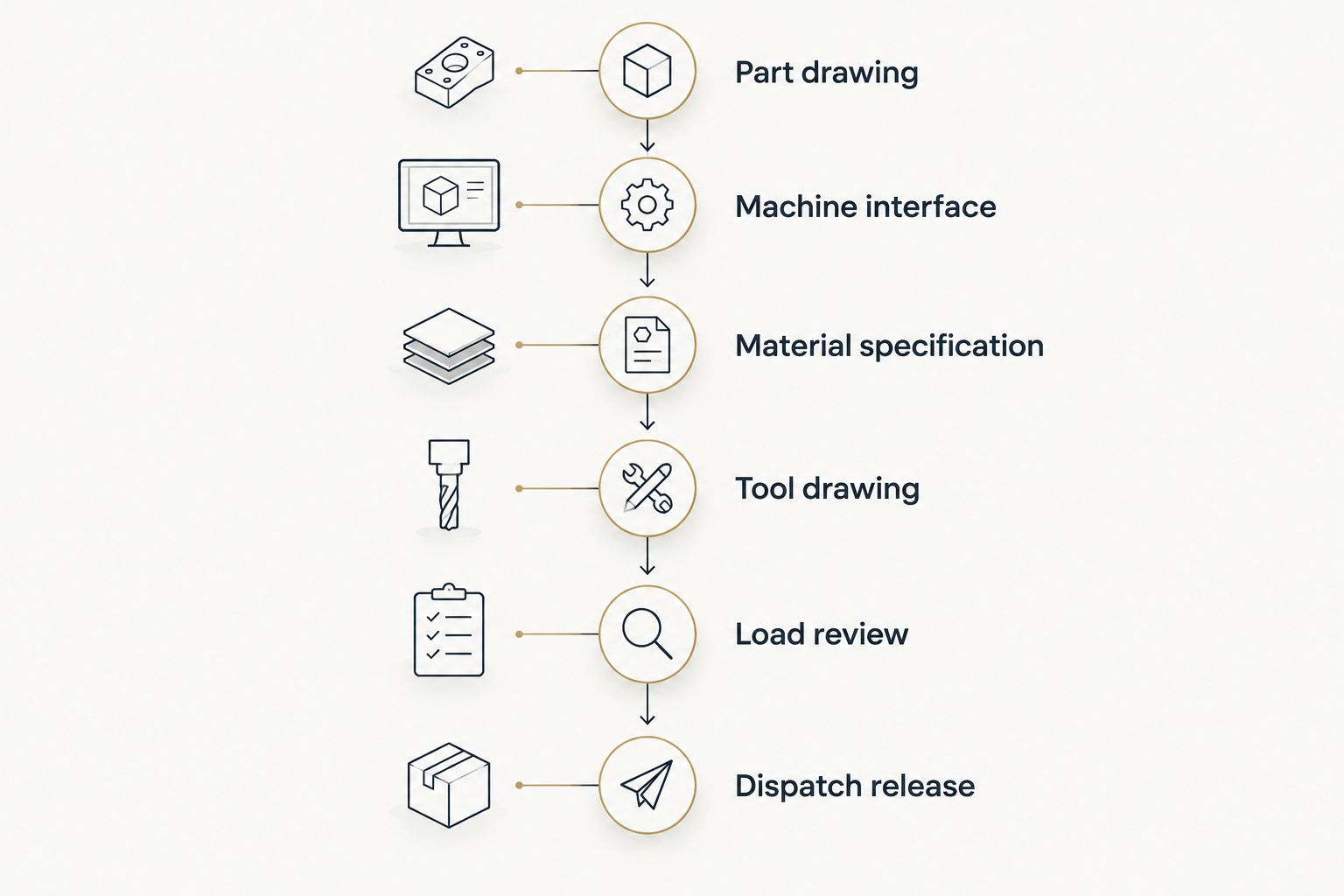
Use this release sequence before requesting a firm dispatch plan:
- Part drawing: Supply the controlled finished-part drawing, bend sequence where relevant, required radius, flange geometry and acceptance requirements. Identify features that restrict punch withdrawal or part rotation.
- Machine interface: Confirm the press brake model, upper and lower clamping interfaces, holders and any adapters. A machine brand name alone does not fully describe the installed interface.
- Material specification: State material grade, thickness and the bend length associated with the application. Identify changes in material or thickness that the same tool must accommodate.
- Tool drawing: Verify profile, installed height, working length and segment layout. Check clearance through the intended bend sequence, not only at the final bend position.
- Load review: Confirm the application against the rated limits of the tooling, holders and machine. Resolve the applicable load basis before approving the arrangement.
- Dispatch release: Tie the approved drawing revision to the packing list and shipment. Confirm which tooling items and segments belong in the consignment.
A repeat order still needs revision control. Confirm whether the new order matches the previously approved tool or includes changes to segments, profile, machine interface or application.
For the upstream schedule, review how long custom press brake tooling takes to manufacture. Keep manufacturing lead time separate from international freight transit when you request the overall delivery plan.
What should I send with a shipping-time request?
Send an engineering package and a delivery brief together. The supplier needs to identify the tooling, while the forwarder needs to identify the shipment and destination.
Engineering package
Include the finished-part drawing, material grade, thickness, bend length, required radius and flange geometry. Add the machine interface details, installed height constraints and proposed segment arrangement.
Identify the drawing revision you want reviewed. Mark any open technical questions rather than allowing a preliminary drawing to appear approved.
Delivery brief
Provide the delivery country, postal code, full receiving address and required arrival date. State whether that date means arrival at a gateway, delivery to your facility or readiness for a scheduled setup.
Include receiving hours, unloading arrangements and any delivery appointment requirement. Ask for packed dimensions and gross weight once the shipment configuration is established.
Schedule confirmation
Request the expected drawing-release date, tooling-ready date, collection date and facility-delivery estimate. Ask which dates are confirmed and which remain dependent on approval or booking.
For 2026 scheduling, keep these milestones in the purchase record rather than scattered across separate messages. Record changes against the affected milestone so your production team can see what actually moved.
Prepare your tooling review
Bring the part drawing, machine interface, material specification and required geometry to the review.
Can I shorten delivery without changing the tool?
You can remove avoidable approval and handover gaps by supplying complete specifications and agreeing on responsibilities early. That does not establish a guaranteed transit duration or justify bypassing inspection.
If the tooling is already approved, compare freight options against the same packed shipment and delivery address. If engineering remains open, resolve the drawing and interface questions before treating a transport change as the solution.
Should I split an urgent tooling order?
Consider a split shipment only when the first shipment contains a usable tooling arrangement for the intended operation. Confirm punches, dies, segments and required accessories together rather than prioritizing pieces solely because they are ready.
The limitation is coordination: each shipment needs clear identification and its own delivery tracking. Verify that receiving the first group actually enables the planned setup before authorizing separate movements.
FAQ
How long does overseas press brake tooling shipping take?
Overseas press brake tooling shipping time requires a shipment-specific estimate based on the dispatch date, route, transport mode and delivery destination. Confirm whether the estimate ends at a port, an airport or your facility.
Does press brake tooling lead time include manufacturing?
Order lead time can include manufacturing, while freight transit describes the transport portion. Request separate milestones for drawing approval, tooling readiness, collection and facility delivery.
Is air freight better than ocean freight for urgent tooling?
Air freight is the option to evaluate when international transport time is the main constraint. It does not remove drawing approval, manufacturing, customs clearance or receiving requirements.
What information does Chinacovo need for custom tooling review?
Chinacovo custom tooling review should start with the finished-part drawing, machine interface, material grade, thickness and required geometry. Include bend length, radius, flange geometry, installed height constraints and segment requirements.
Can I order replacement tooling using only the machine brand?
A machine brand alone is not enough to verify the installed tooling interface. Confirm the clamping interface, holders, retention arrangement, adapters and installed height before ordering.
Does arrival at the destination port mean the tooling is delivered?
Arrival at the destination port does not mean delivery to your facility. Confirm customs release, destination handling, inland transport and receiving arrangements separately.
What should I check when overseas tooling arrives?
Check shipment identification, visible condition and the contents against the packing list and approved drawing. Complete interface, seating, clamping and application checks before releasing the tool for production.
One last thing
The delivery milestone that protects production is accepted tooling, not merely delivered tooling. Define the receiving and setup checks before dispatch so the shipment arrives with a clear acceptance path.
For your 2026 schedule, work backward from the required production release: acceptance, installation, receiving, delivery, transport and tooling readiness. This exposes the dependencies that a single shipping-time estimate hides.
Related guides
- How to verify press brake tooling compatibility before ordering
- Custom press brake tooling for OEM fabricators
- Connecting tooling to a Bystronic press brake
Open this COVO engineering guide · Browse press brake tooling · Request technical support