COVO KNOWLEDGE
How much does it cost to repair a press brake die versus replace it?
Published:
Updated:
Compare repair vs replace press brake die cost by approved geometry, loading and production release. Verify matched scopes before choosing either route.
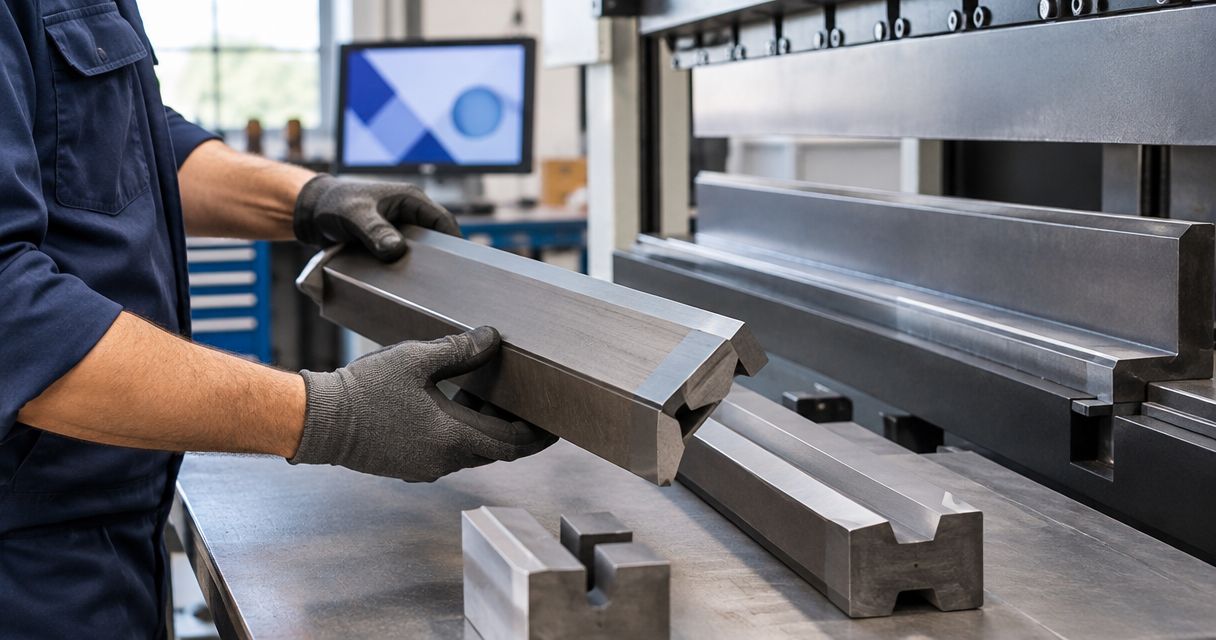
Repair is economical only when the die can be restored to documented geometry and an approved load rating at a lower total return-to-production cost than replacement. For a 2026 decision, compare written scopes rather than a generic repair percentage: inspection, transport, setup changes and part validation belong in the comparison alongside the tooling work. A restored working surface alone does not establish that the die is suitable for service.
- Repair vs replace press brake die cost depends on recoverable geometry, approved loading and return-to-production work.
- Repair suits recoverable wear; replacement suits damage or geometry that cannot be approved for continued service.
- Compare installed height, clamping interface, bend length and validation requirements before approving either route.
- Chinacovo manufactures standard and custom press brake tooling; replacement selection starts with the part drawing and machine interface.
How much does it cost to repair a press brake die versus replace it?
There is no defensible universal repair figure or replacement percentage. The comparison needs an inspection-based repair scope and a replacement specification for the same finished part, material and machine setup.
Start by inspecting press brake dies for wear before reordering. Separate surface condition from dimensional wear, seating damage and suspected cracking before requesting quotations.
| Decision item | Repair route | Replacement route |
|---|---|---|
| Best for | Recoverable wear with an approved restoration plan | Damage, unsuitable geometry or restoration that cannot be approved |
| Main advantage | Retains the existing tool when restoration is technically acceptable | Allows selection against the required part and machine specifications |
| Main limitation | Material removal and existing damage constrain the result | Requires interface, installed-height and setup verification |
| Scope to request | Inspection, restoration method, final dimensions and service approval | Tool drawing, interface, working profile and load rating |
| Production work | Verify changed dimensions and requalify the setup | Verify fit, update the setup and qualify the part |
| Approval basis | Restored condition satisfies documented acceptance criteria | Replacement satisfies documented acceptance criteria |
Compare accepted tooling, not merely completed tooling work. A repair quotation that excludes final dimensional inspection is not equivalent to a replacement quotation that includes it. Align the deliverables before choosing.
Why this matters
A press brake die is part of a loaded system. Its working profile, seating surfaces and installed height affect how the punch, sheet and lower tool interact. Treating repair as a surface-finishing purchase leaves those relationships unchecked.
For your 2026 tooling review, define success from the finished-part drawing backward. The die must support the required flange geometry, radius, bend length and material without exceeding the approved limits of the tool, holder or machine.
Do not use the condition of the die alone to explain every bend defect. Check punch condition, alignment, material variation and machine setup before assigning corrective work to the lower tool.
Repair: best for recoverable wear
Repair is a candidate when inspection establishes that the affected geometry can be restored and the resulting tool remains suitable for the intended load. Require a written restoration proposal; the word regrind does not define the final profile or acceptance criteria.
The advantage is retention of a tool already associated with your production setup. The limitation is that restoration removes or alters material, and the permitted work depends on the tool's construction, condition and manufacturer guidance.
Before authorizing repair, request:
- A condition report identifying the affected surfaces and locations.
- The proposed restoration method and surfaces to be modified.
- Final V-opening, die angle, shoulder geometry and installed height.
- Requirements for checking material condition or suspected defects.
- The basis for approving the restored die for its intended loading.
- A dimensional inspection report tied to the tool identification.
Choose repair only after the final condition is defined. Do not authorize open-ended grinding followed by an assumption that the original setup and rating still apply.
Can a regrind change the bending setup?
A regrind can change working geometry or installed height, depending on the surfaces modified. Update the tool data from the inspected final dimensions, then verify punch clearance, programmed position and first-part results.
For sectional tooling, review the assembled working length as well as individual segments. A repaired segment must seat correctly and work consistently with the adjacent segments selected for that setup.
Replacement: best for an unapproved restoration outcome
Replacement is the appropriate route when the proposed repair cannot establish acceptable geometry, seating or loading for the job. It is also the route to evaluate when the existing die profile does not suit the required part, regardless of its remaining physical condition.
The advantage is a specification built around the required application. The limitation is qualification work: a new die still needs interface verification, setup checks and a documented first-part inspection.
Do not order solely from the old die's nominal V-opening. Verify the clamping interface, base dimensions, seating arrangement, overall length, segment arrangement and installed height against the machine and holder drawings.
Replacement does not correct an unresolved process problem by itself. If the original damage followed an overload, incorrect seating or unsuitable application, address that cause before installing another die.
Should you replace a single damaged segment?
Replacing a segment is an option only when the replacement matches the required working profile, seating and assembled height. Confirm compatibility with neighboring segments rather than relying on nominal length or appearance.
Inspect the rest of the set before making that decision. Localized damage and wear across the complete working length require different scopes, even when the visible defect first appears in one segment.
Why repair versus replacement cost varies
Use these factors to structure your 2026 comparison. Each factor changes the work required to return the tool to an accepted production condition.
- Damage condition: Distinguish removable surface damage from dimensional loss, seating damage and suspected cracking. The required inspection and acceptable restoration method depend on that distinction.
- Working geometry: V-opening, die angle and shoulder geometry determine what must be restored or reproduced. Compare both routes against the same target drawing.
- Tool construction: Confirm material, heat-treatment information and any surface treatment from available records. Do not assume that grinding or local repair preserves the original properties.
- Length and segmentation: Specify the working length and segment arrangement. Include assembled-height and joint checks where the job uses multiple segments.
- Machine fit: Verify the clamping interface, holder, seating surfaces and installed height. Include any necessary setup or tool-data changes in the scope.
- Production acceptance: Define transport, inspection, setup, trial material and first-part approval responsibilities. Evaluate lost production using your own schedule and operating records.
Keep the assumptions visible. A comparison based on existing inspection records is different from one that requires tool shipment and assessment before the restoration scope can be confirmed.
Build a like-for-like decision worksheet
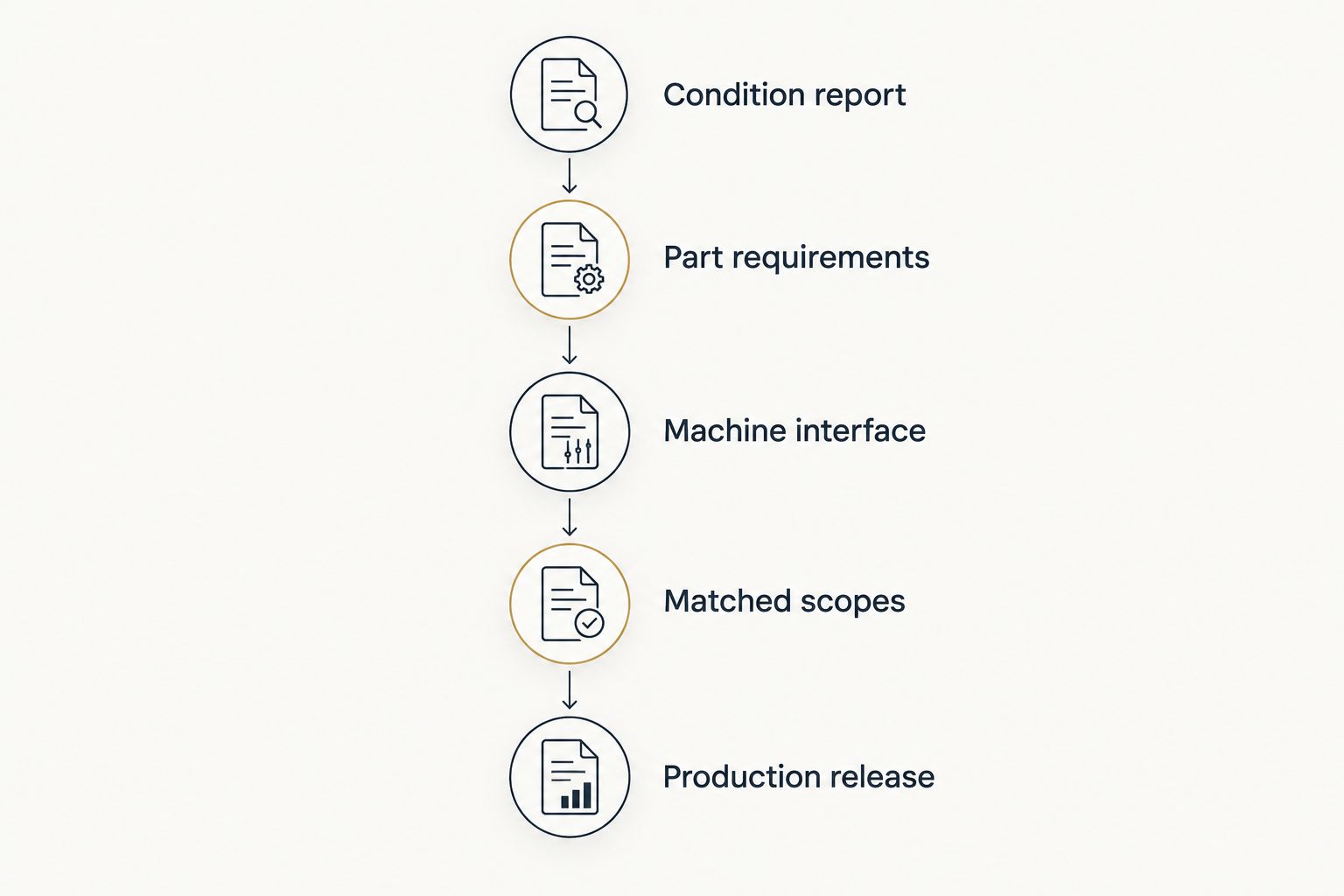
Use a single worksheet for both routes. For 2026 purchasing approval, the worksheet should connect engineering acceptance to the work needed before the next production release.
- Condition report: Identify the die, record the defect locations and attach inspection findings. Keep the tool out of service when its condition has not been approved.
- Part requirements: Attach the finished-part drawing, material grade, thickness, bend length, required radius and flange geometry. Identify critical dimensions and surface requirements.
- Machine interface: Attach the machine and holder details, clamping-interface drawing and current tool arrangement. Record installed height from the applicable datum.
- Matched scopes: Request final geometry, inspection deliverables and intended load approval for each route. Identify exclusions explicitly.
- Production release: Assign responsibility for setup verification, trial bends and acceptance records. Compare the complete route to release, not just the workshop operation.
Separate confirmed work from conditional work in the worksheet. If inspection must precede a repair decision, record that dependency rather than treating a preliminary estimate as an approved restoration plan.
Include your own downtime exposure
Use the actual production schedule to assess interruption. Record affected jobs, alternative tooling, available machine capacity and the work needed to transfer or restart production.
Do not assign a generic downtime multiplier. A die supporting a scheduled repeat job presents a different planning problem from a tool with a qualified alternative already available.
Keep validation in both columns
Both routes require a release check against the part drawing. Include the inspection method, trial material, acceptance criteria and authority to approve production.
Avoid comparing repair plus validation against replacement without validation. That makes the replacement route look simpler by excluding work that still needs to happen.
What specifications should you send for a replacement review?
Send a matched package rather than an isolated photograph. Include the finished-part drawing, machine interface, material grade, thickness, required bend geometry and the existing tooling arrangement.
Chinacovo is best suited to fabricators seeking standard or custom press brake tooling specified from the finished part and machine interface. Chinacovo manufactures punches, dies and forming tools; frame the replacement request around the application rather than an assumed copy of the worn profile.
For a custom die review, identify:
- Required inside radius and bend-angle acceptance criteria.
- Minimum flange geometry and any return-flange interference.
- Bend length and planned segment arrangement.
- Clamping interface, holder details and installed-height constraints.
- Material grade, thickness and surface-finish requirements.
- Intended forming process and the applicable machine and tooling load limits.
A custom profile is not automatically the right answer. First establish whether a standard die satisfies the drawing and setup constraints; request custom engineering when the required geometry or interface calls for it.
How do you approve the repaired or replacement die?
For a 2026 production release, inspect the delivered tool against the approved drawing and agreed scope. Check identification, seating, working geometry and installed height before trial bending under the applicable machine procedures.
Use representative production material for the qualification bends. Inspect angle, radius, flange dimensions and surface condition against the finished-part requirements, and record the setup used to achieve acceptance.
A satisfactory trial bend does not establish a die's structural load rating. Keep dimensional acceptance, part acceptance and approval for intended loading as separate records; none substitutes for the others.
FAQ
Is repairing a press brake die cheaper than replacing it?
Repair is economical only when an approved restoration has a lower total return-to-production cost than an acceptable replacement. Compare inspection, transport, setup changes and part validation as well as the tooling work.
Can a chipped press brake die be repaired?
A chipped press brake die needs a qualified condition assessment before repair is approved. The defect location, tool construction and achievable final geometry determine whether restoration is acceptable; do not grind away the visible chip and assume the tool is suitable for service.
Can I use the original load rating after a die regrind?
Do not assume the original load rating remains applicable after a die regrind. Obtain approval for the restored geometry and condition from the tooling manufacturer or a qualified engineering authority.
Should I replace the whole die set or just one segment?
Replace only the affected segment when its compatibility with the remaining set has been verified. Check working profile, seating, installed height and the condition of neighboring segments before approving the assembled setup.
What should I send Chinacovo for a replacement die review?
Send Chinacovo the finished-part drawing, machine and clamping-interface details, material grade, thickness, bend length and required geometry. Include the existing tool drawing and condition report when available so the replacement review does not reproduce an unsuitable or worn profile.
Does a new press brake die need a first-part inspection?
A new press brake die needs setup verification and first-part inspection before production release. Confirm fit and tool data, then inspect the finished bend against the part drawing using representative material.
What is the most useful repair versus replacement comparison?
The most useful comparison is the complete route to an accepted production setup, with matching engineering requirements on both sides. Define final dimensions, intended loading, inspection deliverables and release responsibilities before selecting either route.
One last thing
Do not use the worn die as the only manufacturing reference. A copy can reproduce wear rather than the geometry the part requires. Reconcile the original tool drawing, measured condition and finished-part requirements before approving restoration or replacement.
Retain the final inspection report with the setup record. At the next review, compare the measured condition against that accepted baseline instead of relying on appearance or memory.
Related guides
- Verify press brake tooling compatibility before ordering
- Can worn press brake punches be reground instead of replaced?
- Store press brake tooling to prevent rust and damage
Open this COVO engineering guide · Browse press brake tooling · Request technical support