COVO KNOWLEDGE
Press brake punches ranked by radius tolerance 2026
Published:
Updated:
Press brake punches ranked by radius tolerance in 2026: which grinding class holds +/-0.025 mm, which runs +/-0.13 mm, and what to verify before ordering.
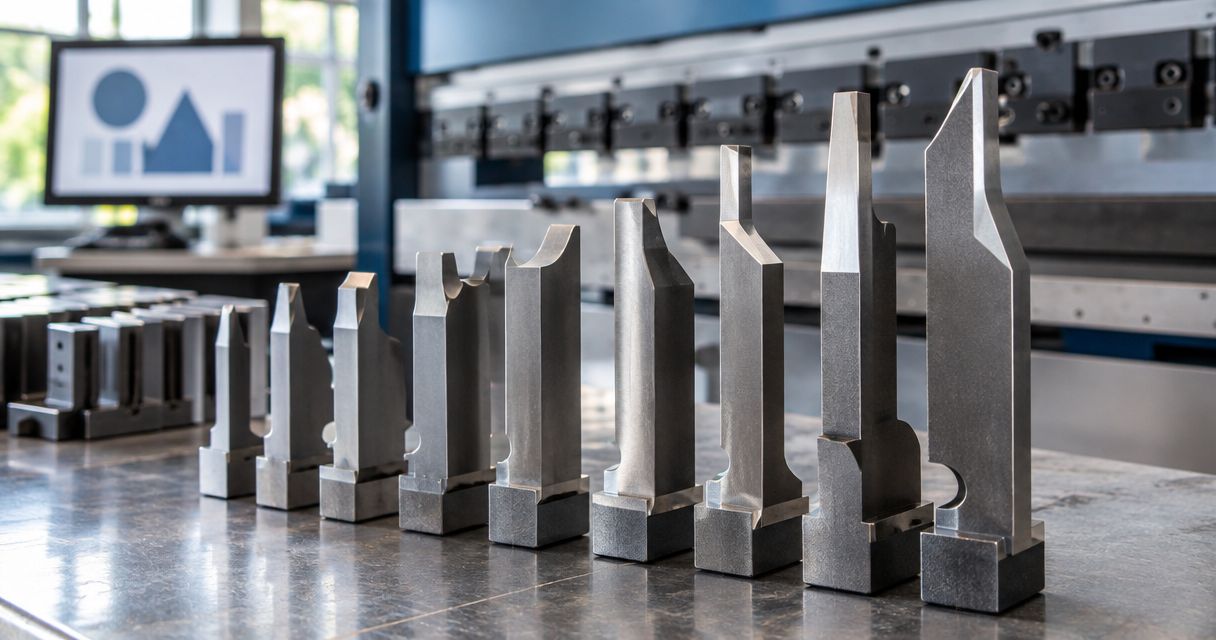
Radius tolerance separates a press brake punch that holds flange geometry across a full production run from one that drifts after a few thousand hits. This ranking sorts punch tooling classes by the radius control they actually deliver, from standard forged tooling up to superprecision ground punches built against a finished-part drawing.
- Press brake punches ranked by radius tolerance: superprecision ground tooling holds +/-0.025 mm, standard forged tooling runs +/-0.13 mm or wider.
- COVO's custom-ground press brake punches win for finished-part drawings with tight flange geometry; verify radius against the part print before ordering.
- Sectional punch sets hold radius segment to segment but need segment-fit and clamping checks at every bend-length rebuild.
- Heavy-gauge steel bending needs reinforced radius geometry, not just a tighter tolerance number, so check load rating alongside radius spec.
- No-mark urethane-faced punches protect coated aluminum surfaces but trade some radius precision for surface protection.
Why this matters
Radius tolerance on the punch nose decides whether the inside bend radius, and therefore the flange geometry, repeats from the first hit to the ten-thousandth. A punch ground to +/-0.13 mm can still meet a print with a generous tolerance band, but tight stainless or aerospace flange call-outs often specify an inside radius tighter than that, which means the punch needs a tighter tolerance than the print, not the same one.
Fabricators running AMADA, TRUMPF, WILA, LVD or BYSTRONIC systems see the same failure pattern in 2026 production: tooling radius tolerance, not machine tonnage, is what causes bend-angle drift and rejected parts on tight-radius runs. COVO grinds punch radius against the finished-part drawing and machine interface rather than shipping a stock profile and letting the fabricator compensate in the program.
What makes the best press brake punch for radius tolerance
- Grinding process — CNC-ground nose profile versus forged-and-stress-relieved tooling
- Steel hardness and heat treatment at the radius, not just at the body
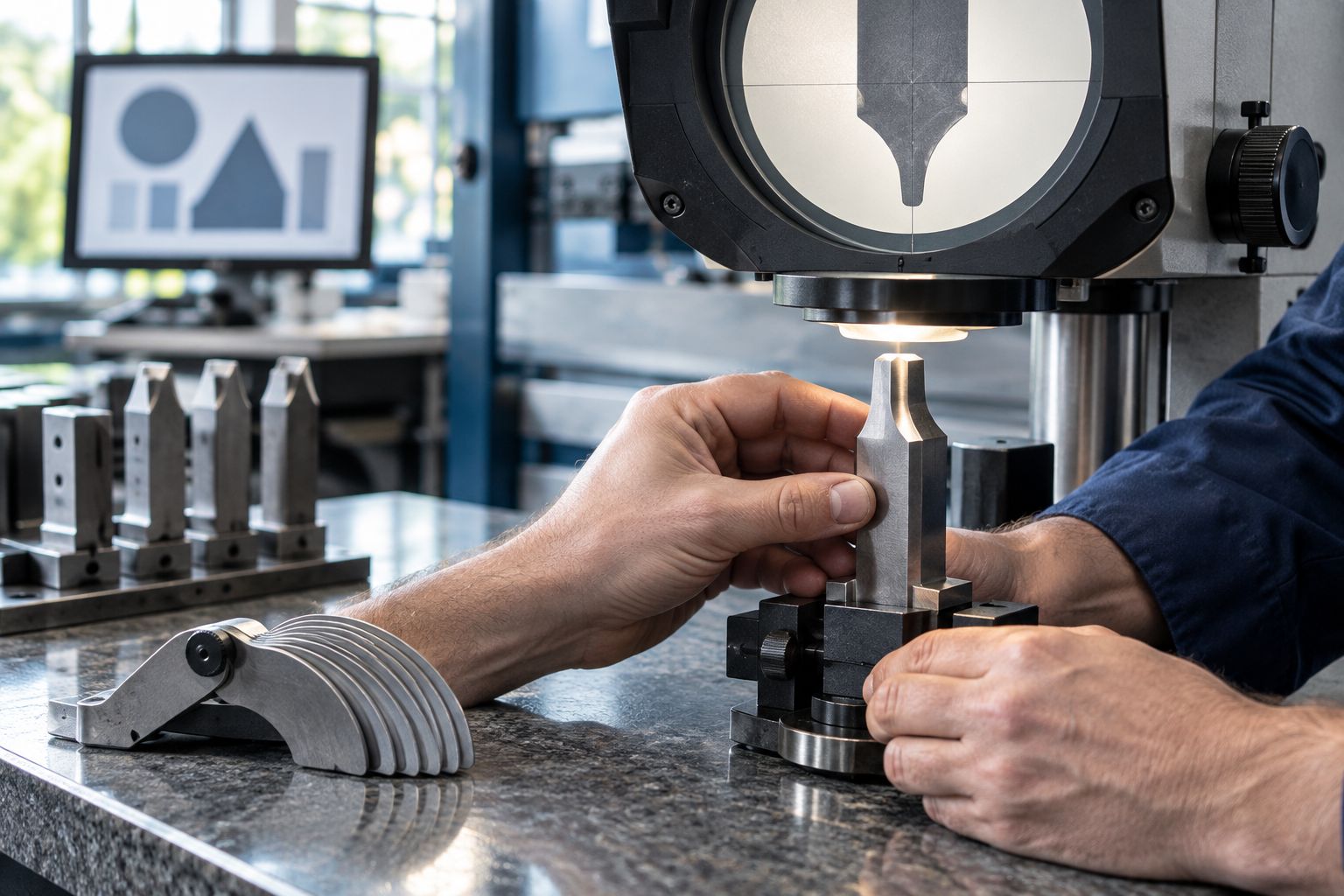
- Radius verification method — optical comparator, radius gauge or CMM check against the drawing
- Clamping interface fit — a loose tang or holder introduces radius drift under load even on a well-ground punch
- Segment length and fit, for sectional tooling used across variable bend lengths
- Surface finish and coating, for punches running against pre-finished or coated material
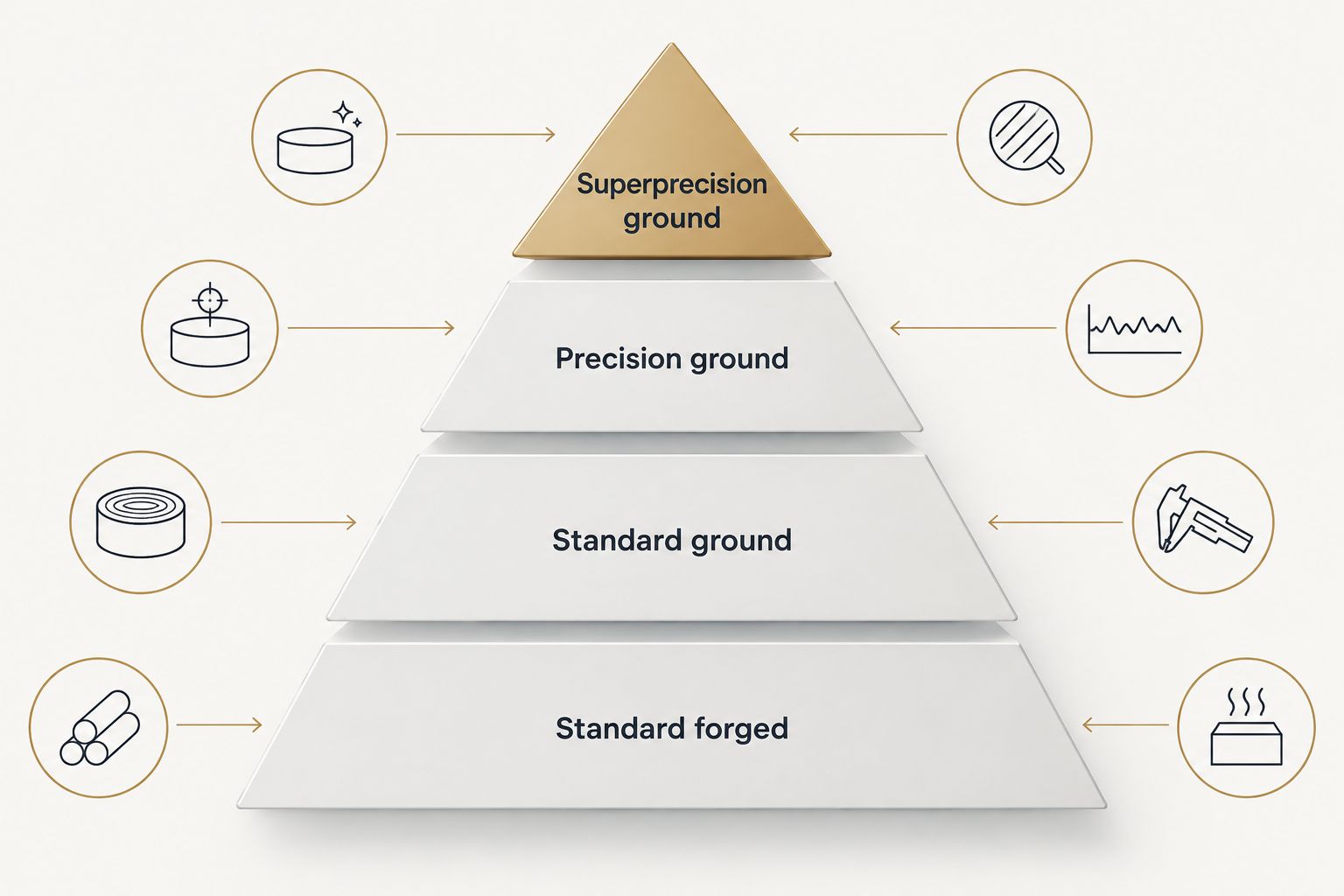
Press brake punches ranked by radius tolerance — at a glance
| Punch class | Best for | Standout feature | Key limitation |
|---|---|---|---|
| COVO custom-ground precision punches | Finished-part drawings with tight flange geometry | Radius ground to the part print, interface and material spec | Custom grinding lead time versus stocked profiles |
| Superprecision ground punches | Aerospace and tight-tolerance stainless | Radius held within +/-0.025 mm | Higher cost per punch than standard ground tooling |
| Precision ground heavy-duty punches | Heavy-gauge steel bending | Reinforced radius and body for high tonnage | Overkill for light-gauge, loose-tolerance work |
| Sectional ground punch sets | Mixed bend lengths and box sections | Reconfigurable length without a full tool swap | Segment fit and clamping need checking at every rebuild |
| No-mark urethane-faced punches | Pre-finished or coated aluminum panels | Protects surface finish through the bend | Radius control looser than bare steel ground tooling |
| Standard forged commercial punches | Low-tolerance, high-volume runs | Lowest cost per linear foot of tooling | Radius tolerance typically +/-0.13 mm or wider |
1. COVO custom-ground precision punches: best press brake punch for finished-part radius geometry
These punches are ground from the finished-part drawing rather than pulled off a stock rack — radius, installed height, clamping interface and material grade are all matched to the job before the punch leaves grinding. COVO builds this class for AMADA-compatible press brake tooling as well as WILA, TRUMPF, LVD and BYSTRONIC-style interfaces, so the interface check happens before the radius check, not after.
COVO custom-ground punches pros:
- Radius matched to the part drawing, not a generic catalog profile
- Clamping interface confirmed against the customer's machine before grinding
- Suited to low-volume and one-off geometry that standard tooling can't hold
COVO custom-ground punches cons:
- Requires a finished-part drawing and machine interface spec up front
- Custom grinding adds lead time compared to stocked standard punches
Best for: finished parts with a tight flange geometry call-out. Verdict: Buy when the print tolerance is tighter than what standard ground tooling publishes.
2. Superprecision ground punches: best for aerospace and tight-tolerance stainless
Superprecision ground tooling holds radius within roughly +/-0.025 mm, the tightest class commonly published for press brake punch tooling in 2026. It's built for parts where springback variation in stainless or thin aluminum makes a +/-0.05 mm punch too loose to hold flange angle consistently across a run.
Superprecision ground punches pros:
- Tightest radius tolerance class available for press brake tooling
- Holds flange geometry consistently across long production runs
- Reduces angle-correction rework on stainless and aerospace-grade material
Superprecision ground punches cons:
- Costs more per punch than standard or precision ground tooling
- Tolerance advantage is wasted on parts with a loose print tolerance band
Best for: aerospace sheet metal and tight-tolerance stainless enclosures. Verdict: Buy for parts where the print calls out an inside radius tolerance tighter than standard ground tooling can hold — see aerospace sheet metal tooling requirements before specifying this class.
3. Precision ground heavy-duty punches: best for heavy-gauge steel bending
Heavy-gauge work needs radius control that survives tonnage, not just a tight number on a spec sheet. Precision ground heavy-duty punches reinforce the body and radius transition so the profile doesn't deform under repeated high-load bends.
Precision ground heavy-duty punches pros:
- Radius and body built for sustained high-tonnage loading
- Holds geometry over long runs of thick-gauge material
- Reduces radius creep that shows up after thousands of heavy-gauge hits
Precision ground heavy-duty punches cons:
- Not necessary for light-gauge or loose-tolerance work
- Heavier body means higher per-punch cost than standard forged tooling
Best for: heavy-gauge steel bending where tonnage and radius both need checking against the tool's rated load. Verdict: Buy for thick-gauge structural or chassis work.
4. Sectional ground punch sets: best for mixed bend lengths and box sections
Sectional tooling splits the punch into segments so the bend length can be reconfigured without swapping a full tool set — useful on shops running box sections and varying part lengths on the same machine day to day. Radius tolerance holds within each segment, but the joint between segments is where drift shows up if fit and clamping aren't checked at rebuild.
Sectional ground punch sets pros:
- Reconfigures bend length without a full tool changeout
- Clears box sections and returns that a solid punch can't reach
- Segment inventory covers more job variety with fewer total tools
Sectional ground punch sets cons:
- Segment-to-segment fit needs verification at every rebuild
- Clamping load across a split set needs the same check as a solid punch
Best for: shops running variable bend lengths and box-section parts on WILA-style modular interfaces — check segment fit against WILA-compatible tooling options before ordering a set. Verdict: Buy for mixed-length production, Hold if the shop runs a fixed bend length every job.
5. No-mark urethane-faced punches: best for pre-finished aluminum panels
Urethane-faced punches trade some radius precision for a surface that won't mar coated or pre-finished aluminum during the bend. They're specified when the part's cosmetic surface matters as much as its geometry.
No-mark urethane-faced punches pros:
- Protects pre-finished, anodized or coated surfaces through the bend
- Reduces rework from surface marking on cosmetic panels
- Available across most standard press brake tooling interfaces
No-mark urethane-faced punches cons:
- Radius control is looser than bare steel ground tooling
- Urethane face wears faster than ground steel under repeated cycles
Best for: cosmetic aluminum panels where surface finish is a pass/fail criterion. Verdict: Buy for finish-critical parts, Skip when radius tolerance is the tighter requirement.
6. Standard forged commercial punches: best budget option for low-tolerance work
Standard forged punches are the commercial baseline — radius tolerance typically runs +/-0.13 mm or wider, which is fine for parts with a loose print tolerance and a high volume where per-unit tooling cost matters more than radius precision.
Standard forged punches pros:
- Lowest cost per linear foot of tooling in this ranking
- Widely stocked across most tooling interfaces
- Fast to source for straightforward, non-critical bends
Standard forged punches cons:
- Radius tolerance is the widest of any class in this ranking
- Not suited to tight flange call-outs or repeat-critical geometry
Best for: high-volume runs with a loose print tolerance. Verdict: Buy for low-tolerance work, Skip for anything with a tight flange geometry call-out.
How we ranked
Each class was ordered by the radius tolerance it can hold in practice: grinding process, steel hardness at the radius, verification method against the drawing, clamping interface fit, segment fit for sectional tooling, and surface finish for coated-material work. Standard forged tooling sits at the loose end because forging and stress-relieving alone don't hold a tight radius; superprecision ground tooling sits at the tight end because the radius is ground and verified against the print before it ships.
Request a punch tooling review
Send the part drawing, machine interface and material spec for a radius check.
Which press brake punch should you choose?
For a low-volume run against a loose print tolerance, standard forged tooling gets the part out the door at the lowest tooling cost. For anything with a tight flange call-out — stainless enclosures, aerospace brackets, or a part that will run for years — custom-ground precision punches verified against the finished-part drawing are the default, not standard catalog tooling.
Bring the finished-part drawing, the machine interface, the material grade and thickness, and the required radius before requesting a tooling review, not after the first sample part fails inspection.
FAQ
What is radius tolerance on a press brake punch?
Radius tolerance is the allowed deviation from the specified nose radius on a press brake punch, typically published as +/-0.025 mm for superprecision ground tooling up to +/-0.13 mm or wider for standard forged tooling. Tighter tolerance means more consistent inside bend radius across a production run.
How much does radius tolerance affect bend accuracy?
A punch outside its rated radius tolerance directly shifts the inside bend radius and flange geometry on every part it produces. On tight-tolerance stainless or aerospace parts, even a +/-0.05 mm deviation can push a bend angle out of print spec.
Is superprecision ground tooling worth it for stainless steel?
It's worth it when the print calls out an inside radius tolerance tighter than standard or precision ground tooling can hold. For loose-tolerance stainless parts, precision ground tooling is usually sufficient.
Can standard forged punches meet tight flange tolerances?
Generally no. Standard forged punches typically run +/-0.13 mm or wider on radius tolerance, which is too loose for most tight flange geometry call-outs on aerospace or precision stainless parts.
What information does COVO need to grind a custom press brake punch?
The finished-part drawing, the machine interface (AMADA, TRUMPF, WILA, LVD or BYSTRONIC-style), material grade and thickness, and the required radius and bend length. Sending all five up front avoids a second review cycle.
Does clamping interface fit affect radius tolerance?
Yes. A punch ground within tolerance can still drift under load if the tang or holder interface has play, so clamping fit needs checking alongside the radius measurement, not instead of it.
How is punch radius tolerance verified?
Radius is checked with an optical comparator, a radius gauge, or a CMM measurement against the part drawing. The check should happen before the tool ships and again before it goes into production.
Are sectional punch sets as accurate as solid ground punches?
Each segment can hold the same radius tolerance as a solid ground punch, but the segment-to-segment joint needs a fit and clamping check at every rebuild, which solid tooling doesn't require.
One last thing
A punch that measures within tolerance on an optical comparator in the shop can still throw radius on the machine if the clamping interface has play — check holder and tang fit as part of every radius verification in 2026, not just the ground profile on the bench.
Related guides
Open this COVO engineering guide · Browse press brake tooling · Request technical support