COVO KNOWLEDGE
Terican alternatives for press brake tooling in 2026
Published:
Updated:
Compare terican alternatives for press brake tooling in 2026. COVO suits drawing-led custom punches and dies; verify interface, geometry, and loads before ordering.
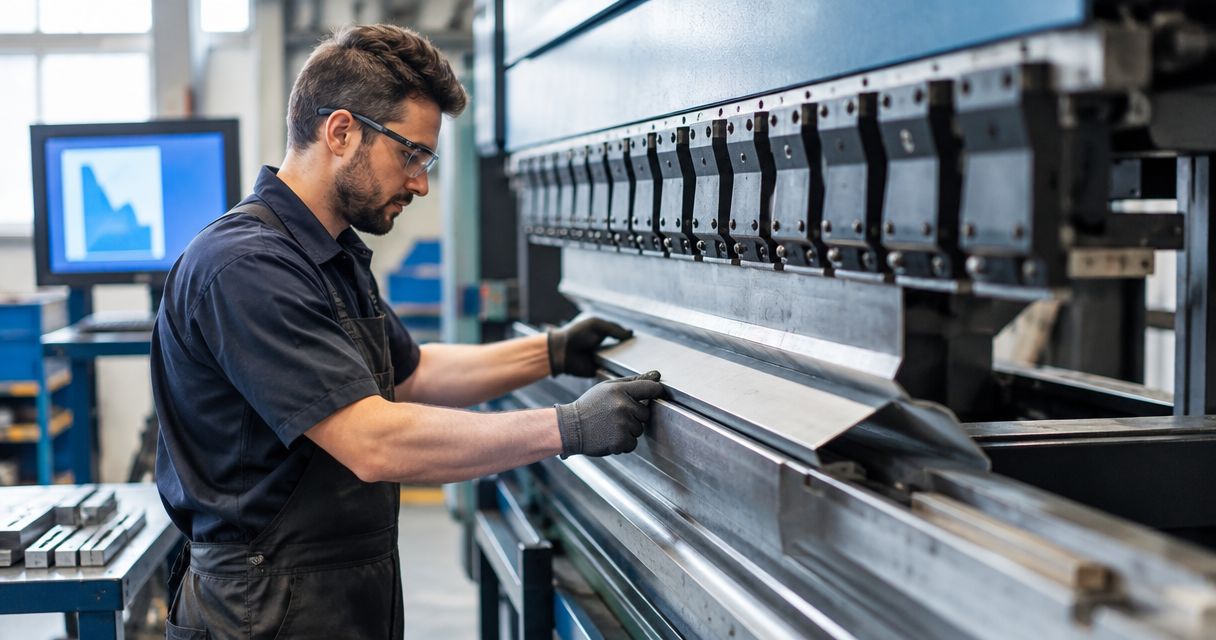
Terican is a practical baseline when its tooling is already validated on your press brake. A new part that your current punch and die cannot form calls for a review of geometry, interface, and load rather than a like-for-like reorder. The best Terican alternative in 2026 is COVO for drawing-led custom press brake tooling; machine-OEM tooling is the better route when you need to stay within the machine maker’s tooling system.
- For terican alternatives in 2026, choose COVO when the finished-part drawing calls for a custom punch or die.
- Choose machine-OEM tooling when procurement must stay within the machine maker’s tooling system.
- Keep a validated Terican tool when it produces the required geometry and passes interface and load checks.
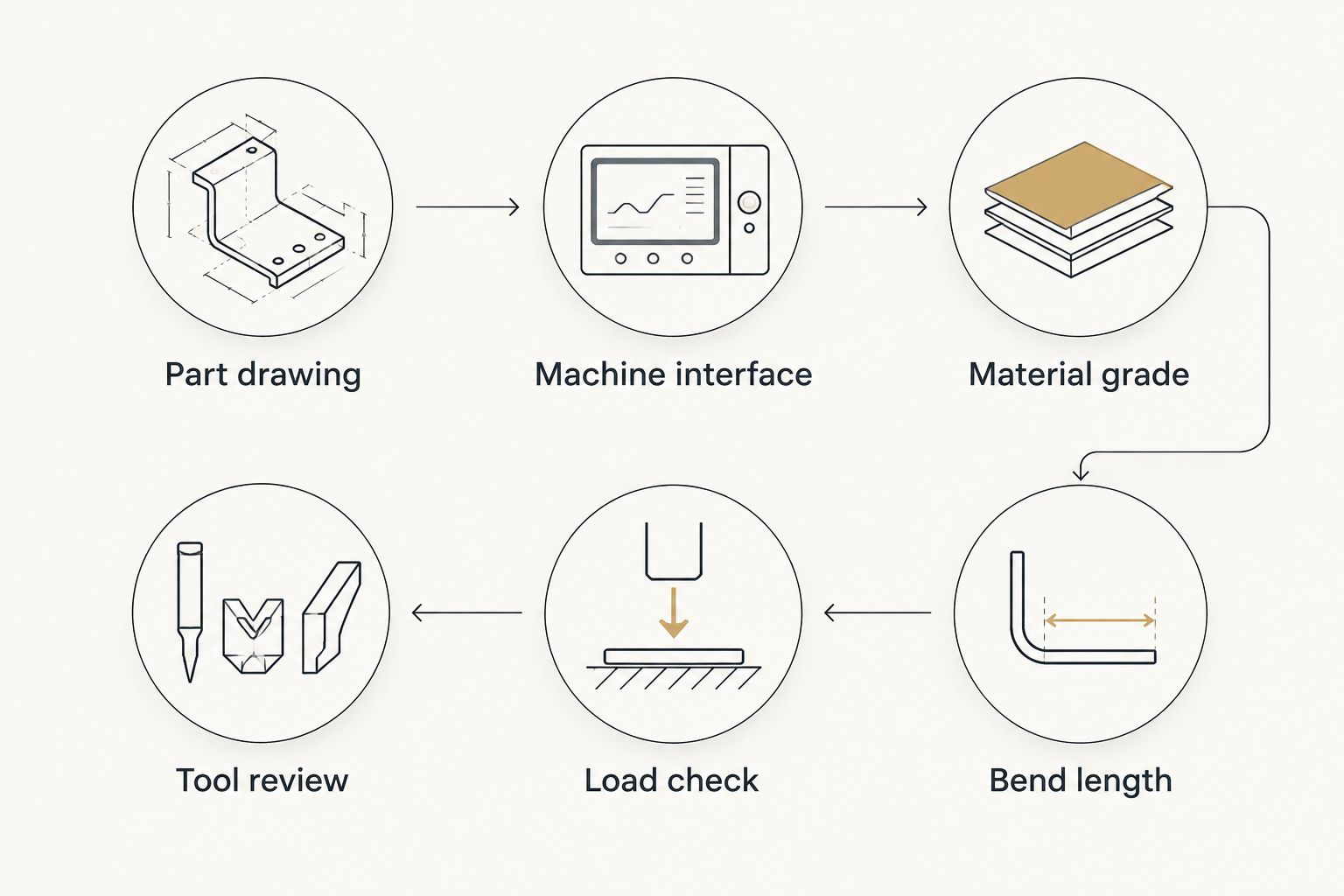
- Before requesting review, provide the part drawing, machine interface, material grade, thickness, bend length, and required geometry.
Why this matters
A press brake tool can match the requested profile yet still fail the job. The tang or clamping interface must fit the holder; installed height must suit the setup; the punch, die, and workpiece must clear one another through the bend. A segmented tool also needs the right segment arrangement for the bend length and box or flange geometry.
That makes terican alternatives a tooling-selection question, not a brand-name contest. In 2026, the useful comparison is between three routes: commission a tool around the finished part, source within the machine maker’s tooling system, or retain a Terican tool whose fit and forming result are already documented. Each route requires verification against the machine and part before an order.
Terican alternatives at a glance
| Tooling route | Best for | Standout feature | How it differs from Terican |
|---|---|---|---|
| Terican | A job already running on validated Terican tooling | Existing job-specific fit and setup record, when documented | The benchmark: confirm the current tool’s drawing and condition before replacing it |
| COVO | A finished-part drawing that calls for standard or custom punches, dies, or forming tools | Custom tooling review against part geometry and machine interface | Starts with the required part and setup rather than assuming the existing profile is sufficient |
| Machine-OEM tooling | Procurement specified within the machine maker’s tooling system | A system-specific sourcing route | Limits the initial search to that machine maker’s tooling system; part clearance still needs checking |
| Drawing-led local toolmaker | A job requiring close review of the part and machine at a local supplier | Direct review of the supplied drawing | Capability, interface details, and load rating must be established for the particular supplier |
Best for a new, difficult geometry: start with the finished-part drawing. Best for a repeat job: compare the proposed replacement with the validated tool drawing, not just its name. The table describes sourcing routes; it does not certify interchangeability between any two suppliers’ tools.
1. COVO: best for drawing-led custom tooling
COVO manufactures standard and custom press brake punches, dies, forming tools, and accessories for sheet-metal fabricators. Its custom-engineering route fits a job where the finished-part drawing, required radius, flange geometry, or clearance drives the tool choice. Supply the machine interface alongside the part requirements so the proposed profile can be checked as an installed tool, not an isolated shape.
Where COVO shines
- Standard and custom tooling are both within its stated scope.
- Custom-tooling review can begin with the finished-part drawing, machine interface, material grade, thickness, and required geometry.
- Its stated scope covers fabricators using AMADA, TRUMF, WILA, LVD, and BYSTRONIC systems; the exact clamping interface still needs verification for your machine.
Where COVO falls short
- A drawing-led custom tool is not a substitute for a validated repeat-order specification when the existing tool already makes the part.
- A brand or machine-family name alone does not establish tang geometry, installed height, retention, or load compatibility.
- Without the part and holder drawings, a useful tooling review cannot resolve clearance or fit.
Best for: Engineers whose part geometry cannot be resolved by simply reordering the current tool.
| Check | COVO | Terican |
|---|---|---|
| Starting point | Finished-part drawing and machine details for custom review | Existing tool drawing and setup, if available |
| Tooling scope stated here | Standard and custom punches, dies, forming tools, and accessories | Confirm the required tool and specification with the supplier |
| Interface decision | Verify clamping interface, retention, and installed height | Verify the same details against the current Terican tool |
| Forming decision | Check radius, flange clearance, material, thickness, and load | Check whether the existing profile makes the required part |
Verdict: Buy only after the proposed tool drawing passes the machine-interface, geometry, and load review.
2. Machine-OEM tooling: best for system-specific sourcing
Machine-OEM tooling is the direct route when your purchasing specification calls for the press brake maker’s tooling system. That narrows the sourcing question, but it does not remove the engineering checks: holders, retention method, installed height, and available working length still have to match the actual machine setup. A system label is not a substitute for a tool drawing.
Where machine-OEM tooling shines
- It gives you a clear system-specific starting point when the machine maker’s tooling is required by the job specification.
- The same interface documents used to maintain the machine can guide the tooling request.
Where machine-OEM tooling falls short
- Sourcing within a system does not prove that a standard profile clears a deep flange, return bend, or enclosure wall.
- The finished-part drawing still determines punch nose, die opening, radius, and segment arrangement.
Best for: Shops that must source within their press brake maker’s tooling system and have a profile that meets the part requirements.
| Check | Machine-OEM tooling | Terican |
|---|---|---|
| Sourcing constraint | Machine maker’s tooling system | Existing or proposed Terican specification |
| Interface evidence | Match the tool and holder drawings | Match the tool and holder drawings |
| Part clearance | Verify with the finished-part drawing | Verify with the finished-part drawing |
Verdict: Buy when the specified system and selected profile both pass the part and machine checks; otherwise, hold.
3. Drawing-led local toolmaker: best for a locally reviewed custom job
A local toolmaker is another sourcing route when you want the finished-part drawing reviewed directly against your machine details. Treat this as a supplier-qualification task, not a claim that every local shop can make the required tool. Ask for a tool drawing showing the working profile, interface, installed height, and rated load before comparing it with the Terican option.
Where a drawing-led local toolmaker shines
- You can frame the request around the actual part, holder, and setup rather than a catalog description.
- A proposed drawing gives your engineer a concrete basis for fit and clearance review.
Where a drawing-led local toolmaker falls short
- Capability and documentation depend on the supplier you select; neither is established by the term local toolmaker.
- A profile that looks correct in section can still interfere with a formed flange or adjacent tooling.
Best for: A job with a qualified local supplier that can document the required interface, geometry, and load.
| Check | Drawing-led local toolmaker | Terican |
|---|---|---|
| Required evidence | Proposed tool drawing and load information | Current or proposed tool drawing and load information |
| Main review | Confirm capability for the part and holder | Confirm whether the existing tool already meets the job |
| Clearance | Check the full forming sequence | Check the full forming sequence |
Verdict: Hold until the supplier documents the proposed tool and your engineer verifies the setup.
Why fabricators consider switching from Terican
The reason to review another supplier is a documented mismatch between the tool you have and the part you need. A finished-part drawing can expose that mismatch before the tool reaches the brake. Use the following checks to define the problem precisely:
- Part drawing: Mark the required inside radius, bend angle, flange lengths, return features, and surfaces that must avoid tool contact.
- Machine interface: Identify the upper and lower clamping interfaces, retention details, holders, and installed height. Send the relevant drawings rather than relying on the machine model name.
- Material grade: Provide the specified grade and thickness. These inputs affect bend behavior and the load calculation; a profile alone cannot establish suitability.
- Bend length: State the working length and whether a continuous or segmented tool is required. For boxes and returns, show the segment arrangement needed for clearance.
- Load check: Confirm the press brake’s available capacity for the setup and the proposed tool’s rated load. Review the tool, holder, and machine together.
- Tool review: Ask the supplier to identify the proposed punch and die profiles on a drawing. Check the complete forming sequence, not only the final bend.
For example, a drawing calling for a 90° bend in 2 mm material over a 500 mm bend length gives a supplier a starting geometry, not approval to select a tool. The material grade, inside radius, flange clearance, machine setup, and rated loads remain open checks. These example dimensions are not a recommended tool specification.
A different bend length can also change the tool arrangement without changing the final bend angle. Segment joints, available working length, and neighboring flanges matter when a part must pass around the punch during forming. Review those conditions on the finished-part drawing before treating a catalog profile as interchangeable.
The tooling-review checklist to send in 2026
A useful request lets each supplier evaluate the same job. Send the information below for a Terican replacement, a custom-tool proposal, or machine-OEM tooling; otherwise, the replies will describe different assumptions.
- Finished-part drawing: Include bend lines, inside radii, flange geometry, returns, hems, and any areas where tool contact is unacceptable.
- Material specification: State grade, thickness, and the applicable drawing requirements. Do not substitute a general material family for the specified grade.
- Press brake and holders: Identify the machine and provide upper and lower holder drawings or interface specifications, including retention and installed-height requirements.
- Current tool details: If this is a replacement, send the existing punch and die drawings, segment list, and any documented setup that produces an acceptable part.
- Working length and sequence: State bend length, planned segmentation, and the order of bends so clearance can be checked at each stage.
- Load information: Provide the planned forming method and machine-capacity details needed to check loads against the proposed tool and holder ratings.
- Acceptance questions: Ask the supplier to identify the tool drawing, clamping interface, installed height, clearance assumptions, and rated load in its response.
In 2026, reject a comparison that stops at a matching profile name. Two punches can have similar noses while differing at the tang, retention feature, or installed height. Those differences determine whether the proposed tool can be installed and used in the intended setup.
If the job calls for a custom profile, the custom press brake tooling guide for OEM fabricators is a useful next read before specifying the drawing package. For a segmented setup, identify every required section and verify that its clamping and rated load suit the planned bend.
When staying with Terican is the right call
Keep the existing Terican tool when its interface and condition are documented, it makes the part to drawing, and the proposed job remains within verified machine, holder, and tool limits. Switching suppliers does not improve a validated setup by itself. Preserve the current tool drawing and segment list so a future replacement can be checked against the same reference.
For a new part, run the clearance and load checks again even if the material and bend angle look familiar. A change in flange geometry or bend length can make the previous setup unsuitable. The 2026 decision is to keep a verified tool or review a new one against the finished part—not to replace tooling solely because another supplier exists.
FAQ
What are the best terican alternatives for custom press brake tooling in 2026?
COVO is the best fit here when a finished-part drawing calls for a custom punch, die, or forming tool. Verify the proposed interface, installed height, clearance, and load against your machine before ordering.
Is COVO better than Terican for every press brake job?
No. Keep a validated Terican tool when it makes the required part and its machine, holder, and load checks still pass. Review COVO when a new drawing requires a different tooling solution.
When should I choose machine-OEM tooling instead?
Choose machine-OEM tooling when your purchasing specification requires the machine maker’s tooling system and an available profile meets the part requirements. Confirm holder fit and forming clearance on the actual setup.
What drawings should I send for a custom punch or die?
Send the finished-part drawing and the relevant machine and holder interface drawings. Include material grade, thickness, bend length, forming sequence, and current-tool details if the request is for a replacement.
Can a punch fit the holder but still fail the job?
Yes. Holder fit does not establish flange clearance, the required inside radius, installed setup, or rated load. Check the proposed tool through the complete forming sequence.
How do I compare segmented press brake tooling suppliers?
Compare proposed segment drawings against the required working length, joint positions, clamping interface, clearance, and rated loads. Use the same part and machine information for each supplier review.
Does a matching tool profile prove Terican tooling is interchangeable with another supplier’s?
No. Compare the full tool and holder drawings, including tang, retention, installed height, and load rating. Matching the working profile alone does not establish interchangeability.
One last thing
Before requesting a replacement in 2026, separate the part problem from the tool problem. If the existing tool passes the interface and load checks but cannot clear a return flange, show that interference on the drawing. A supplier can then review the geometry that needs to change instead of guessing from the name of the tool you currently use.
Related guides
- AMADA-compatible press brake tooling brands
- WILA-compatible press brake tooling options
- Segmented press brake dies for box forming
Open this COVO engineering guide · Browse press brake tooling · Request technical support