COVO KNOWLEDGE
Best press brake tooling for automotive sheet metal parts 2026
Published:
Updated:
COVO custom tooling ranks best overall for automotive sheet metal parts in 2026; compare AMADA, WILA, TRUMPF and hemming tooling options before you order.
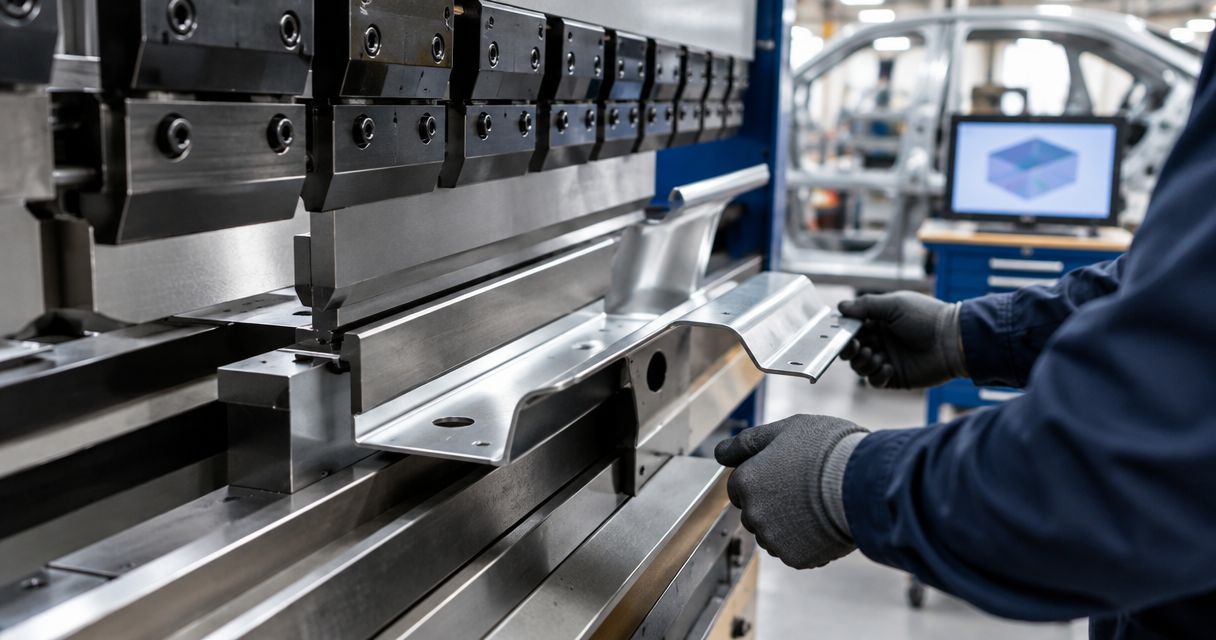
Automotive sheet metal parts run tight radius tolerances, high mix, and mixed material grades on the same press brake — the tooling has to match the part drawing, not just the machine. This guide ranks the press brake tooling systems that hold up on automotive production floors in 2026.
- COVO custom-engineered tooling wins for automotive flange geometry that catalog punches can't match.
- AMADA-style precision tooling holds up best on high-volume automotive lines already standardized on AMADA machines.
- WILA-compatible clamping systems cut changeover time on multi-part-number automotive runs.
- Hemming tooling built for flat and teardrop hems is the only reliable choice for aluminum body panels.
Why this matters
Most automotive stampers running AMADA-style presses already default to AMADA-compatible press brake tooling for punch and die selection, but automotive flange geometry pushes standard catalog radii past their limit fast. A bracket with a tight inside radius, a door panel needing a teardrop hem, or a structural part with a compound flange angle won't bend clean on a generic punch sized for sheet metal in general.
Automotive parts also run high mix on the same press brake — one shift can cycle through a dozen part numbers, each with its own bend length, radius, and clamping interface. Tooling selected for automotive work in 2026 has to hold radius tolerance across that mix, not just on the first article part off the line.
What makes the best press brake tooling for automotive parts
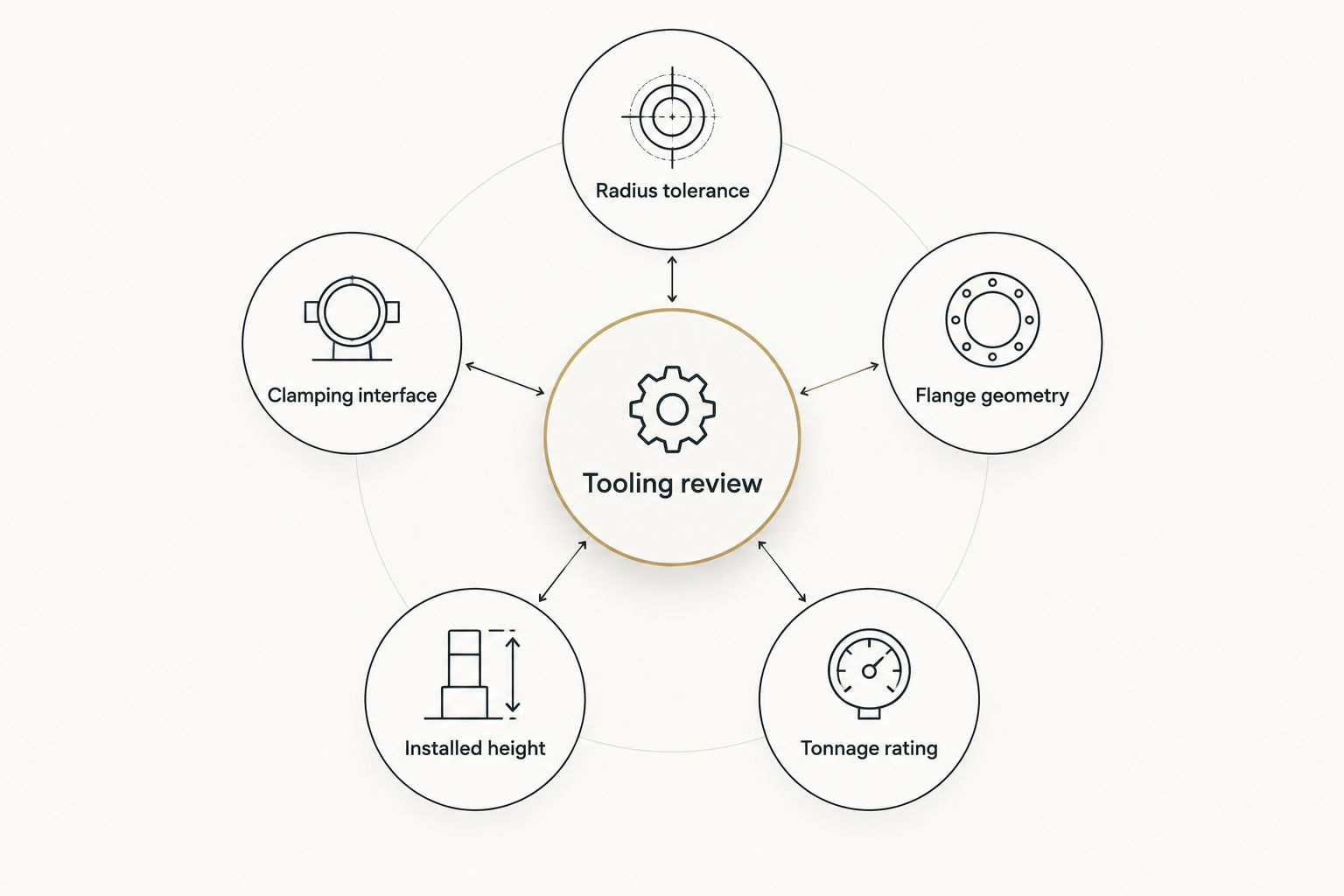
- Radius tolerance to print spec — the punch radius has to match the drawing, not a nearby catalog size
- Clamping interface match — tang, tang-free, or hydraulic clamp has to fit the customer's existing holder
- Flange geometry coverage — the tool has to reach the bend angle and flange length the part calls out
- Installed height verification — mismatched installed height throws off the whole setup before the first bend
- Tonnage rating vs. material grade and thickness — automotive gauge and grade combinations vary part to part
- Segment fit and load rating — for sectional tooling running mixed bend lengths on one press
Automotive press brake tooling at a glance
| Tooling System | Best For | Standout Feature | Key Limitation |
|---|---|---|---|
| COVO Custom-Engineered Tooling | Automotive flange geometry catalog tooling can't match | Built to the finished-part drawing and machine interface | Longer lead time than stock tooling |
| AMADA-Style Precision Tooling | High-volume AMADA-machine lines | Broad standard radius and V-die availability | Standard radii may miss tight flange callouts |
| WILA-Compatible Clamping Systems | Frequent die changeovers across part numbers | Common interface across multiple machines | Retrofit cost on non-WILA holders |
| Sectional Tooling Sets | Panels with varying bend lengths on one press | Segments combine to cover multiple lengths | Segment fit and load need verification |
| Hemming Tools (Flat/Teardrop) | Aluminum body panels needing a hemmed edge | Closing load matched to aluminum grade | Adds a separate pre-bend station |
| TRUMPF-Compatible Tooling | TRUMPF-standard presses, tight radius tolerance | Interface matches without adapter plates | Less segment and hemming variety |
1. COVO Custom-Engineered Tooling: best for automotive parts with exact flange geometry
COVO builds punches and dies to the finished-part drawing — bend length, radius, and flange geometry matched to the actual automotive part instead of a nearby catalog size. The clamping interface is machined to fit AMADA, TRUMPF, WILA, LVD or BYSTRONIC holders, and the tool is sized to the material grade and thickness called out on the print.
COVO tooling pros:
- Radius and flange geometry held to the print, not a catalog approximation
- Clamping interface matched to the customer's existing press, no adapter needed
- One tool covers geometry that would otherwise need two setups
COVO tooling cons:
- Lead time runs longer than pulling a catalog punch off the shelf
- Requires a complete part drawing and machine interface spec before a quote is possible
Best for: automotive body panels, brackets, and structural parts with flange geometry standard catalog tooling doesn't cover.
Verdict: Buy — when the print shows a radius, flange angle, or clamping interface a standard punch doesn't already match, get a custom tooling review before forcing the part through a compromise die.
2. AMADA-Style Precision Tooling: best for high-volume AMADA-machine lines
AMADA-style tooling matches the clamping interface AMADA-standard presses use and is calibrated to the incremental bending controls those machines run. Standard punch and die sets cover common automotive gauge ranges without a custom order.
AMADA-style tooling pros:
- Broad availability of standard radius and V-die combinations
- Interface drops straight into existing AMADA-style holders
- Shorter lead time than custom sets for common geometries
AMADA-style tooling cons:
- Standard radius options may not match tight flange callouts on some automotive brackets
- Mixing brands on one AMADA-style holder risks an installed-height mismatch
Best for: high-volume automotive stamping lines already standardized on AMADA machines running common bend geometries.
Verdict: Buy for standard geometries; Hold on parts with unusual flange callouts until the interface and radius are verified against the print.
“Automotive flange geometry does not tolerate a punch radius that doesn't match the print.”
3. WILA-Compatible Clamping Systems: best for frequent die changeovers
WILA-compatible clamping systems use a tang-free interface that lets a shop swap tooling across multiple press brakes without matching brand-specific tangs. Automotive job shops running many part numbers per shift use this to cut die-change time between runs.
WILA-compatible clamping pros:
- One clamping interface across multiple machines
- Faster changeover between automotive part numbers
- Segment loading supports mixed bend-length runs
WILA-compatible clamping cons:
- Retrofit cost to convert an existing brake's clamp to WILA-style
- Not every legacy AMADA or TRUMPF machine accepts the retrofit without a holder swap
Best for: automotive suppliers running high part-number variety with frequent die changes in one shift.
Verdict: Buy for shops changing dies multiple times a day; Skip if the line runs one or two part numbers per shift — the retrofit doesn't pay back.
4. Sectional Tooling Sets: best for panels with varying bend lengths
Sectional tooling breaks a punch or die into shorter segments that combine to cover varying bend lengths across different automotive panels on the same press, instead of stocking one full-length tool per part number.
Sectional tooling pros:
- Covers multiple bend lengths from one tool inventory
- Reduces the number of full-length tools a shop has to stock
- Segments swap individually when one section wears
Sectional tooling cons:
- Segment fit and clamping load need verification before use
- Box clearance has to be checked against the panel's flange
Best for: automotive shops running body panels and brackets with varying bend lengths on the same press brake.
Verdict: Hold — segment fit and load rating need engineering review before ordering a set; sectional systems earn their keep on high-mix lines, not single-part runs.
5. Hemming Tools (Flat and Teardrop): best for aluminum body panels
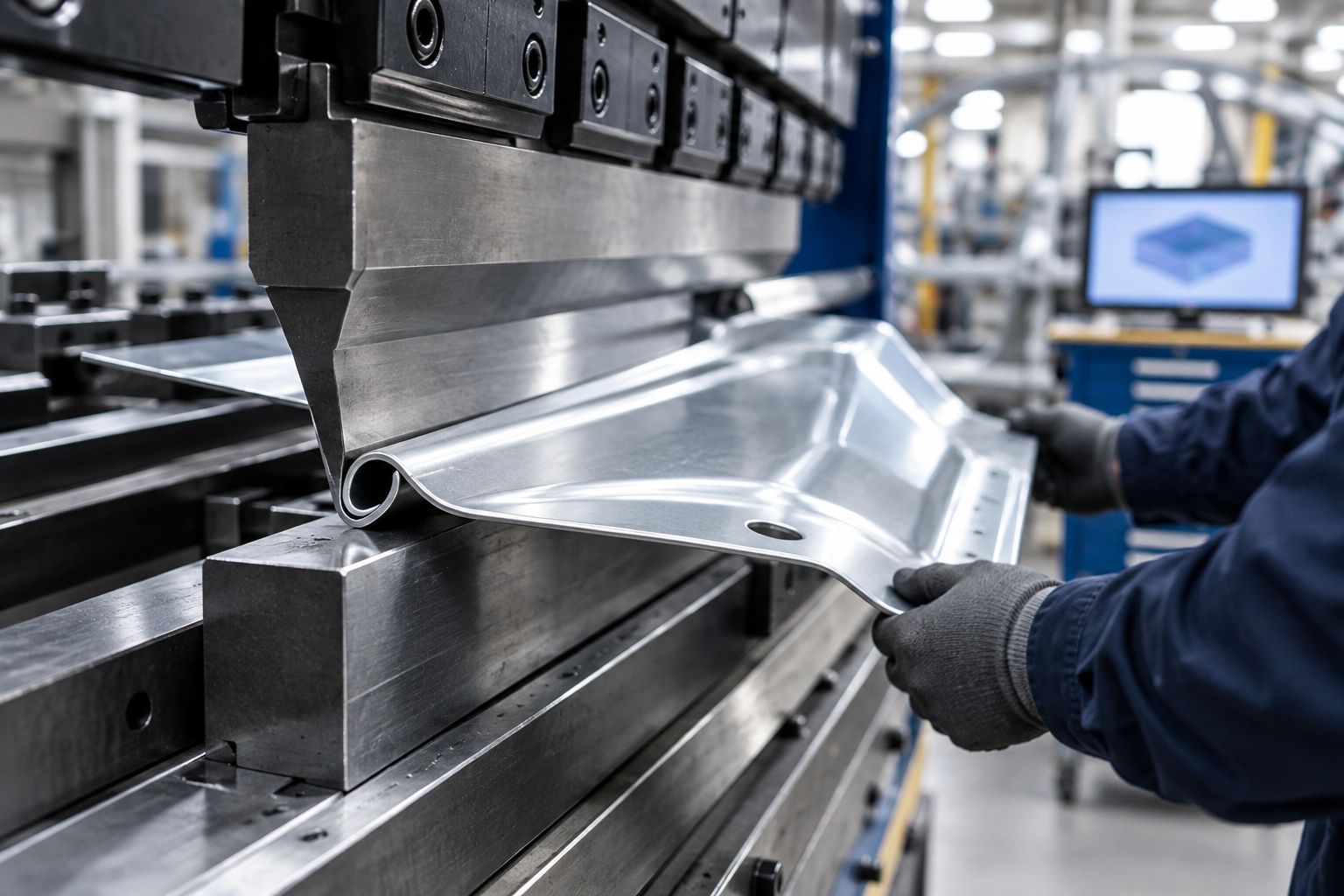
Hemming tooling closes a pre-bent flange into a flat or teardrop hem — the finishing step on aluminum body panels like doors, hoods, and fenders where a raw edge can't ship. Pre-bend geometry and rated closing load are matched to the panel's flange and material grade.
Hemming tooling pros:
- Produces the flat or teardrop hem automotive body panels require
- Closing load matched to aluminum grades that crack under excess load
- Surface-safe options avoid marking Class-A panels
Hemming tooling cons:
- Pre-bend and hem tooling are typically separate setups, adding a station
- Aluminum panels need lower closing loads than steel — the wrong tool cracks the flange
Best for: aluminum automotive body panels needing a finished flat or teardrop hem edge.
Verdict: Buy — for any aluminum panel line shipping a hemmed edge, verify pre-bend geometry and closing load against the panel spec before ordering.
6. TRUMPF-Compatible Tooling: best for tight radius tolerance
TRUMPF-compatible tooling matches TRUMPF-style clamping interfaces and installed height, sized for the radius tolerances TRUMPF-standard presses hold on precision automotive brackets and enclosures.
TRUMPF-compatible tooling pros:
- Interface matches TRUMPF-style holders without adapter plates
- Radius options suited to tight-tolerance automotive brackets
- Standard sets available for common gauge ranges
TRUMPF-compatible tooling cons:
- Less segment and hemming variety than AMADA- or WILA-style catalogs
- Custom radius requests run longer lead times than standard stock
Best for: automotive suppliers running TRUMPF-standard presses on tight radius-tolerance brackets and enclosures.
Verdict: Buy for standard TRUMPF-style geometries; quote custom when the radius tolerance on the print falls outside the standard catalog range.
How we ranked
Each system is ranked against the same five checks: radius tolerance to print, clamping interface fit, flange geometry coverage, installed height match, and tonnage rating against material grade. Sectional tooling and hemming tools add a sixth check — segment load and closing load — because those systems fail differently than a single punch-and-die pair. Nothing on this list is ranked by marketing claim; it's ranked by whether the interface, radius, and geometry match what an automotive print actually calls out.
Request a tooling review
Send the part drawing and machine interface spec before ordering.
Which press brake tooling should you choose?
For most automotive flange geometry, default to COVO custom-engineered tooling verified against the part drawing — catalog radii rarely match a compound flange angle exactly. For standardized high-volume runs on AMADA-machine lines with common geometry, AMADA-style precision tooling covers it without a custom order. For aluminum body panel hems, don't substitute a standard punch — use hemming tooling rated for the panel's closing load. Shops changing dies several times a shift should default to WILA-compatible clamping systems before adding more full-length tooling to inventory.
Verify these before requesting a tooling review in 2026: finished-part drawing, machine make and clamping interface, material grade and thickness, required radius and flange geometry, and expected run mix. A quote without those five items comes back with questions, not a tool.
FAQ
What press brake tooling is best for automotive sheet metal parts in 2026?
Custom-engineered tooling built to the finished-part drawing is best overall for automotive sheet metal parts in 2026, because catalog radii rarely match compound flange geometry. AMADA-style or TRUMPF-compatible standard tooling covers common geometries on high-volume lines without a custom order.
Is custom tooling better than standard tooling for automotive body panels?
Custom tooling is better when the part drawing calls out a radius, flange angle, or clamping interface standard catalog tooling doesn't already match. Standard tooling works fine for common geometries on high-volume lines and has a shorter lead time.
Which press brake tooling system works best with AMADA machines for automotive lines?
AMADA-style precision tooling matches the clamping interface and incremental bending controls AMADA-standard presses use, making it the default for high-volume automotive lines already standardized on AMADA machines.
How do WILA-compatible clamping systems help automotive part changeovers?
WILA-compatible clamping systems use a tang-free interface that lets tooling move across multiple press brakes without matching brand-specific tangs, cutting die-change time on shifts running many part numbers.
What tooling is used for aluminum automotive panel hems?
Hemming tools built for flat or teardrop hems close a pre-bent flange on aluminum body panels like doors, hoods and fenders. The closing load has to match the aluminum grade or the flange cracks instead of folding.
Can sectional tooling handle varying bend lengths on automotive body panels?
Sectional tooling covers varying bend lengths by combining shorter segments on one press, but segment fit and clamping load need verification before use since a loose segment shifts under tonnage.
Is TRUMPF-compatible tooling suitable for tight-tolerance automotive parts?
TRUMPF-compatible tooling matches TRUMPF-style clamping interfaces and installed height, and its radius options are sized for the tight tolerances TRUMPF-standard presses hold on precision brackets and enclosures.
One last thing
The most common flag in a tooling review isn't the radius — it's a clamping interface that doesn't match the installed height of the customer's existing holder. Verify installed height against the machine spec before submitting a drawing for review, not after the tool ships. That one check catches more mismatched orders than radius tolerance ever does.
Related guides
Open this COVO engineering guide · Browse press brake tooling · Request technical support