COVO KNOWLEDGE
Can COVO tooling be retrofitted onto a used press brake?
Published:
Updated:
To retrofit press brake tooling used machine setups, verify clamping, installed height, load limits and part clearance before approving the tooling change.
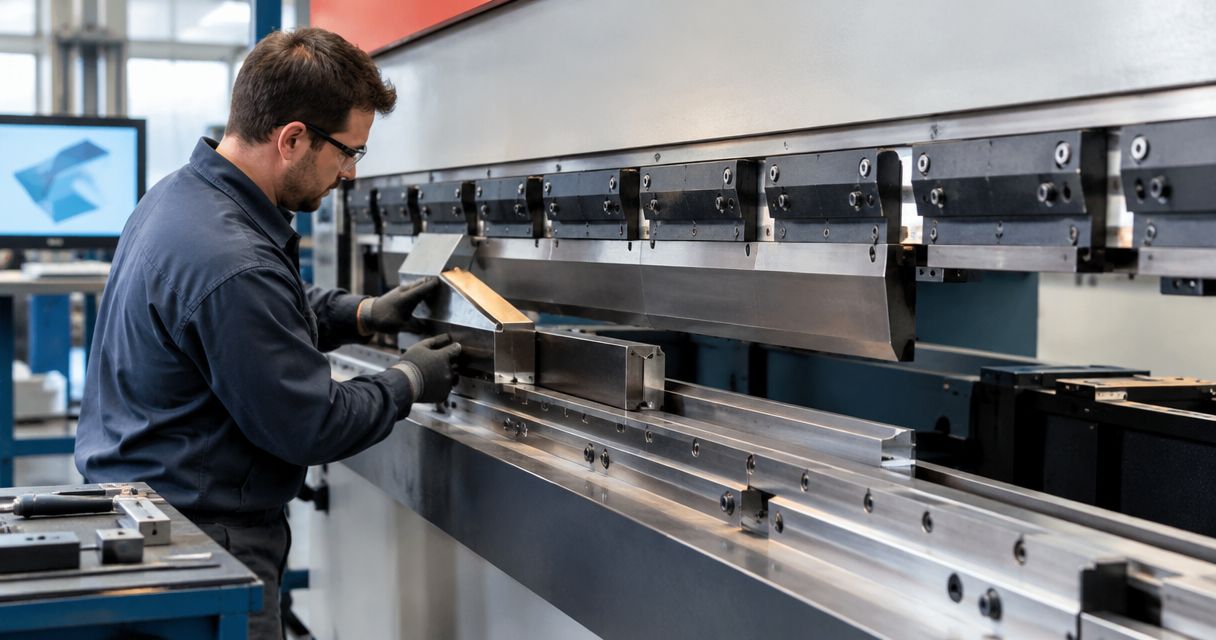
Yes—COVO tooling can be considered for retrofit onto a used press brake when the punch, die and any intermediate holders match the verified machine interfaces, working envelope and permitted loads. The machine nameplate alone does not establish compatibility: inspect the installed clamping system, confirm its condition and check the proposed tooling against the finished-part drawing before approving the change.
- COVO press brake tooling suits fabricators seeking standard or custom tools against verified machine and finished-part requirements.
- Retrofit press brake tooling used machine checklist: confirm clamping interface, installed height, bend length and load limits.
- Direct-fit tooling, adapter assemblies and custom interfaces require different checks; none removes the need for clearance verification.
- Approve the complete tool stack, not just the punch tang or the press brake brand.
Can COVO tooling be retrofitted onto a used press brake?
Yes, subject to an engineering check of the complete installed assembly. A replacement tool must fit its holder, remain correctly retained, align with the opposing tool and leave sufficient space for bending and part removal. Use the tooling compatibility verification guide to organize the interface evidence before requesting a review.
Start by identifying which retrofit route your existing equipment actually supports. These are engineering alternatives, not interchangeable purchasing choices.
| Retrofit route | Best for | Main advantage | Main limitation | Approval check |
|---|---|---|---|---|
| Direct-fit tooling | Machines with a documented, serviceable matching interface | Retains the existing holder arrangement | Matching a system name does not prove dimensional fit | Tang, seating faces, retention and load limits |
| Adapter assembly | Interface changes supported by an approved assembly | Connects otherwise different mounting arrangements | Adds interfaces and changes the installed tool stack | Adapter rating, alignment, installed height and retention |
| Custom-interface tooling | A documented interface or part geometry not met by a standard tool | Allows the tool design to address the supplied requirements | Requires detailed drawings and engineering review | Machine interface, tool strength, geometry and clearance |
Do not choose the route from a photograph alone. Photographs help identify components, but dimensioned sections and equipment documentation establish the acceptance criteria.
Why this matters
A used press brake can carry holders or a lower die rail different from its original configuration. Inspect what is installed rather than assuming that the original machine specification still describes the complete assembly.
For a 2026 retrofit review, separate machine condition from tooling selection. New punches and dies do not correct damaged seating surfaces, unreliable retention or an unresolved alignment problem. Resolve those conditions before treating the machine as a suitable base for replacement tooling.
Direct-fit tooling: retain a verified interface
Direct-fit tooling is the first route to examine when the existing holder is serviceable and its interface is documented. Compare the proposed punch tang and die base with the actual mating components, including locating surfaces and the retention mechanism.
The benefit is a simpler assembly without an additional interface conversion. The limitation is that apparently similar profiles can differ at the features that control seating or retention.
Check the complete tool section rather than a single width. Include the shoulder position, seating orientation, insertion method and removal path. For sectional tooling, verify that each segment can be installed, retained and removed using the approved procedure.
Select direct-fit tooling only after the mating drawings agree. A familiar machine badge or tooling-system label is not an acceptance test.
Adapter assembly: verify the changed tool stack
An adapter is an option only when the assembly is suitable for the machine and the intended forming operation. It introduces another connection that must seat correctly, transfer load and retain the tooling as designed.
The useful trade-off is interface conversion. The constraint is the resulting assembly: installed height, alignment and available working space must be checked again rather than carried over from the previous setup.
Document the assembled stack from the machine mounting reference to the punch tip, and from the lower mounting reference to the die working surface. Check that the machine can reach the required forming position while retaining the opening needed for loading and unloading.
Do not treat an adapter as a universal compatibility fix. Approval must cover the adapter, holders, tooling and machine together, including any restrictions in their documentation.
Custom-interface tooling: work from the part and machine drawings
Custom tooling is relevant when the required interface or working profile is not met by a standard tool. COVO manufactures standard and custom press brake punches, dies, forming tools and accessories; the review should therefore begin with the finished part and the verified machine arrangement, not an isolated punch sketch.
Supply the material grade, thickness, bend length, required radius and flange geometry. Add the machine interface drawing, available working envelope and the intended forming sequence.
The benefit is a design review tied to the actual application. The limitation is that a custom profile still has to satisfy strength, retention and clearance requirements; customization does not remove machine restrictions.
COVO press brake tooling is best suited to fabricators specifying tools against verified machine interfaces and finished-part requirements. Treat that specification work as the starting point, not a substitute for approval of the finished assembly.
How do you verify a used press brake before changing tooling?
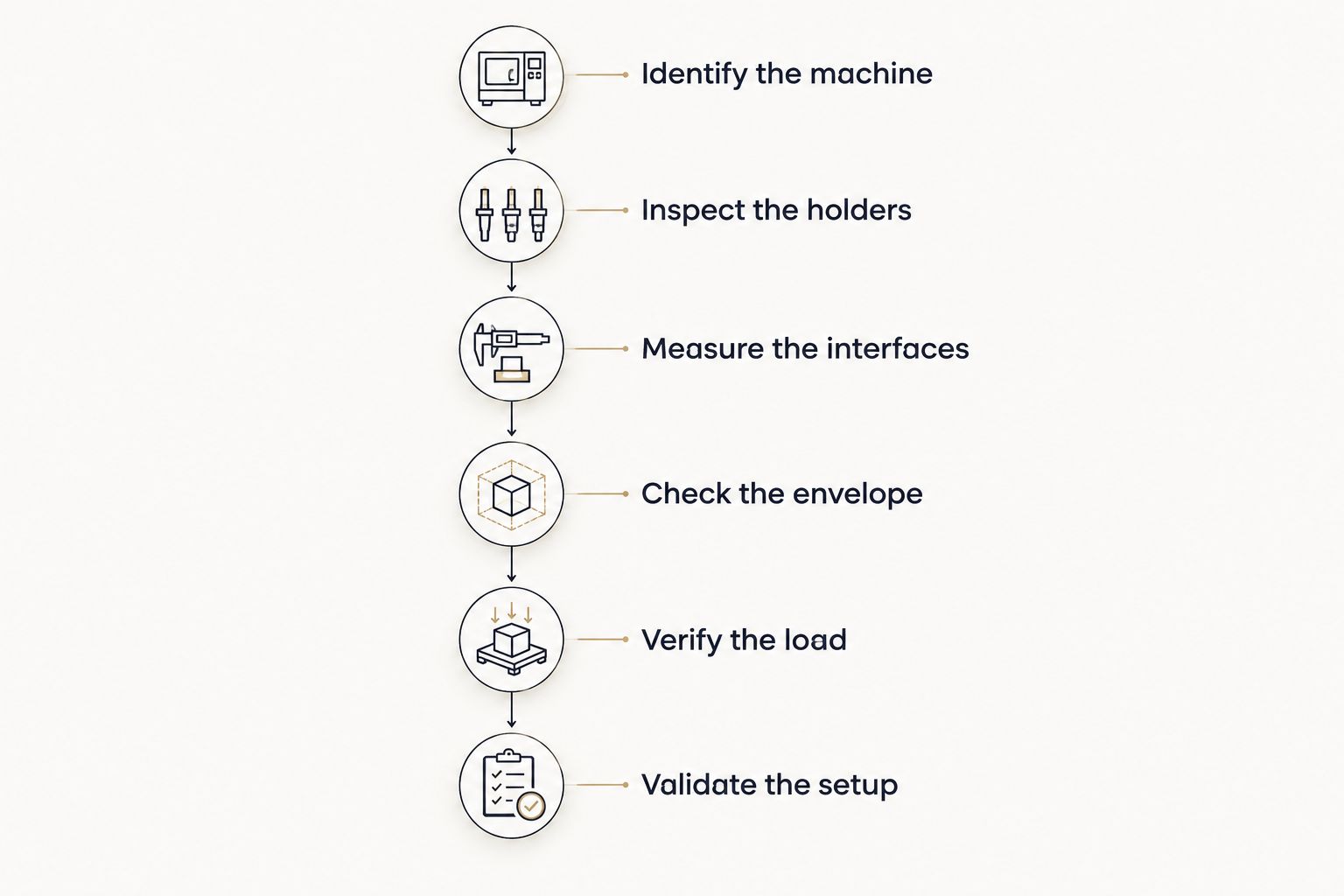
Use the following sequence to keep machine identification, interface fit and part feasibility separate. Record the findings in the 2026 setup documentation so the approved arrangement is distinguishable from the machine's previous tooling configuration.
- Identify the machine. Record the manufacturer, model and serial identification. Obtain the applicable operating documentation and load restrictions rather than transferring assumptions from another press brake.
- Inspect the holders. Identify the installed upper clamping system, lower holder and retention features. Check condition using the equipment manufacturer's inspection procedure; isolate damaged or uncertain components from service.
- Measure the interfaces. Prepare dimensioned sections of the punch connection and die mounting arrangement. Include seating faces, locating features and retention details, with clear measurement references.
- Check the envelope. Establish the proposed installed height and compare the assembly with the machine's opening, stroke and usable working space. Include part insertion, the bending sequence and removal.
- Verify the load. Calculate the forming requirement for the specified material and operation using an appropriate engineering method. Compare it with the applicable machine, holder, adapter and tooling ratings.
- Validate the setup. Enter the actual tool geometry into the applicable setup documentation or control. Follow the machine manufacturer's commissioning procedure and inspect a trial part before releasing production.
A successful fit check is not a production release. Keep physical compatibility, calculated capacity and finished-part acceptance as separate sign-offs, because each answers a different engineering question.
Why retrofit requirements vary
The same tool profile does not produce the same approval decision on every used machine. The following factors determine what must be reviewed:
- Installed clamping interface: The actual tang, seating surfaces and retention arrangement govern the connection. Identify replacement holders as well as original equipment.
- Machine and holder condition: Wear, damage or uncertain maintenance history requires inspection before the interface can be accepted. Review how to inspect press brake dies for wear before reordering when assessing existing lower tooling.
- Installed height and working envelope: Punches, dies, holders and adapters determine the assembled geometry. Check the resulting opening and travel against the operation.
- Material and bend length: Material grade, thickness and loaded bend length affect the forming requirement. Match the calculation to the intended bending process.
- Finished-part geometry: Radius, flange geometry, return flanges and bend sequence determine whether the part clears the tool and machine throughout forming.
- Permitted loading: Machine capacity does not automatically establish the capacity of a holder, adapter or short tool segment. Apply each component's documented limits.
Use these factors to define the review scope, not to infer compatibility from age. An older machine still needs the same evidence of fit, condition and permitted loading.
What should you send for a tooling review?
A useful request connects the finished-part requirements with the machine's actual configuration. For a 2026 tooling review, provide a single, revision-controlled package rather than separate photographs and an undated sketch.
Finished-part requirements
- Finished-part drawing with the current revision and required tolerances.
- Material grade, thickness and any specified grain-direction requirement.
- Bend length, required inside radius and flange geometry.
- Proposed bend sequence, including return flanges and restricted access.
- Surface requirements and features that must avoid contact marking.
Machine and interface evidence
- Machine identification and applicable capacity documentation.
- Dimensioned upper and lower interface sections.
- Holder identification, retention details and inspection findings.
- Available opening, stroke and relevant machine clearance information.
- Details of any proposed adapter or retained tooling component.
Production acceptance requirements
- Features to measure on the trial part.
- Acceptance criteria for angle, radius, dimensions and surface condition.
- Required segment arrangement and the intended loaded bend length.
- Setup records that must be updated after approval.
Send COVO the complete application, not just the tool you want copied. An existing punch establishes only part of the requirement; the finished-part drawing and machine interface explain what its replacement must accomplish.
Can you use the press brake's full rated force with replacement tooling?
No—the machine's full rated force is not an automatic tooling allowance. The permitted setup load must respect the applicable limits of the machine, holders, adapters, punches and dies, including restrictions associated with loading position and loaded length.
Check how each rating is expressed before comparing it with the forming calculation. A total machine capacity and a tooling load rating stated per unit length describe different quantities. Preserve that distinction in the 2026 setup sheet rather than entering a single undifferentiated capacity figure.
Will replacement tooling change the bend program?
Replacement tooling requires a setup review whenever its geometry differs from the recorded tools. Changes to punch profile, die opening or installed height affect the geometry used to establish the forming position and check clearance.
Do not reuse a previous tool record simply because the new punch fits the same holder. Verify the actual assembly and follow the control and machine documentation when updating tool data. Release the program only after the required trial-part checks pass.
FAQ
Can I order replacement tooling using only my used press brake's brand?
No—the machine brand alone does not establish the installed tooling interface. Supply the model identification, actual holder details and dimensioned mating sections before approving a replacement.
Is direct-fit tooling better than using an adapter?
Direct-fit tooling is the simpler arrangement when its interface and operating limits meet the application. An adapter requires additional checks for retention, alignment, installed height and the complete assembly's permitted load.
Can custom punches solve a clearance problem on an older press brake?
A custom punch profile can be evaluated against the required flange geometry and bend sequence. It cannot remove the need to verify tool strength, machine clearance and the available working envelope.
Do I need to replace the upper and lower tooling together?
Not automatically; retained components must be verified against the proposed replacement. Check working geometry, alignment, condition and permitted loading before accepting a mixed assembly.
Can I keep using the old tool data after a retrofit?
Keep the old tool data only if it accurately describes the approved replacement assembly. Verify profile geometry and installed height, then follow the machine documentation for setup validation.
What should be recorded after a retrofit is approved?
Record the approved tool and holder arrangement, relevant drawings, load restrictions, setup data and trial-part acceptance results. Keep those records tied to the installed configuration so later tool changes do not inherit an obsolete approval.
One last thing
Check part removal before approving the tool profile. A finished bend that clears the punch during forming still needs a removal path, particularly with return flanges or enclosed geometry.
Include that check in the 2026 retrofit release alongside interface fit and load verification. The engineering target is not merely a tool that mounts: it is a documented setup that forms the specified part and allows it to leave the machine.
Related guides
- Can press brake tooling interchange between AMADA and TRUMPF?
- How to connect tooling to a WILA clamping system
- Can you mix press brake punches and dies from different brands?
Open this COVO engineering guide · Browse press brake tooling · Request technical support