COVO KNOWLEDGE
How much does custom press brake tooling cost in 2026?
Published:
Updated:
Custom press brake tooling cost requires a defined quote. Check part geometry, clamping interface, material, bend length and scope before comparing suppliers.
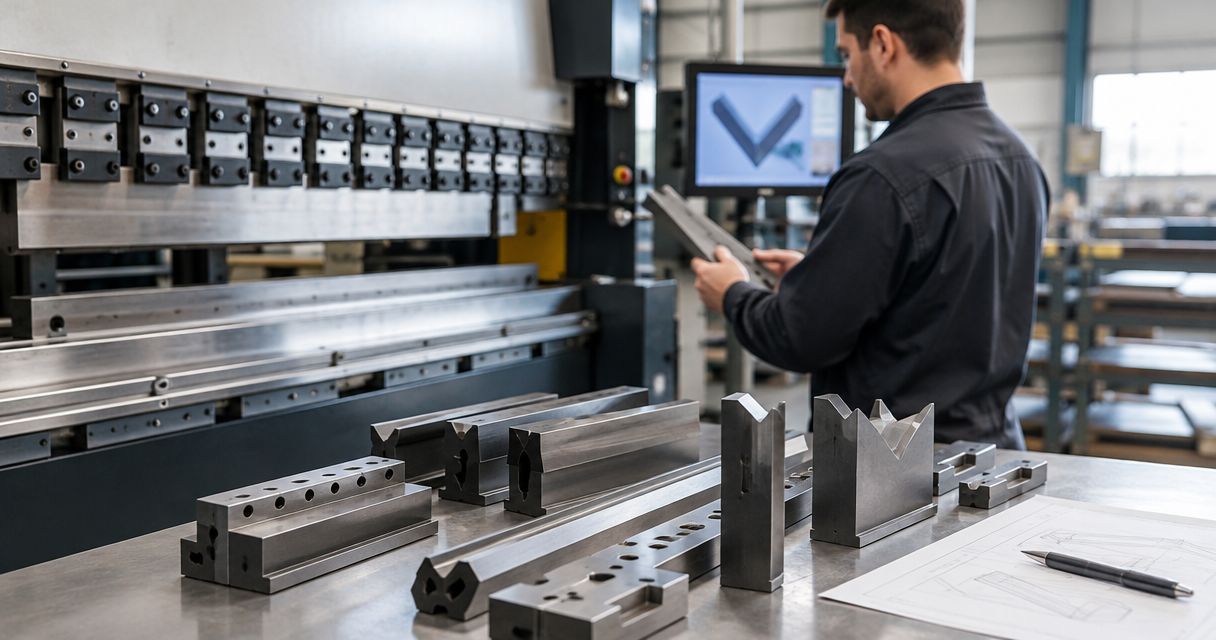
Custom press brake tooling cost in 2026 is job-specific: a usable quotation must match the finished-part drawing, machine interface, material grade, thickness and required forming geometry. Compare the complete tooling package, not just the punch or die, because adapters, matching tools, inspection requirements and setup work change the purchasing scope.
- Custom press brake tooling cost depends on the approved drawing, clamping interface, material and forming requirements.
- Chinacovo manufactures standard and custom press brake tooling; verify machine fit before selecting a tool profile.
- Compare quotations against the same bend length, installed height, radius and acceptance criteria.
- Choose custom tooling when standard profiles cannot meet the required flange geometry or clearance.
How much does custom press brake tooling cost in 2026?
Treat custom tooling as a drawing-defined purchase, not a catalog item with a universal average. Establish the tool configuration and acceptance criteria before comparing quotations. A punch-only quotation and a matched punch-and-die quotation describe different purchases, even when both refer to the same finished part.
For application-specific selection checks, see the guide to custom press brake tooling for OEM fabricators. Start with the finished-part requirement, then verify whether an existing profile can produce it on your machine.
Use this breakdown to separate the tool itself from the other requirements that belong in your purchasing decision:
| Quotation component | What to define | What to check before approval |
|---|---|---|
| Working profile | Punch radius, die opening and forming geometry | Agreement with the part drawing and bending process |
| Tool length | Required bend length and segment arrangement | Usable working length, joints and end clearance |
| Machine connection | Clamping interface, tang, holder and retention | Fit with the actual upper and lower mounting arrangements |
| Matched tooling | Punch, die and any supporting components | Whether the quotation covers a complete working combination |
| Verification | Drawing tolerances and inspection requirements | Which characteristics will be measured and documented |
| Purchasing scope | Packaging, transport and acceptance responsibilities | Which items are included and which remain separate |
Do not assume every line belongs in every order. Ask the supplier to identify what the application requires, then compare that defined scope across quotations.
Why this matters
A tool that matches the bend profile but does not match the holder is not a usable replacement. Likewise, a tool that fits the machine still needs clearance for the finished flange, intermediate bends and part removal.
Your 2026 purchasing decision should therefore connect tooling expenditure to a verified forming operation. A quotation becomes useful when engineering and purchasing can identify exactly what the tool must do, how it mounts and how acceptance will be determined.
Standard tooling: best for parts within an existing profile
Standard tooling is the first alternative to check when an existing punch-and-die combination satisfies the drawing. Its advantage is avoiding a new working profile; its limitation is that the available geometry must fit the part rather than the other way around.
Check the actual profile drawing before ruling standard tooling in or out. A familiar tool name does not establish punch radius, die opening, shoulder geometry, installed height or allowable load.
Choose standard tooling when the documented profile meets the part, machine and load requirements. Do not specify a custom profile solely because a part is new to your shop.
Custom tooling: best for geometry standard profiles cannot produce
Custom tooling is appropriate when the required radius, flange geometry, offset or clearance cannot be achieved with a verified standard setup. The benefit is a profile designed around the application; the limitation is the need to define and approve that application precisely.
The finished-part drawing alone does not describe every tooling requirement. Include the forming sequence, machine interface and material specification so the review addresses intermediate positions as well as the final shape.
Choose custom tooling to solve a defined forming constraint. Identify that constraint in the request instead of asking for a special tool without explaining the operation.
Special forming tools: best for a defined secondary operation
Hemming, offsetting and other special forming operations require their own geometry and load review. Their benefit is addressing a specific operation directly; their limitation is that pre-form geometry and the closing or forming sequence become part of the specification.
For a hem, distinguish the required finished shape from the pre-bend. For an offset, define the offset geometry and adjacent flange clearance rather than supplying only the overall part dimensions.
The alternatives below are not interchangeable. Select the route by its engineering fit, then request quotations against that route.
| Tooling route | Best for | Principal advantage | Principal limitation |
|---|---|---|---|
| Standard punch and die | Parts within an existing verified profile | Avoids a new working-profile design | Existing geometry limits the application |
| Custom punch and die | Parts requiring application-specific geometry | Addresses the specified radius, flange or clearance constraint | Requires detailed application definition and drawing approval |
| Special forming tools | Hemming, offsets or another defined forming operation | Addresses the operation's specific working geometry | Requires operation-specific sequence and load checks |
| Sectional tooling | Changing bend lengths and restricted box clearance | Allows segment arrangements suited to the part | Requires segment-fit, joint and clamping checks |
Why custom press brake tooling cost varies
The quotation changes when the engineering or supply scope changes. Keep these factors explicit in your 2026 request so revisions do not silently turn into a different tooling package.
- Working geometry: State the required radius, angle, flange geometry and clearance. Distinguish dimensions controlling the finished part from dimensions controlling the tool.
- Bend length and segmentation: Define the working length and necessary segment arrangement. Include end clearance and any segment joints relevant to the part.
- Machine interface: Identify the upper and lower clamping arrangements, retention features and installed height. Include adapters only when the reviewed setup requires them.
- Material and forming load: Provide material grade, thickness and the intended bending process. Verify the applicable machine, holder and tool limits before approving the configuration.
- Acceptance requirements: Specify drawing tolerances, inspection documentation and any agreed forming verification. Separate dimensional inspection of the tool from acceptance of a bent sample.
- Complete supply scope: Identify matched tools, accessories, packaging and delivery responsibilities. Compare the same included items across suppliers.
Avoid treating any factor as an automatic surcharge. The practical question is whether it changes the design, manufacturing requirements, supplied components or verification work.
Prepare a tooling request that engineers can review
A useful request connects the part drawing to the machine setup. Follow this sequence before seeking a quotation; it prevents purchasing from comparing technically different proposals.
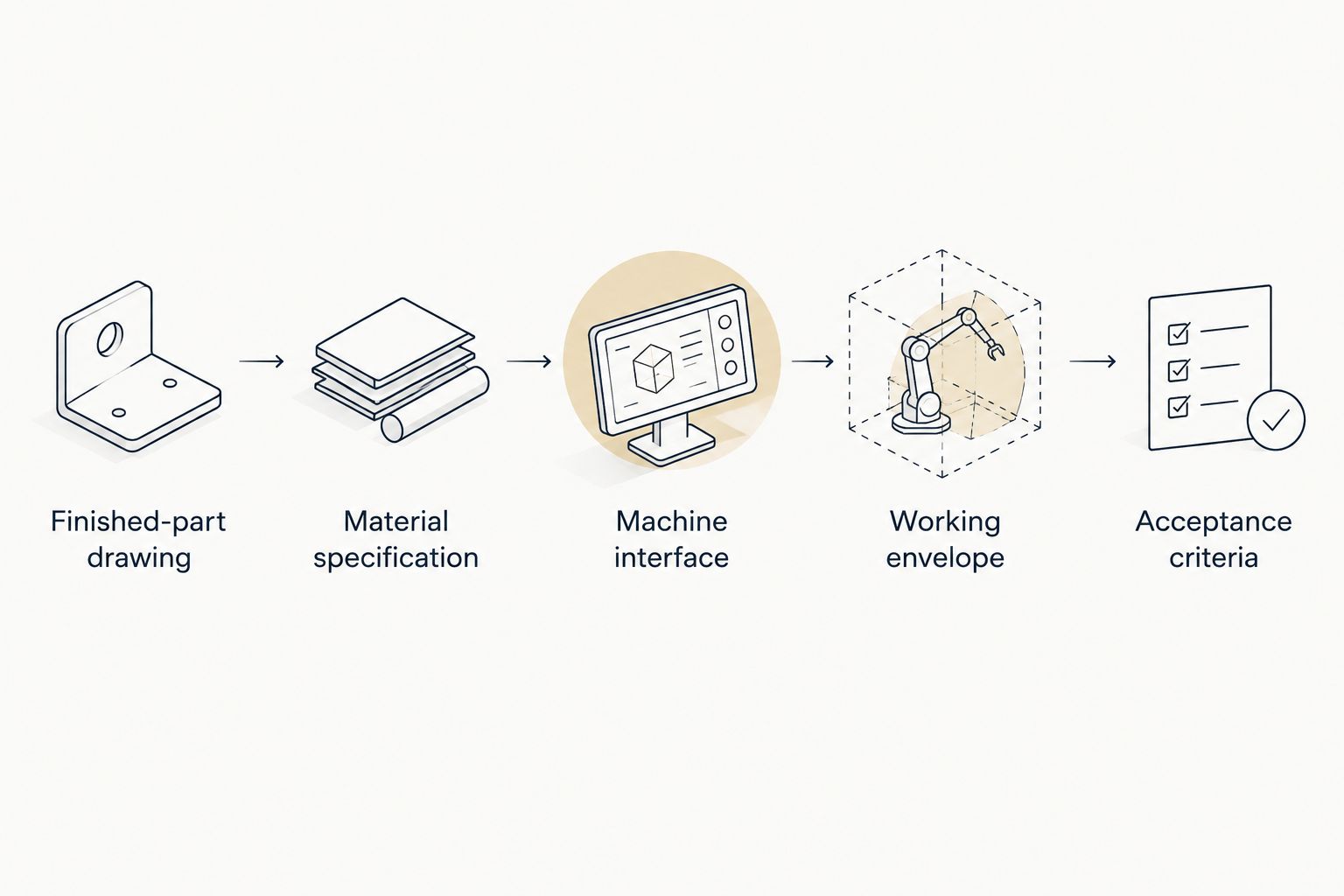
Start with the finished-part drawing
Supply the controlled drawing revision and identify the bends the proposed tool must produce. Mark the required inside radius, flange geometry, angle tolerance and surface requirements where they affect acceptance.
Include the proposed bend sequence if the part contains adjacent bends or enclosed geometry. Clearance must be checked during forming and removal, not only against the finished cross-section.
Confirm the material specification
State material grade and actual specified thickness. Add the applicable thickness tolerance and coating or surface condition when they affect the forming requirement.
Do not use a gauge designation as the only thickness information. The engineering review needs a defined material specification, not an assumed conversion.
Verify the machine interface
Provide the machine identification and drawings or measurements of the actual holder arrangement. Identify the clamping interface, tang, retention features, lower mounting arrangement and installed height.
AMADA, TRUMPF, WILA, LVD and BYSTRONIC system names identify the intended equipment context, but they do not replace interface verification. Confirm the arrangement installed on your machine rather than relying on a brand name alone.
Check the working envelope
Define bend length and segment arrangement, then check available opening and the required setup height. Include the space needed to insert, support and remove the workpiece.
For a box or return flange, review the intermediate part positions against the punch body, holder and adjacent tooling. A finished-part section does not show every interference risk.
Define acceptance criteria
Agree which dimensions will be checked on the tool and what constitutes acceptable forming performance. Identify the drawing revision, material and setup associated with any sample requirement.
Keep acceptance measurable. A request for a tool that produces a good bend leaves angle, radius, surface condition and dimensional requirements undefined.
Compare quotations without changing the specification
Compare quotations against one approved specification and one supply scope. Otherwise, a difference in the quoted amount can reflect omitted tooling, a different segment arrangement or a different verification requirement rather than a like-for-like purchase.
For your 2026 comparison, keep the technical drawing attached to the commercial review. Ask each supplier to identify exceptions explicitly, including changes to the profile, interface, material requirements or acceptance method.
Use a comparison checklist rather than a single total:
- Does the quotation reference the same part and tooling drawing revisions?
- Does it include both working tools where a matched combination is required?
- Are working length, segment arrangement and installed height consistent?
- Are the interface and retention details documented?
- Are allowable loads and the intended forming operation addressed?
- Are inspection, sample acceptance and delivery responsibilities equivalent?
Resolve technical exceptions before selecting the order. Purchasing cannot compare two configurations accurately while engineering still considers them different solutions.
Separate acquisition scope from operating consequences
The supplied tooling is only one part of the decision. Your own records establish setup effort, trial material, inspection work, rejected parts and repeat-run performance; use those records rather than assumed savings.
Document the existing process before claiming that a custom profile improves it. If fewer operations or a different setup are part of the proposal, verify that the approved forming sequence actually supports that change.
When is custom tooling justified instead of standard tooling?
Custom tooling is justified when a verified standard configuration cannot satisfy the required geometry, clearance or forming operation. Name the failed requirement first; it gives the tooling review a specific problem to solve.
Do not confuse unfamiliarity with incompatibility. Review available profile drawings and machine fit before deciding that a new working profile is necessary.
What should you send for a custom tooling quotation?
Send the finished-part drawing, material grade, thickness, bend length, required radius and machine-interface details. Include the forming sequence and acceptance criteria so the quotation describes a working application rather than an isolated tool shape.
Chinacovo custom press brake tooling is best for fabricators who need a tool profile engineered around a defined part and machine interface. Chinacovo manufactures standard and custom punches, dies, forming tools and accessories, so verify the standard route before specifying a custom profile.
The benefit of a custom profile is application-specific geometry. The trade-off is the engineering information and approval work needed to define it accurately.
Does machine compatibility settle the tooling specification?
Machine compatibility settles only the mounting question, not the whole forming requirement. You still need to verify installed height, bend length, workpiece clearance, material and applicable load limits.
A correctly mounted tool can remain unsuitable for a particular flange or forming sequence. Treat machine fit and part fit as separate approval checks.
FAQ
How do I budget custom press brake tooling cost in 2026?
Budget custom press brake tooling cost against a defined engineering quotation. Include the required punch-and-die combination, interface components, verification work and purchasing scope rather than budgeting an unspecified tool.
Is custom press brake tooling always better than standard tooling?
Custom press brake tooling is better suited to applications that verified standard profiles cannot satisfy. Standard tooling remains the appropriate choice when its geometry, interface and load limits meet the requirement.
What information does Chinacovo need for a tooling review?
A Chinacovo tooling review should start with the finished-part drawing, machine interface, material grade, thickness and required geometry. Add bend length, installed height, forming sequence and acceptance criteria to define the application.
Can I order tooling by press brake brand alone?
A press brake brand name alone does not establish tooling compatibility. Verify the actual clamping interface, tang, retention arrangement, holder and installed height.
Does a punch-only quotation cover a complete bending setup?
A punch-only quotation covers the punch, not automatically a complete bending setup. Confirm the matching die, mounting requirements and supporting components separately.
Should I specify sectional tooling for box parts?
Specify sectional tooling when the segment arrangement is needed for bend length or box clearance. Verify segment fit, clamping, joints and part removal before approving the configuration.
What should I check before approving a custom tooling order in 2026?
Approve a custom tooling order only after confirming the drawing revision, interface, working geometry, load requirements and acceptance criteria. Keep the approved technical scope attached to the purchase documentation.
One last thing
Approve the intermediate part positions, not just the final part shape. A tooling drawing that matches the finished cross-section does not by itself establish clearance through the bend sequence or during removal.
For a 2026 tooling request, include a sequence sketch whenever adjacent flanges restrict access. That gives the engineering review a direct view of the constraint the custom profile must solve.
Related guides
- Connect tooling to a WILA clamping system
- Segmented press brake dies for box forming
- Press brake tooling for electrical enclosures
- Minimum bend radius by material and thickness
Open this COVO engineering guide · Browse press brake tooling · Request technical support