COVO KNOWLEDGE
How much does it cost to switch press brake tooling brands?
Published:
Updated:
Press brake tooling brand switching cost depends on interface changes and qualification. Check clamping, installed height and trial scope before you commit.
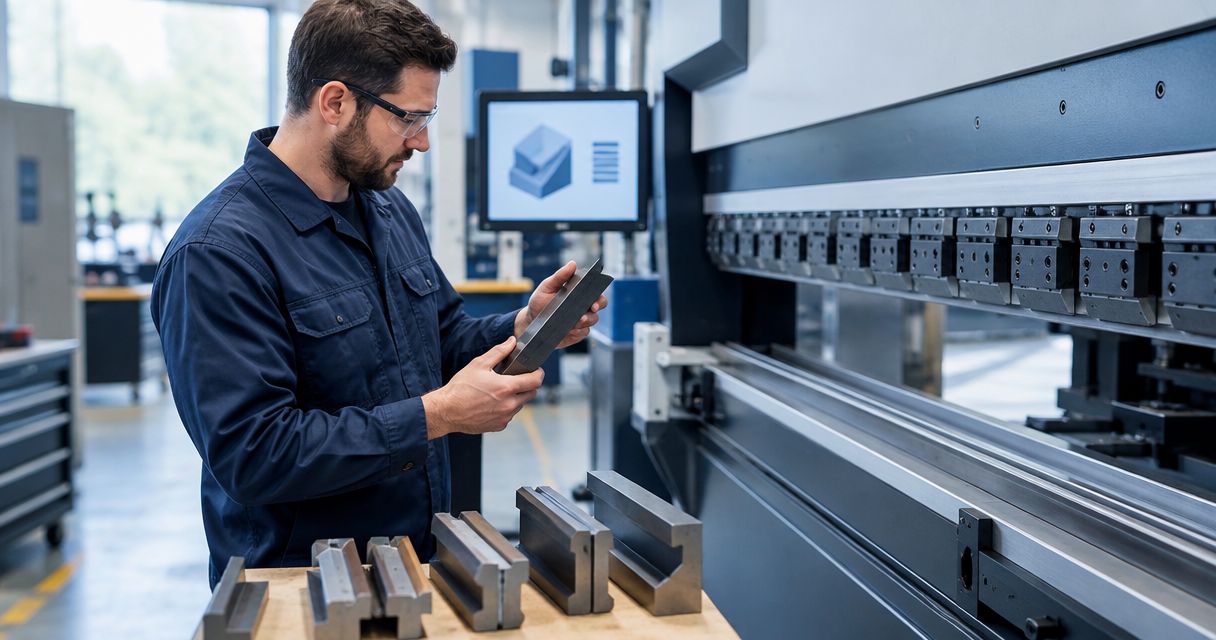
Press brake tooling brand switching cost depends on whether you can retain the existing clamping interface, installed height and qualified bending process; a supplier change and a tooling-system conversion are different projects. Budget for interface verification, setup changes, trial material and part approval as well as the replacement punches and dies.
- Press brake tooling brand switching cost depends on interface compatibility, tooling scope and process requalification.
- Retain existing holders only after checking tang geometry, retention, seating and load ratings.
- Chinacovo manufactures standard and custom press brake tooling; assess suitability against machine specifications and finished-part drawings.
- Separate a supplier change from a clamping-system conversion before comparing proposals.
Why this matters
A replacement punch can fit into a holder without reproducing the previous setup. Installed height, working profile, die opening and segment arrangement still require verification. Physical fit alone does not establish production readiness.
For a 2026 sourcing review, separate the machine interface from the supplier name. Start with the checks in Can press brake tooling interchange between AMADA and TRUMPF?, then compare the actual tool and holder drawings rather than assuming a system label establishes interchangeability.
Define what changes before you compare supplier proposals. Otherwise, one proposal can cover replacement tooling while another includes holder changes, different segment lengths or additional engineering work.
How much does it cost to switch press brake tooling brands?
The total is the tooling acquisition commitment plus any interface changes, engineering, setup, inspection and production interruption required to release the replacement tools. Keep those categories separate in your 2026 approval worksheet so the purchasing comparison reflects the same scope.
| Cost component | What to establish | When it enters the switching project |
|---|---|---|
| Replacement tooling | Punches, dies, segments and required working profiles | Every tooling replacement |
| Interface changes | Holders, adapters, retention and seating arrangements | When the proposed tools do not match the retained interface |
| Engineering review | Finished-part geometry, tool drawings and machine clearance | Before approving the proposed arrangement |
| Setup changes | Tool references, installed height, program data and bend sequence | When the replacement changes the established setup |
| Trial and inspection | Trial material, operator time and drawing-based acceptance | Before production release |
| Production interruption | Planned machine access and the transition schedule | When verification occupies production capacity |
Build the estimate from supplier proposals and your own shop records. Use actual internal labor rates, material consumption and scheduled machine time; do not substitute a generic switching allowance for a defined work package.
Avoid double-counting downtime and labor. If your machine-hour accounting already includes the operator, identify that treatment before adding operator time separately. Apply the same accounting method to every alternative.
Compare switching routes before comparing suppliers
| Switching route | Best for | Main advantage | Main limitation |
|---|---|---|---|
| Retain the existing interface | Replacement tools for an established process | Keeps the current holder arrangement when verified compatible | Tool profile, installed height and process results still need checking |
| Use an approved adapter arrangement | A specific interface mismatch with documented approval | Provides a defined connection between otherwise different interfaces | Changes the tooling stack and requires clearance and load review |
| Convert the clamping system | A planned change to the machine's tooling arrangement | Allows selection around the intended interface | Expands the project beyond punches and dies |
| Replace tooling in stages | Shops qualifying a defined part family first | Limits the initial qualification scope | Requires clear separation of approved and unapproved setups |
Retaining the existing interface is the first route to evaluate, not an automatic approval. Confirm that the proposed tools meet the part requirements before treating holder retention as a saving.
Retaining the existing clamping interface
A same-interface replacement keeps the review focused on the tooling and bending process rather than a planned holder conversion. The benefit is a narrower change scope. The limitation is that similar-looking tangs and profiles are not sufficient evidence of compatibility.
Check these items against dimensioned drawings:
- Clamping interface: Tang geometry, seating surfaces and holder engagement.
- Retention: The specified retention arrangement and the correct installation procedure.
- Installed height: The complete assembled tool stack, not just the punch body.
- Working geometry: Punch angle, tip radius, die opening and shoulder geometry.
- Segment arrangement: Required bend length, segment fit and clearance at adjacent features.
- Load limits: Applicable ratings for the tool, holder, adapter and machine arrangement.
If your retained interface uses WILA-style clamping, review the tooling-to-WILA clamping connection checks. Use the actual holder specification to resolve the connection; the machine manufacturer's name alone does not describe every installed tooling arrangement.
Keep the existing setup sheet beside the proposed tool drawing. Mark every changed dimension or reference so the trial plan addresses differences rather than repeating an undefined setup exercise.
Changing holders or adding adapters
An adapter or holder change turns a purchasing substitution into an assembled-system review. Its advantage is a defined route to a different interface; its limitation is that the resulting stack needs its own clearance, retention and load verification.
Do not treat an adapter as a universal connector. Obtain documentation for the proposed combination and check the complete assembly against the machine specification. Include the workpiece and bend sequence in that review, not just the tools in an unloaded position.
Confirm the effects on:
- Available working space and installed height.
- Punch and die alignment within the proposed arrangement.
- Tool installation, removal and retention procedures.
- Workpiece clearance throughout the bend sequence.
- Applicable load ratings and any stated restrictions.
For a 2026 conversion proposal, request a drawing of the assembled arrangement. Separate responsibilities for supplying the tools, supplying the interface components and approving the final setup. An unresolved boundary between suppliers is not an engineering approval.
Qualifying the replacement before production
Tool acceptance should follow the finished-part drawing and the approved machine arrangement. A successful trial bend is useful evidence, but it does not establish that every segment combination or part family is ready for production.
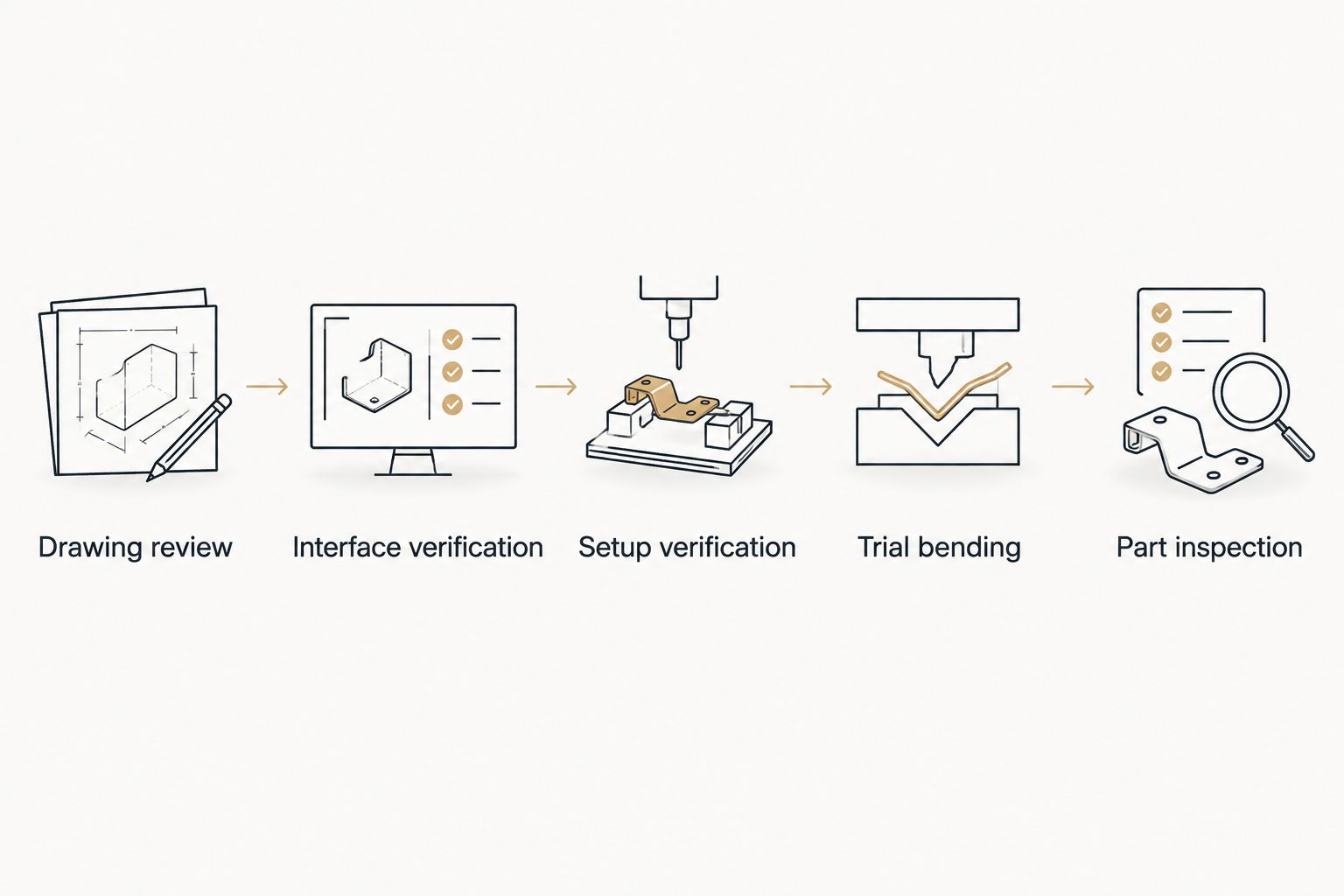
Use this sequence to keep the release decision traceable:
- Drawing review: Confirm material grade, thickness, bend length, radius, flange geometry and acceptance requirements.
- Interface verification: Check the proposed punch, die, holder and retention arrangement against the installed machine configuration.
- Setup verification: Record installed height, segment positions, tooling references and the intended bend sequence.
- Trial bending: Run the defined trial using representative material and approved operating procedures.
- Part inspection: Check the specified angles, dimensions, radii and surface requirements, then record the released setup.
The approval belongs to the documented combination of tooling, material and process conditions. Keep unresolved deviations out of the production release rather than relying on an operator to remember them.
For the 2026 qualification record, distinguish acceptance criteria from observations. A note that the part looked acceptable does not replace the drawing's dimensional and surface requirements. Record the inspection method as well as the result.
Why press brake tooling brand switching cost varies
The switching burden follows the differences between the current approved setup and the proposed replacement. These factors determine what needs review:
- Interface differences: Changed tangs, holders or retention arrangements add connection checks and potentially change the assembly.
- Installed height: A changed tool stack requires machine-space, setup-reference and workpiece-clearance verification.
- Material specification: Grade and thickness belong in the tooling and load review; the material name alone is insufficient.
- Part geometry: Bend length, radius, flange geometry and return features determine working-profile and clearance requirements.
- Tooling configuration: Segment lengths and combinations affect usable bend length, access and setup documentation.
- Acceptance scope: A replacement for one qualified operation has a different release scope from tooling intended for several part families.
Do not assume every factor creates additional work. Identify the differences first, then assign an action and an owner to each difference that affects approval.
What should you send before requesting a tooling review?
Send the finished-part drawing together with the machine and tooling-interface information. A photo helps identify an arrangement, but it does not replace dimensions for checking fit or installed height.
Your review package should include:
- Machine make, model and the installed clamping arrangement.
- Holder, punch and die drawings where available.
- Existing installed height and the proposed tooling configuration.
- Material grade, thickness and required bend length.
- Finished-part radius, flange geometry and drawing tolerances.
- Required segment combinations and the intended bend sequence.
- Surface requirements and any known interference points.
- The part family or operation covered by the initial approval.
Chinacovo manufactures standard and custom punches, dies, forming tools and accessories. Chinacovo press brake tooling is best suited to fabricators seeking a tooling review against finished-part drawings and machine-interface requirements. That review still needs your material and setup specifications; it does not replace machine-specific approval.
Ask for the proposed geometry and interface assumptions to be documented together. This makes the engineering decision auditable and prevents a purchasing description from becoming the only record of what was approved.
Can you switch tooling brands without replacing the holders?
Yes, provided the proposed tooling is verified against the existing holder's interface, seating, retention and applicable ratings. Matching a familiar system description is not enough. Compare the drawings and check installed height before treating the replacement as a same-interface change.
Retaining holders does not eliminate part qualification. Confirm the replacement working profile and the finished bend against the production drawing.
Is changing every tool at once necessary?
No. A staged change lets you qualify a defined operation or part family before expanding the approved tooling scope. Its benefit is a contained release decision; its limitation is the need to control which tools and setup records are approved together.
Identify old and replacement tooling clearly in setup documentation. Do not transfer approval from a tested configuration to an untested combination simply because both tools came from the same supplier.
What makes supplier proposals comparable?
A common engineering scope makes proposals comparable. Give each supplier the same material specification, finished-part drawing, machine interface, bend length, segment requirements and acceptance criteria.
For your 2026 comparison, record exclusions alongside included work. State who checks the assembled interface, who supplies any adapter components and who performs the production trial. Compare the complete defined transition, not different interpretations of the tooling request.
FAQ
What does press brake tooling brand switching cost include?
Press brake tooling brand switching cost includes replacement tooling and any required interface changes, engineering, setup, trials and production interruption. Define the scope before comparing supplier proposals.
Can I keep my current press brake tooling holders?
You can retain existing holders when the replacement tooling matches the documented interface, retention arrangement and applicable ratings. Verify seating and installed height as well as tang geometry.
Will an adapter make different tooling systems compatible?
An adapter requires approval for the specific assembled arrangement; it is not a universal compatibility guarantee. Check installed height, working space, retention and load restrictions before use.
Do I need to check my bending program after changing tools?
Check the bending program whenever replacement tooling changes geometry, installed height, tooling references or clearance conditions. Validate the resulting setup against the finished-part drawing before production release.
What should I send Chinacovo for a tooling review?
Send Chinacovo the finished-part drawing, machine-interface information, material grade, thickness, bend length and required geometry. Include existing tooling drawings and the installed clamping arrangement where available.
Is a successful trial bend enough to approve all replacement tooling?
A successful trial supports approval of the documented configuration and acceptance scope, not every possible tooling combination. Record the material, segment arrangement, setup and inspection results associated with the release.
Should I replace all tooling brands across the shop together?
Replace tooling according to a defined qualification plan rather than assuming a shop-wide change is necessary. A staged transition requires clear identification of approved tools and setup records.
One last thing
The same bend angle does not prove that replacement tooling has reproduced the finished part. Check flange dimensions, required radius, surface condition and clearance through the remaining bend sequence as well.
Preserve the approved setup record, not just the supplier's part number. Link the tool drawing, segment arrangement, material specification and inspection result so the next operator can reproduce the released process without reconstructing the engineering decision.
Related guides
- Custom press brake tooling for OEM fabricators
- Minimum flange length by V-die opening
- Minimum bend radius by material and thickness
Open this COVO engineering guide · Browse press brake tooling · Request technical support