COVO KNOWLEDGE
How much more tonnage does stainless steel need than mild steel?
Published:
Updated:
Compare tonnage stainless steel vs mild steel: no fixed multiplier fits every setup. Verify tensile strength, thickness, die opening and tooling load limits.
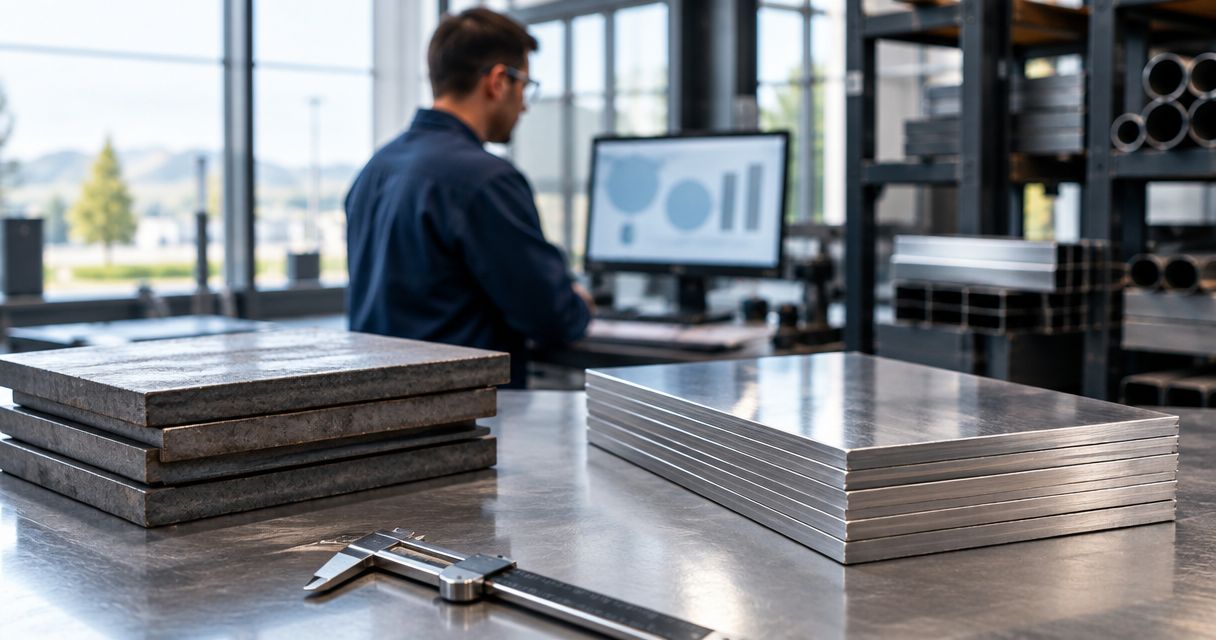
Stainless steel generally needs more press brake tonnage than mild steel, but there is no single multiplier that applies to every grade and setup. For a 2026 air-bending calculation, compare the materials’ tensile strengths at the same actual thickness, bend length and V-die opening; then verify the machine, punch, die and clamping limits separately.
- For tonnage stainless steel vs mild steel, compare tensile strength under identical air-bending conditions—not material names alone.
- Chinacovo press brake tooling suits fabricators requiring standard or custom punches and dies matched to part and machine requirements.
- Thickness, bend length and V-die opening change the load calculation; a material multiplier cannot replace those inputs.
- Check total bending force and permitted load per unit length before approving the setup.
Why this matters
A stainless replacement part can share the mild-steel part’s drawing and still require a different bending setup. Material strength affects force, while springback, inside radius and surface requirements affect how you achieve the finished geometry.
Do not transfer a mild-steel tonnage setting directly to stainless steel. Start with the material certificate and the actual tool geometry. For tooling selection alongside the force calculation, use the guide to press brake dies for stainless steel fabrication.
The distinction matters most when a setup approaches a tooling or machine limit. Enough total machine capacity does not establish that a short punch segment, narrow die or holder can carry the local load.
How much more tonnage does stainless steel need than mild steel?
For otherwise identical air-bending conditions, the estimated force ratio follows the ratio of the tensile strengths used in the calculation. That comparison is valid only while thickness, bend length, V-opening and calculation method remain unchanged.
Use this relationship as a comparison framework:
Stainless force ÷ mild-steel force ≈ stainless tensile strength ÷ mild-steel tensile strength.
This is not permission to substitute a generic stainless factor for verified material data. Grade, delivery condition and work hardening affect strength. Your machine or tooling supplier’s calculation method must also apply to the bending operation.
| Verification point | Mild-steel reference setup | Stainless-steel replacement setup |
|---|---|---|
| Material strength | Use the specified grade and condition | Use the specified stainless grade and condition |
| Thickness | Record actual thickness | Verify rather than assume equal thickness |
| Bend length | Record engaged bend length | Include every simultaneously loaded bend |
| Die opening | Record the working V-opening | Recalculate if the opening changes |
| Force estimate | Establish the reference load | Recalculate using stainless material data |
| Acceptance check | Verify machine and tool limits | Repeat all load and geometry checks |
The benefit of a strength-ratio comparison is that it isolates the material change. Its limitation is equally important: it stops being a material-only comparison as soon as you change thickness, opening or forming method.
Use a matched comparison, not two unrelated charts
Before comparing chart values, confirm that both charts use the same force units, reference material strength and bending method. A chart for air bending cannot establish the required force for bottoming or coining.
For your 2026 setup records, preserve the chart revision or calculation reference with the material specification. A force value without its assumptions is not a repeatable process instruction.
Why stainless-steel bending tonnage varies
These factors explain why one stainless-to-mild-steel multiplier does not cover every job:
- Tensile strength: Use the strength basis required by the calculation method. Do not substitute yield strength into a formula that requires ultimate tensile strength.
- Actual thickness: Air-bending force varies approximately with thickness squared. A thickness change therefore affects force more strongly than an equal proportional change in bend length.
- Bend length: A longer engaged bend requires more total force under otherwise equivalent conditions. Distinguish part length from the length actually loaded.
- V-die opening: A narrower opening increases the estimated air-bending force. A wider opening reduces that estimate but also changes the forming geometry.
- Forming method: Air bending, bottoming, coining and hemming have different contact conditions. Do not apply an air-bending material factor to every operation.
- Material condition: Annealed, cold-worked and other specified delivery conditions are not interchangeable strength assumptions. Verify the supplied condition rather than relying on the grade name alone.
Recalculate whenever an input changes. Keeping the same part number does not guarantee that the material, tooling or process remains equivalent.
Verify the setup before applying a stainless multiplier
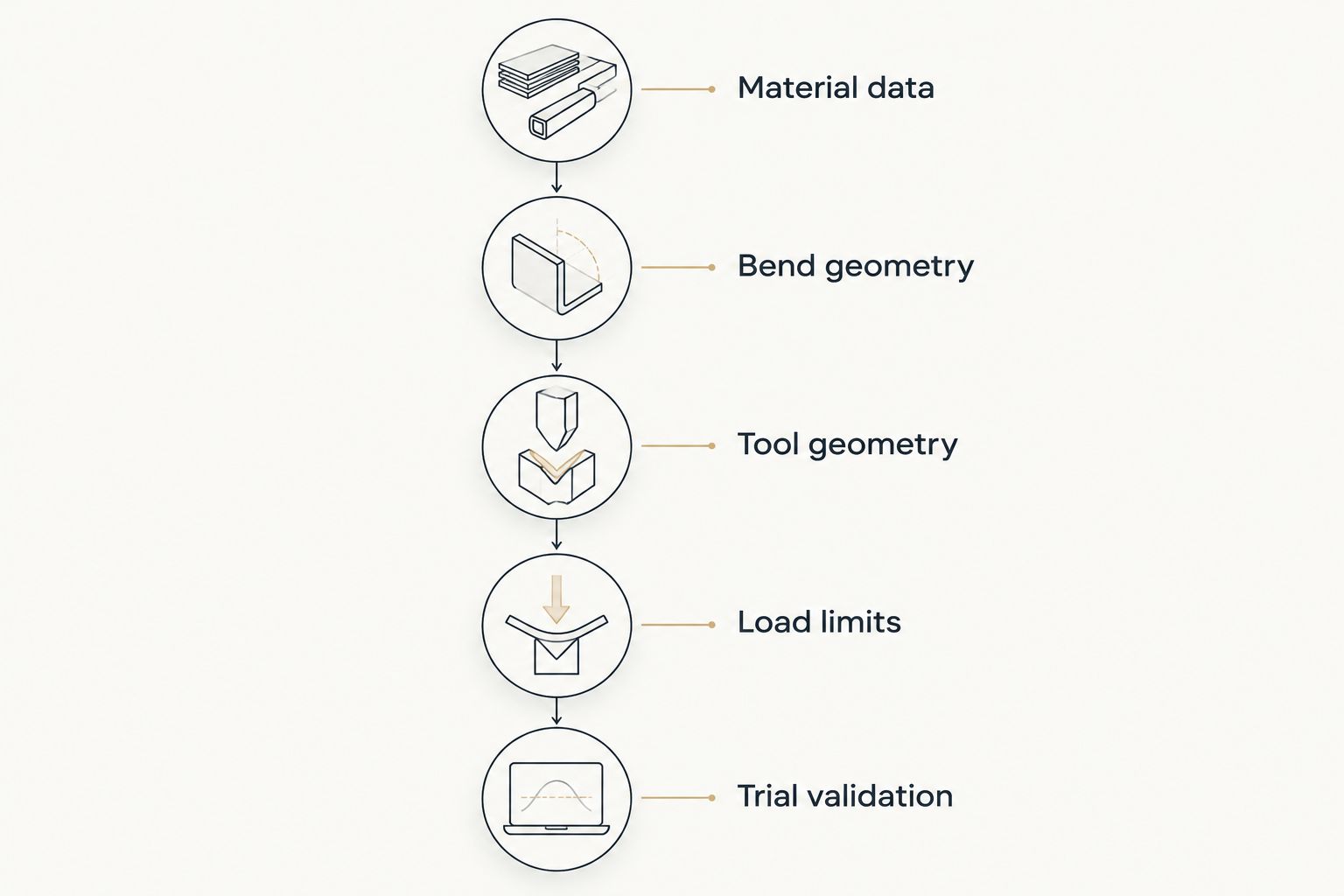
Use this sequence to turn a material comparison into a tooling decision. Complete the load check before approving a trial bend; a trial is not a substitute for rated capacity.
- Material data: Record grade, delivery condition, actual thickness and the tensile-strength basis. Resolve any difference between the purchase specification and material certificate.
- Bend geometry: Record bend length, required inside radius, angle, flange geometry and surface requirements. Identify features that restrict the die opening or punch profile.
- Tool geometry: Record V-opening, punch radius, working profiles and installed height. Check interference throughout the bending sequence, not just at the final position.
- Load limits: Calculate total force and load per unit length. Verify the machine, punch, die, holders and clamping interface against their applicable ratings.
- Trial validation: After the capacity checks pass, validate angle, radius, flange dimensions and surface condition using an approved setup procedure.
A tooling review needs the finished-part drawing as well as the machine interface. The drawing identifies the required geometry; the interface information establishes whether the selected tooling can be mounted and supported correctly.
Chinacovo press brake tooling is best suited to fabricators requiring standard or custom punches and dies matched to part and machine requirements. Chinacovo manufactures punches, dies, forming tools and accessories; suitability for a particular stainless job still depends on the specified geometry, interface and load.
Check total force and local loading separately
Total tonnage answers whether the machine can generate the required force under its permitted operating conditions. Load per unit length answers a different question: whether the tooling and supporting components can carry that force over the engaged length.
A short bend concentrates force into a shorter working section. Do not divide a machine’s nominal capacity by an arbitrary tool length and treat the result as an approved tool rating. Use the documented limits for the actual components and setup.
For sectional tooling, check segment fit, seating and support. Verify how the load is distributed across the engaged segments, especially where the setup includes gaps or different working profiles.
Your 2026 setup sheet should identify:
- Total calculated bending force and the calculation basis.
- Engaged bend length and corresponding load per unit length.
- Punch, die, holder and clamping ratings in compatible units.
- Machine restrictions relevant to load position and distribution.
- Installed height, available stroke and clearance through the bend sequence.
Tool fit and force capacity are separate acceptance checks. Use the tooling compatibility verification guide when checking the clamping interface and installed height.
Keep force units consistent
The word tonnage is not a complete unit specification. A machine chart, tooling drawing and calculation worksheet can use different conventions, so identify the force unit before comparing values.
One metric tonne-force equals approximately 9.80665 kN; one US short ton-force equals approximately 8.89644 kN. These are unit conversions, not recommended operating loads or stainless-steel multipliers.
Also distinguish total force from force per unit length. A rating expressed per meter cannot be compared directly with a total machine rating or a value expressed per foot.
For a 2026 worksheet, retain the original rating and show the converted value separately. That makes the conversion traceable and prevents a later reader from interpreting a converted figure as the manufacturer’s original specification.
Can you reduce stainless-steel tonnage with a wider die?
A wider V-opening reduces the estimated force for an otherwise equivalent air bend. It is useful only when the resulting inside radius, flange support and finished geometry remain acceptable.
The trade-off is geometric, not just numerical. Changing the opening changes how the sheet is supported and formed. Recheck minimum flange feasibility, the required radius and contact with adjacent features before accepting the lower force estimate.
A narrower opening offers a different geometry but raises the force requirement. Neither opening is automatically better: select the opening that satisfies the part drawing within the machine and tooling limits.
Do not widen the die solely to make a capacity calculation pass. If the new opening cannot produce the specified part, the lower calculated force does not solve the job.
Does springback mean stainless always needs more pressure?
Springback requires angle compensation, but it does not justify increasing pressure without checking the forming method and tooling limits. In air bending, the setup must achieve the required angle while maintaining acceptable radius, clearance and load.
Do not treat an angle error as proof that the machine lacks tonnage. Check material data, penetration, tool geometry and the bend program before changing the process.
Bottoming or coining is not simply an air bend with extra pressure. Changing the contact conditions requires a separate force assessment and tooling approval.
Can you use the same tooling for stainless and mild steel?
The same tooling can serve both materials only when its geometry, condition, interface and load rating satisfy both setups. A shared nominal thickness does not establish compatibility.
Check the punch radius and die opening against the required finished radius and flange geometry. Then verify the working surfaces against the part’s surface requirements, including any specified protective material used during bending.
Chinacovo’s standard and custom tooling options require the same verification discipline. A standard profile avoids unnecessary customization when it fits; a custom profile addresses a defined geometry or interface requirement but still needs a documented load assessment.
What should you send for a tooling review?
Send the finished-part drawing, machine information and material specification together. A request that says only stainless steel leaves the strength basis, geometry and interface unresolved.
Include these items in the 2026 review package:
- Part requirements: Drawing revision, bend sequence, bend length, inside radius, flange geometry and tolerances.
- Material requirements: Grade, delivery condition, actual thickness and available material certificate.
- Machine requirements: Machine model, clamping interface, holders, installed height and relevant operating limits.
- Tooling requirements: Existing punch and die drawings, V-opening, working radii, segment arrangement and load ratings.
- Process requirements: Air bending or another specified method, surface acceptance criteria and any clearance restrictions.
If replacing an established mild-steel process, include its verified setup information as a reference. Keep the reference separate from the proposed stainless settings so an old value is not mistaken for an approved instruction.
FAQ
How much more tonnage does stainless steel need than mild steel?
There is no universal stainless-to-mild-steel multiplier. For otherwise identical air-bending conditions, compare the tensile strengths used by the calculation method, then verify machine and tooling limits.
Can I use a generic stainless multiplier from a tonnage chart?
Use a chart multiplier only within the chart’s stated material and process assumptions. Confirm its reference strength, thickness, V-opening and force units before applying it.
Does stainless steel thickness affect tonnage more than bend length?
Air-bending force varies approximately with thickness squared and directly with bend length. Compare actual thicknesses rather than assuming that matching gauge labels establish equal thickness.
Will a wider V-die opening reduce stainless bending force?
A wider V-opening reduces the estimated air-bending force under otherwise equivalent conditions. Recheck the required inside radius, flange support and finished geometry before changing the opening.
Is machine tonnage enough to approve a stainless bend?
Machine tonnage alone is not enough. Verify the punch, die, holders and clamping interface, including permitted load per unit length and applicable machine loading restrictions.
Can I bend stainless with the same punch and die used for mild steel?
You can use the same punch and die only when both setups meet the tooling’s geometry, condition and load requirements. Recalculate force and verify radius, flange geometry and surface acceptance.
What does Chinacovo need for a stainless tooling review?
Chinacovo needs the finished-part drawing, machine interface, material grade, thickness and required geometry for a relevant tooling review. Include existing tool drawings and load ratings when evaluating a replacement setup.
One last thing
Record the assumptions beside the tonnage value, not in a separate conversation. A force estimate becomes reusable only when the next engineer can identify its material strength, thickness, bend length, die opening and forming method.
The most useful stainless-to-mild-steel comparison is therefore a matched setup record—not an isolated multiplier. Preserve that record with the approved tooling arrangement and finished-part inspection requirements.
Related guides
- Minimum flange length benchmarks by V-die opening
- Minimum bend radius benchmarks by material and thickness
- Press brake dies ranked by tonnage capacity
Open this COVO engineering guide · Browse press brake tooling · Request technical support